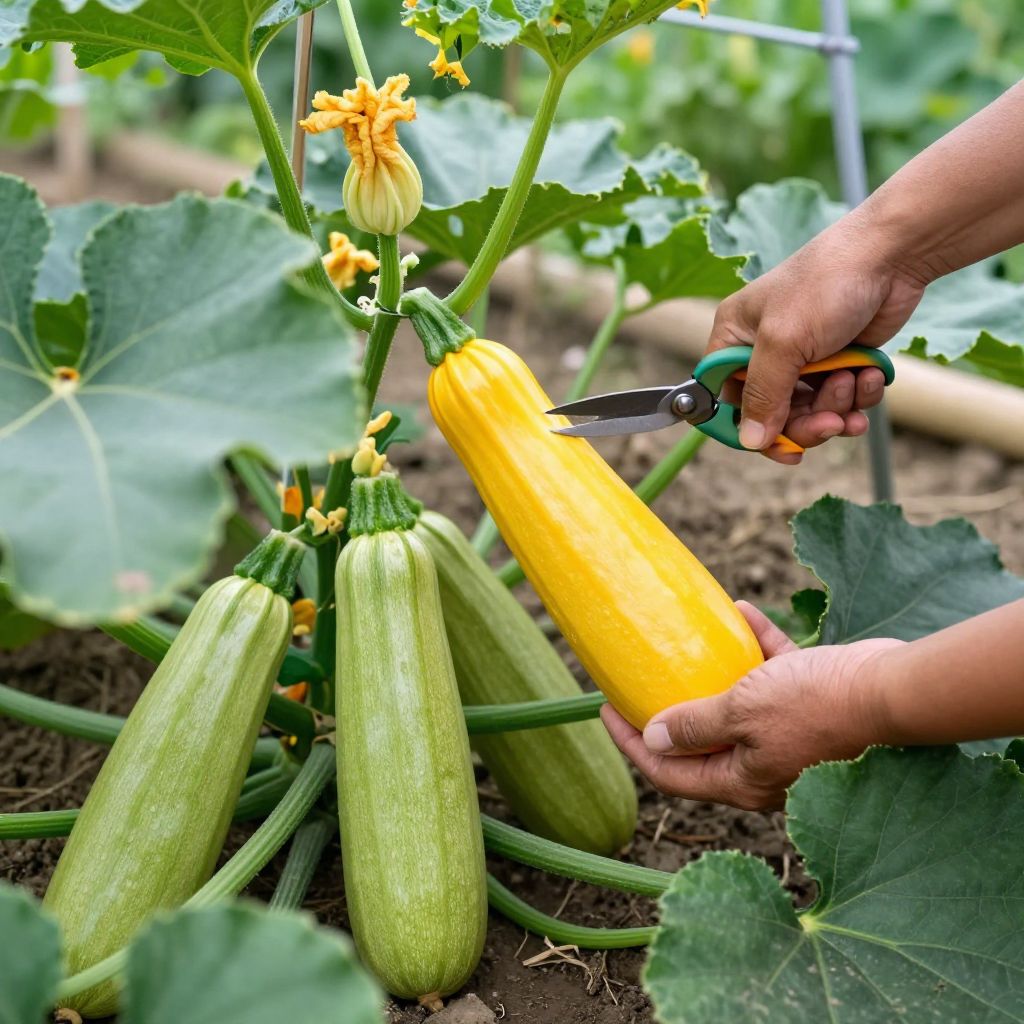
Wondering when to pick squash so it tastes best and keeps producing? The right harvest time depends on the type of squash, the weather, and how fast the fruits are growing. Pick too early and you may lose flavor or size; wait too long and the skin can harden, the seeds enlarge, and the plant may slow down.
With a few simple checks, you can harvest summer squash at peak tenderness and winter squash at full maturity. The key is to watch fruit size, skin texture, stem condition, and days from flowering, then harvest regularly to encourage more fruit.
When to pick squash?
Pick squash when it matches the harvest stage for its type: summer squash while the skin is still tender and easy to pierce, and winter squash when the rind is hard and the stem is dry or corky. Harvesting at the right time improves flavor, texture, storage life, and continued production on the vine.
Know which squash you’re growing
“Squash” covers two very different harvest groups, and timing matters more than the calendar.
Summer squash
These include zucchini, yellow crookneck, straightneck, and pattypan squash. They are harvested young, while the skin is soft and the seeds are still small.
Winter squash
These include butternut, acorn, delicata, spaghetti squash, and many pumpkins. They are left on the vine longer so the rind hardens and the flesh develops better storage quality.
How to tell when summer squash is ready
Summer squash is best picked young, usually when fruits are small to medium-sized and the skin is glossy and easy to dent with a fingernail. Most types are most tender at about 4 to 8 inches long, though size varies by variety. If the squash feels firm but not hard, it is usually ready.
Signs it’s time to harvest
- Skin is glossy rather than dull or tough.
- You can press it lightly with a fingernail.
- Seeds inside are still small and soft.
- Fruit is growing quickly and has reached a usable size.
- The plant is producing more flowers and young fruit.
What happens if you wait too long?
Overgrown summer squash becomes seedy, watery, and less flavorful. The skin thickens, and the plant often slows down because it is putting energy into maturing large fruits instead of making new ones.
How to tell when winter squash is ready
Winter squash usually needs a longer season. Harvest when the rind is fully colored, the skin is hard enough that your fingernail does not easily puncture it, and the stem begins to dry and cork over. Many winter squash are ready after the vines have matured for several weeks beyond flowering, but exact timing depends on variety and climate.
Signs of maturity
- Hard rind that resists fingernail pressure.
- Deep, even color typical of the variety.
- Stem turns dry, tan, or corky.
- Fruit sounds hollow when tapped in some varieties.
- Vines begin to decline naturally later in the season.
Don’t rely on color alone
Color can be misleading, especially with butternut and some pumpkins. A squash may look mature but still have a soft rind if picked too early. Always check the stem and skin firmness too.
Seasonal timing: what to watch through the growing year
Squash harvest timing changes with your local climate, planting date, and weather. Warm, sunny conditions can speed ripening, while cool nights and shorter days can slow it down.
Spring and early summer
Young summer squash may start forming soon after flowering. Check plants every day or two once fruits begin setting, because they can grow from small to oversized very quickly.
Midsummer
This is often peak harvest time for summer squash. Frequent picking encourages more production and helps prevent fruits from becoming too large.
Late summer into fall
Winter squash usually finishes ripening now. Watch for hardening rinds and drying stems, especially before the first frost in your area.
Before frost
If frost is forecast and winter squash is close to mature, harvest it. Light frost can damage the fruit, and a hard freeze can ruin storage quality.
How to harvest squash correctly
Use a clean, sharp knife, pruners, or garden snips to cut squash from the vine. Leave a short stem attached, especially for winter squash, because a broken or missing stem can shorten storage life and create entry points for rot.
- Inspect the fruit for size, skin firmness, and stem condition.
- Hold the squash steady with one hand.
- Cut the stem cleanly instead of twisting the fruit off.
- Leave about 1 to 2 inches of stem on winter squash when possible.
- Handle fruit gently to avoid bruising or punctures.
Best time of day
Harvest in the morning if you can. Fruits are often firmer and cooler, which makes handling easier and reduces stress on the plant and the squash.
How often to pick squash
For summer squash, check plants every day or every other day during peak production. Fruits grow fast, and even a short delay can lead to oversized squash. Winter squash usually needs less frequent checking, but you should still inspect it regularly as harvest time approaches.
Frequent harvesting is one of the easiest ways to keep summer squash producing. If you let a few fruits get huge, the plant often shifts energy away from new flowers and young fruit.
Growing conditions that affect harvest timing
Healthy plants reach harvest sooner and more evenly. Squash grows best in full sun, rich soil, and consistent moisture, but too much nitrogen or irregular watering can change fruit development.
Soil and compost
Squash prefers fertile, well-drained soil enriched with compost. Good soil helps plants grow steadily, which supports even fruiting and more predictable harvest timing.
Watering
Uneven watering can cause misshapen fruit, blossom-end issues, or slowed growth. Keep soil evenly moist, especially while fruits are sizing up, but avoid waterlogged conditions that stress roots.
Sunlight and warmth
Squash ripens faster in warm weather with plenty of sun. In cooler or cloudy periods, fruit development may slow, so use visual cues rather than the calendar alone.
Common mistakes when deciding when to pick squash
- Waiting for summer squash to get larger instead of harvesting while tender.
- Picking winter squash before the rind hardens.
- Twisting fruit off the vine and tearing the stem.
- Ignoring frost risk on late-season winter squash.
- Leaving overripe fruit on the plant too long, which can reduce new production.
Troubleshooting harvest problems
Fruit is large but tastes bland
This usually means summer squash was picked too late. Harvest younger next time, and check plants more often during peak growth.
Winter squash looks ready, but the skin is still soft
Leave it on the vine a little longer if weather allows. If frost is coming, harvest and cure it indoors, but know that storage life may be shorter than fully mature fruit.
Fruit stops developing
Pollination may have been incomplete, or the plant may be stressed by heat, drought, or pests. Improve watering consistency and inspect flowers for pollinator activity or damage.
Vines are declining before fruit is ready
Check for squash vine borers, powdery mildew, or other disease pressure. If the fruit is close to mature, harvest it early rather than losing it to plant decline.
After harvest: curing and storage basics
Summer squash should be used soon after picking for the best texture. Winter squash can often be stored longer, but only if it is mature, undamaged, and properly cured when needed.
Curing winter squash
Let winter squash sit in a warm, dry, airy place for about 1 to 2 weeks if the variety benefits from curing. This helps toughen the skin and improve storage, though not every squash stores equally well.
Storing your harvest
Keep winter squash in a cool, dry place with good air circulation. Avoid stacking fruit tightly or storing damaged squash with sound ones, since rot can spread quickly.
Simple harvest checklist
- Identify whether your squash is summer or winter type.
- Check fruit size against the variety’s typical harvest stage.
- Test skin firmness with a fingernail.
- Look at the stem for dryness or corking on winter squash.
- Cut fruit cleanly with pruners or a knife.
- Harvest summer squash often to keep plants producing.
If you’re still unsure when to pick squash, start by checking your plants daily once fruit begins forming. For more growing help, you may also want to read about how to grow zucchini and harvesting winter squash for storage if those topics match your garden.