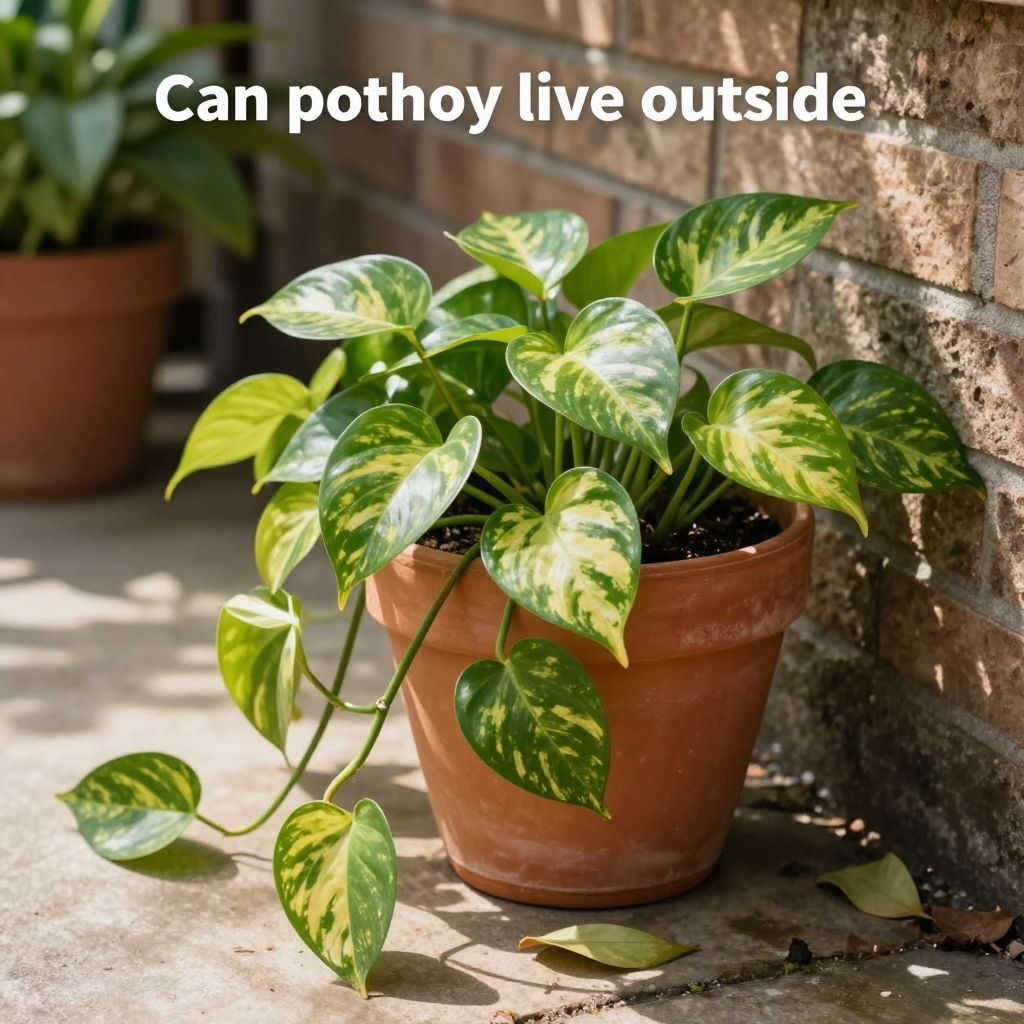
Can pothos live outside? Yes, but only in the right climate and with a little protection from weather extremes. Pothos (Epipremnum aureum) is a tropical vine that can grow beautifully outdoors in warm, sheltered conditions, yet it can suffer fast from cold, direct sun, wind, and heavy rain.
If you want to move pothos outdoors or grow it there year-round, the key is matching the plant to your local temperatures, light levels, and drainage. With the right setup, it can become a lush container plant, hanging basket filler, or shaded groundcover in frost-free areas.
Can pothos live outside?
Pothos can live outside in warm, frost-free climates where temperatures stay consistently above about 50°F (10°C). It grows best in bright, indirect light or dappled shade, with well-draining soil and protection from cold snaps, harsh midday sun, and waterlogged ground.
What outdoor conditions does pothos need?
Think of pothos as a shade-loving tropical plant that prefers stable, mild conditions. Outdoors, it performs best when you give it filtered light, moderate moisture, and shelter from weather stress.
Light
Outdoors, pothos usually does best in bright shade or morning sun with afternoon shade. Too much direct sun can bleach or scorch the leaves, especially in hot climates.
- Good spots: under a porch, on a covered patio, beneath open tree canopy, or on a north- or east-facing wall.
- Avoid: full afternoon sun, reflective heat from concrete, and exposed rooftops or balconies.
Temperature
Pothos is not frost-tolerant. Cold damage can show up quickly as blackened leaves, limp stems, or leaf drop.
- Best growth happens in warm temperatures.
- Bring it indoors before nights turn cool in your area.
- If frost is possible, do not leave pothos outside unprotected.
Humidity and airflow
Pothos likes humidity, but it also needs moving air to reduce fungal problems. A sheltered outdoor area often gives it a better balance than a stuffy indoor room.
Just avoid placing it where it sits in stagnant, overly wet air after rain.
How to grow pothos outside successfully
If you want healthy outdoor pothos, start with a container or a well-prepared planting site. The plant is much easier to manage outside when you can control drainage and move it if weather changes.
Container growing is usually the safest option
For most gardeners, a pot or hanging basket is the easiest way to grow pothos outdoors. Containers let you shift the plant into shade, shelter it from storms, and bring it inside when temperatures drop.
- Use a pot with drainage holes.
- Choose a potting mix that drains well, such as a houseplant mix amended with perlite or orchid bark.
- Do not let the pot sit in a saucer full of water for long periods.
Planting in the ground
In frost-free regions, pothos can sometimes be grown in the ground as a trailing or climbing ornamental. This works best in loose, fertile soil that drains well and stays lightly moist, not soggy.
Before planting, loosen compacted soil and mix in compost if your soil is poor. Avoid heavy clay unless you can improve drainage significantly.
Soil, compost, and drainage tips
Drainage matters more than rich soil for pothos. The roots dislike sitting in wet ground, especially outdoors where rain can soak the planting area for days.
Best soil traits
- Loose and airy
- Well-draining
- Moderately fertile
- Not prone to standing water
How much compost to use
A small amount of compost can improve soil structure and add nutrients, but don’t overdo it. Too much organic matter can hold excess moisture if the site already drains slowly.
If your soil is heavy, focus first on drainage improvement rather than adding more compost.
Watering pothos outdoors
Outdoor pothos usually needs less frequent watering than an indoor plant in a dry room, but it can also dry out faster in wind, heat, or containers. The right approach is to check the soil rather than follow a fixed schedule.
How to tell when to water
- Water when the top 1 to 2 inches of soil feel dry.
- For larger pots, check deeper before watering again.
- After rain, make sure the root zone is not staying soggy.
Common watering mistakes
- Overwatering: leads to yellowing leaves, soft stems, and root rot.
- Underwatering: causes drooping, crispy edges, and slowed growth.
- Inconsistent watering: can make the plant look stressed even if it survives.
How to protect pothos from weather damage
Outdoor pothos needs a little seasonal management. A few simple protections can prevent most problems.
Cold protection
If temperatures are expected to dip, move potted pothos indoors or into a sheltered area. Even a short cold spell can damage tropical foliage.
- Bring containers inside before chilly nights arrive.
- Use frost cloth only as a temporary emergency measure, not as a long-term solution.
- Do not leave pothos exposed to frost.
Sun and heat protection
In hot climates, the biggest threat is often sun scorch rather than cold. Leaves exposed to intense afternoon sun may fade, curl, or develop brown patches.
If your plant is getting too much sun, move it to deeper shade or use a location with filtered light.
Wind and rain
Strong wind can tear leaves and dry the plant quickly. Heavy rain can saturate the soil and invite root problems.
A porch, patio, or partially covered area is often ideal because it reduces both extremes.
Pruning and training pothos outdoors
Outdoor pothos can grow quickly in warm weather, especially if it has climbing support or room to trail. Regular pruning keeps it neat and encourages fuller growth.
How to prune
- Use clean, sharp pruners or scissors.
- Trim back long vines to shape the plant.
- Cut just above a node to encourage branching.
- Remove damaged, yellow, or sunburned leaves.
Training options
- Hanging baskets: good for trailing growth on patios and balconies.
- Trellises or poles: useful if you want larger leaves and a climbing habit.
- Mixed containers: possible if the other plants have similar light and water needs.
Pests and diseases to watch for outside
Outdoors, pothos can pick up pests more easily than it does indoors. Regular inspection helps you catch problems early.
Common pests
- Mealybugs
- Scale
- Aphids
- Spider mites in hot, dry conditions
Check the undersides of leaves and along stems, especially if the plant is near other ornamentals.
Common disease issues
Most disease problems come from excess moisture and poor drainage. Root rot is the most serious risk, and it often starts with soil that stays wet too long.
If leaves yellow and the plant wilts despite moist soil, inspect the roots and drainage right away.
Can pothos be planted in the ground?
Yes, but only where winters are mild and frost is not a concern. In many regions, pothos is better treated as a container plant that spends the warm season outdoors and returns indoors before cold weather.
Best uses in the landscape
- Understory planting in shaded tropical-style gardens
- Container accent on patios and balconies
- Trailing filler in sheltered outdoor spaces
- Climbing vine on a protected support
Be cautious about planting pothos in the ground where it could spread aggressively in warm climates. In some regions, it may become invasive or difficult to control, so check local guidance before planting it outdoors permanently.
How to move indoor pothos outside safely
If your pothos has been indoors, don’t place it straight into full outdoor conditions. A gradual transition reduces shock and leaf burn.
- Start in a shaded, protected spot for a few days.
- Increase light slowly over 1 to 2 weeks if needed.
- Watch for sun scorch, drooping, or yellowing.
- Bring it back inside if nights turn cool.
This gradual adjustment is especially important if the plant has been growing in low indoor light.
Troubleshooting common outdoor pothos problems
Yellow leaves
Yellowing often points to overwatering, poor drainage, or too much direct sun. Check the soil first, then the light exposure.
Brown or crispy edges
This usually means too much sun, wind stress, or underwatering. Move the plant to a gentler site and water more consistently.
Leggy growth
If stems stretch and leaves get farther apart, the plant probably needs brighter indirect light. Prune it back and reposition it where it gets more usable light without harsh sun.
Drooping leaves
Drooping can mean the plant is too dry, too wet, or chilled. Feel the soil and consider recent weather before making changes.
Simple outdoor pothos care checklist
- Give it bright shade or filtered light.
- Keep it above frost and away from cold drafts.
- Use well-draining soil and a pot with drainage holes.
- Water when the top layer of soil dries out.
- Protect it from harsh afternoon sun and strong wind.
- Inspect regularly for pests and root problems.
- Prune to control size and encourage fuller growth.
So, can pothos live outside? Absolutely, if your climate is warm enough and you place it in the right spot. Start with a container, give it shade and drainage, and watch the weather closely. If you’re comparing other plants for outdoor growing, you may also find it helpful to read about can snake plants live outside and can orchids be outside.