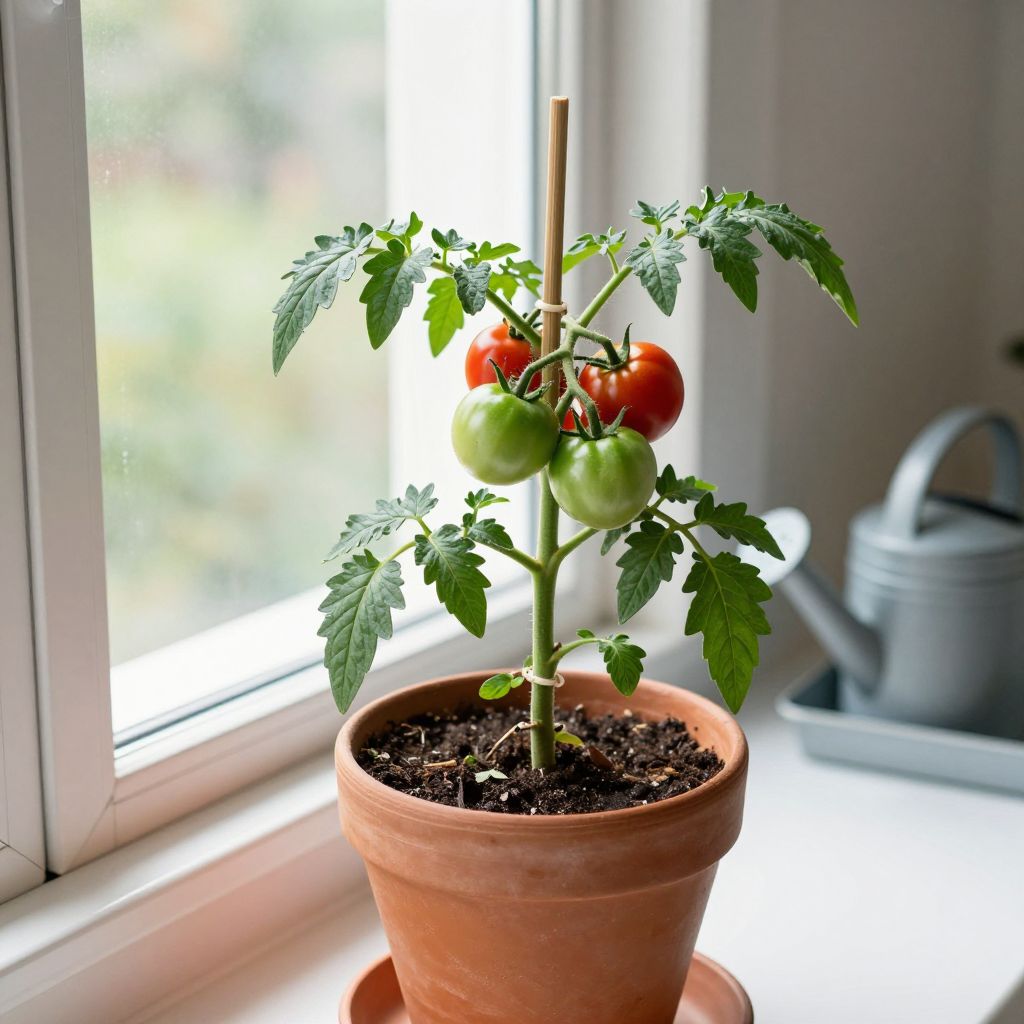
Can you grow tomatoes indoors? Yes—you can, and with enough light, warmth, and care, indoor tomatoes can produce flowers and fruit. The biggest challenge is not germination, but giving the plant the intense light and steady conditions it needs to stay productive.
Indoor tomato growing works best when you choose the right variety, use a large enough container, and manage pollination, watering, and airflow carefully. If you set up those basics well, you can grow tomatoes on a sunny windowsill, under grow lights, or in a small indoor growing space.
Can you grow tomatoes indoors?
Yes, tomatoes can be grown indoors if you provide at least 6 to 8 hours of strong light daily, warm temperatures, a roomy pot, and regular pollination help. Indoors, tomatoes usually need more attention than houseplants, but compact varieties can fruit successfully with the right setup.
What types of tomatoes grow best indoors?
Not every tomato is a good indoor candidate. Choose compact, container-friendly plants that stay manageable and mature relatively quickly under artificial light or a bright window.
Good indoor choices
- Dwarf or patio tomatoes that stay compact
- Determinate varieties that grow to a set size and fruit in a shorter window
- Cherry tomatoes, which often perform better indoors than large slicing types
Why compact varieties matter
Indoors, space is limited and light is weaker than outdoors. A large indeterminate tomato can quickly become too tall, too leafy, and too difficult to support, prune, and pollinate.
If you want the best chance of success, look for a variety described as compact, dwarf, bush, patio, or container-friendly. These are easier to manage in pots and usually fit better under lights or near a bright window.
How much light do indoor tomatoes need?
Light is the most important factor in indoor tomato growing. Tomatoes need very bright light to flower well and ripen fruit, and a standard indoor window is often not enough on its own.
Best light setup
- Grow lights are usually the most reliable option indoors
- Place lights close enough to the plant to prevent stretching, but not so close that leaves overheat
- Rotate plants if they lean toward a window or light source
A south-facing window may work in very bright conditions, especially in sunny seasons, but many gardeners still need supplemental lighting. If your plant becomes tall, thin, and pale, it is likely not getting enough light.
Tip: If you are relying on natural light alone, monitor the plant closely. Weak stems and poor flowering usually mean the light level is too low for reliable fruiting.
What is the best pot and soil for indoor tomatoes?
Tomatoes need a container that gives the roots room to grow and drains well. Crowded roots and soggy soil are common reasons indoor tomatoes struggle.
Container basics
- Use a pot with drainage holes
- Choose a container large enough for mature roots; bigger is usually better for fruiting tomatoes
- Use a sturdy saucer or tray to catch runoff, but never let the pot sit in standing water
Soil mix
Use a high-quality potting mix made for containers, not garden soil. Garden soil compacts too easily indoors and can hold too much water, which reduces oxygen around the roots.
A good indoor tomato mix should be loose, moisture-retentive but well draining, and rich in organic matter. You can improve a potting mix with compost if the product label allows it, but avoid making the mix heavy or muddy.
How do you plant tomatoes indoors?
You can start tomatoes from seed indoors or move in young transplants. Starting from seed gives you more variety choices, while transplants save time and are often easier for beginners.
Starting from seed
- Sow seeds in a fine seed-starting mix.
- Keep the medium evenly moist, not soaked.
- Provide warmth for germination.
- Move seedlings under bright light as soon as they emerge.
- Pot up seedlings when roots begin filling the cell or small pot.
Transplanting into the final pot
- Fill the container with fresh potting mix.
- Set the tomato deeper than it grew before if the stem is leggy; buried stem sections can form roots.
- Water thoroughly after planting.
- Place the pot in the brightest location available.
Whether you start from seed or transplant, avoid planting into a tiny pot and expecting the plant to stay productive. Tomatoes need root space to support flowers and fruit.
How do you care for indoor tomatoes?
Indoor tomato care is about balance: enough water, enough light, enough airflow, and enough room for the plant to grow without becoming stressed.
Watering
Water when the top layer of potting mix begins to dry, but do not let the plant wilt repeatedly. Tomatoes dislike extreme swings between dry and soggy soil.
- Water deeply until excess drains from the bottom
- Empty saucers after watering
- Check moisture with your finger rather than watering on a fixed schedule
Indoor conditions vary a lot, so the plant’s size, pot material, light intensity, and room temperature all affect how quickly the soil dries. A small plant in a cool room will need less water than a large fruiting plant under bright grow lights.
Temperature and airflow
Tomatoes prefer warm conditions and dislike cold drafts. Keep them away from chilly windows at night, heating vents, and air conditioners that dry or stress the foliage.
Good airflow helps reduce fungal problems and supports pollination. A small fan on a low setting can help move air gently around the plant without blasting it.
Feeding
Indoor tomatoes usually need regular nutrition because container soil contains limited reserves. Use a balanced fertilizer or one suited for tomatoes, following the product label and adjusting based on plant response.
Too much nitrogen can produce a lush, leafy plant with few flowers. If your tomato is growing lots of foliage but not setting fruit, excess nitrogen may be part of the problem.
How do you pollinate tomatoes indoors?
Tomatoes are self-pollinating, but indoors they often need help because there is no wind or insect activity to shake pollen loose. Without pollination, flowers may drop without forming fruit.
Simple pollination methods
- Gently tap the flower clusters every day or two
- Use a small fan to create light air movement
- Brush the flowers lightly with a soft paintbrush or cotton swab
Pollinate when flowers are open and dry. If humidity is very high, pollen may clump and move less easily. If the air is extremely dry, flowers may also struggle, so aim for moderate indoor conditions.
Should you prune indoor tomatoes?
Pruning can help indoor tomatoes stay manageable, but it should be light and purposeful. Over-pruning reduces leaf area, and the plant needs leaves to power fruit production.
What to remove
- Yellowing or damaged leaves
- Lower leaves that touch the soil
- Excess side shoots on larger indeterminate plants, if space is tight
Support the plant with a stake, cage, or trellis as it grows. A supported tomato is easier to water, inspect, and pollinate, and it is less likely to break under the weight of fruit.
What pests and diseases affect indoor tomatoes?
Indoor tomatoes can still get pests and disease, especially if the air is stagnant or the plant is stressed. Catching problems early is much easier than fixing a serious outbreak.
Common pests
- Aphids
- Whiteflies
- Spider mites
- Fungus gnats in overly wet potting mix
Common disease issues
- Powdery mildew in poor airflow
- Leaf spots from wet foliage and crowded growth
- Root problems from consistently soggy soil
Inspect leaves regularly, especially the undersides. If you spot pests early, isolate the plant and remove the worst affected leaves. Improving airflow and correcting watering habits often prevents repeat problems.
Why do indoor tomatoes fail to fruit?
If your plant looks healthy but does not produce tomatoes, the issue is usually one of four things: insufficient light, poor pollination, too much nitrogen, or a container that is too small.
Troubleshooting checklist
- Not enough light: move the plant to brighter light or add grow lights
- Poor pollination: tap flowers or use a brush
- High nitrogen: switch to a fertilizer that supports flowering and fruiting
- Root crowding: repot into a larger container if the plant is clearly outgrowing its pot
Another common issue is temperature stress. Very hot rooms, cold nights, or sudden drafts can cause blossoms to drop before they set fruit.
When and how do you harvest indoor tomatoes?
Harvest when the fruit reaches its mature color and feels slightly soft with gentle pressure. Pick regularly to encourage the plant to keep producing.
Use clean scissors or pinch fruit from the stem if it separates easily. Handle ripe tomatoes carefully, since indoor-grown fruit can be more delicate if light levels were modest.
Best practices for success indoors
If you want the shortest path to success, focus on the basics that matter most for indoor tomatoes.
- Choose a compact or determinate variety
- Use a large pot with drainage holes
- Provide strong light, ideally with grow lights
- Keep the soil evenly moist, not waterlogged
- Support the plant as it grows
- Pollinate flowers by hand if needed
- Watch closely for pests and airflow problems
Indoor tomatoes are less forgiving than many houseplants, but they are very doable once you understand their needs. Start with one compact plant, give it strong light and a roomy pot, and adjust care based on how it responds.
If you want to plan your indoor tomato project from the beginning, you may also find it helpful to read when to plant tomato seeds indoors and when to start pepper seeds indoors for timing ideas that work well in a home growing setup.