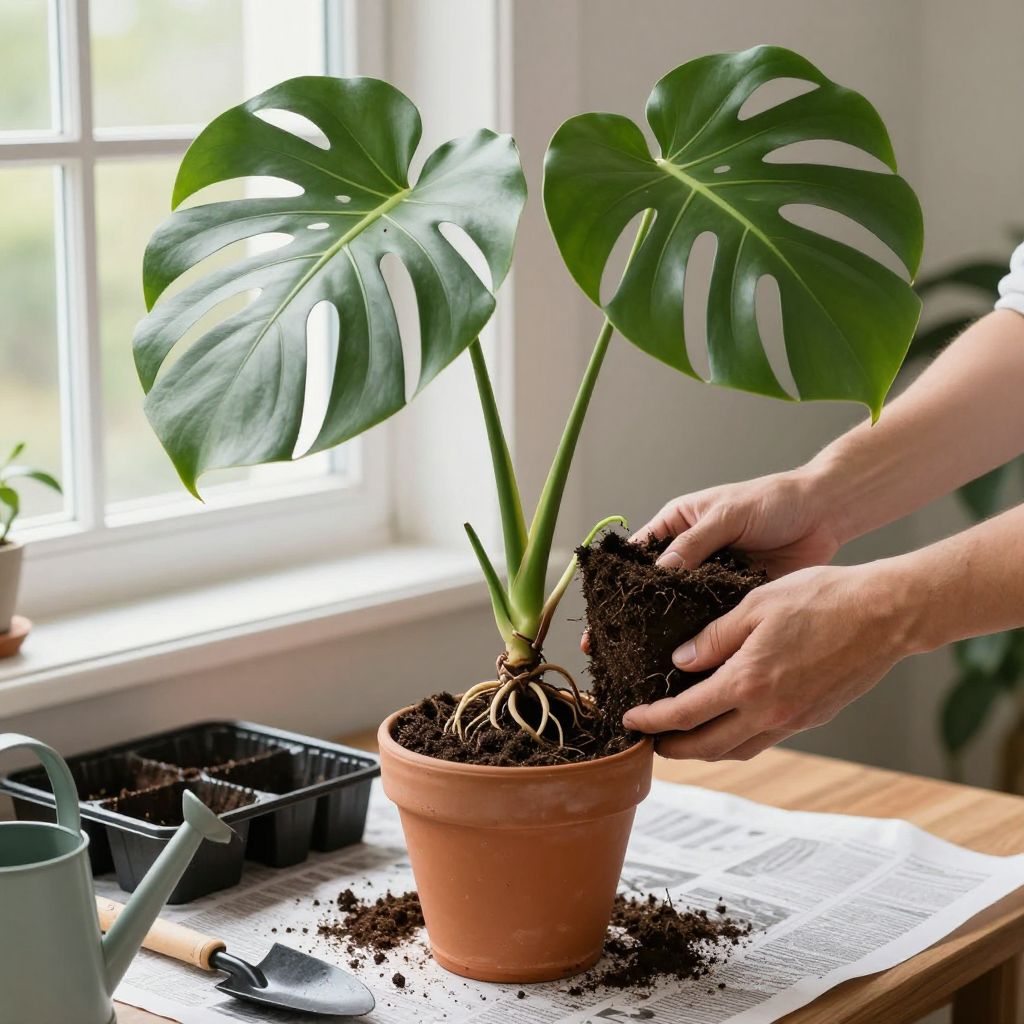
Wondering when to repot Monstera? The best time is usually in spring or early summer, when the plant is actively growing and can recover quickly from root disturbance. Repot sooner if roots are circling the pot, poking from drainage holes, or the mix dries out unusually fast.
Timing matters, but so does the plant’s condition. A Monstera that is rootbound, top-heavy, or sitting in tired, compacted soil will often benefit more from repotting than one that simply “looks big” for its pot.
When to repot Monstera?
Repot Monstera when you see clear signs of root crowding, poor drainage, or slowed growth, ideally during the plant’s active growing season in spring or early summer. Avoid repotting in the darkest, coldest part of winter unless the plant is stressed and the potting mix is failing, because recovery is usually slower then.
Best seasonal timing for repotting
For most indoor Monsteras, spring is the sweet spot. Longer days and brighter light help the plant rebuild roots and push new leaves after the move.
Why spring works best
- Light levels are increasing, which supports faster recovery.
- Temperatures are usually steadier and warmer indoors.
- The plant is naturally entering a growth phase.
Can you repot in summer, fall, or winter?
- Summer: Usually fine, especially if the plant is rootbound or unstable.
- Fall: Possible, but growth may slow as light decreases.
- Winter: Best avoided unless necessary, because the plant may stall after repotting.
If you live in a very bright, warm climate or grow Monstera under strong indoor lights, the plant may handle repotting outside of spring more easily. Still, try to choose a period of stable conditions rather than a sudden cold snap or heat wave.
Signs your Monstera needs repotting
Don’t repot just because the plant has gotten larger. Repot when the root system and pot are no longer working well together.
- Roots emerge from drainage holes or circle tightly at the soil surface.
- The plant dries out much faster than it used to.
- Water runs straight through the pot instead of soaking in.
- Growth slows despite good light and care.
- The plant becomes top-heavy and tips over easily.
- Leaves look smaller than usual, or new leaves unfurl more slowly.
- The potting mix has broken down, smells sour, or stays wet too long.
One or two of these signs may not mean immediate repotting, but several together usually do.
How often should you repot Monstera?
Many Monsteras need repotting every 1 to 2 years when young or fast-growing. Larger, more mature plants may stay in the same pot longer if the roots are healthy and the mix still drains well.
Monstera deliciosa and related houseplant Monsteras often tolerate being slightly snug in their pots. In fact, a pot that is only a little tight can help limit overwatering risk. The goal is not constant upsizing, but healthy roots and a stable growing medium.
What size pot should you choose?
When repotting Monstera, move up only one pot size at a time. A pot that is too large can hold excess moisture and increase the risk of root rot.
- Choose a pot about 2 to 5 cm wider in diameter than the current one.
- Make sure it has drainage holes.
- Use a heavier pot if the plant is tall and top-heavy.
If the plant is very rootbound, you can gently loosen the root ball and remove some circling roots, but avoid jumping to a dramatically larger container unless the root mass truly needs it.
Best soil mix for Monstera
Monsteras do best in a chunky, airy potting mix that holds some moisture but drains quickly. Dense, peat-heavy soil can stay wet too long and suffocate roots.
A good Monstera mix usually includes
- Quality indoor potting mix
- Orchid bark or coco chips for structure
- Perlite or pumice for drainage
- A small amount of compost if you want extra organic matter
The exact blend can vary, but the finished mix should feel loose and springy, not muddy or compacted. If your home is humid, you may want a slightly airier mix. If your indoor air is very dry, keep enough moisture-retaining material in the blend so the roots do not dry out too quickly.
How to repot Monstera step by step
Repotting is easiest when you prepare everything first. Have the new pot, fresh mix, and a watering can ready before you remove the plant.
- Water the plant lightly a day before repotting if the mix is very dry.
- Remove the Monstera from its pot and inspect the roots.
- Trim away any mushy, black, or rotten roots with clean scissors.
- Loosen tight circling roots gently with your fingers.
- Add a layer of fresh mix to the new pot.
- Set the plant at the same depth it was growing before.
- Fill around the sides with mix and lightly firm it in place.
- Water thoroughly until excess drains out.
- Empty any saucer so the pot does not sit in water.
Do not bury the stem deeper than before. Monsteras can rot if the base sits too low in wet soil.
Aftercare after repotting
Repotting is a shock, even when done carefully. Give the plant a few weeks of steady, low-stress care.
- Keep it in bright, indirect light.
- Avoid direct hot sun for the first week or two.
- Water only when the top layer of mix begins to dry.
- Skip fertilizer for about 4 to 6 weeks unless the plant is clearly growing well.
- Watch for drooping, yellowing, or soggy stems.
Some temporary droop is normal after repotting. New growth usually resumes once roots settle into the fresh mix.
Common repotting mistakes to avoid
A few simple errors can make a healthy Monstera struggle after repotting.
- Using an oversized pot: This keeps soil wet too long.
- Choosing heavy, compact soil: Roots need air as well as water.
- Repotting in a rush: Damaged roots and poor placement can slow recovery.
- Watering too soon and too often: The new pot may stay wet longer than expected.
- Ignoring drainage: Decorative pots without holes can trap excess water.
What if your Monstera is not ready for a full repot?
If the plant is healthy but slightly cramped, you may not need a full-size increase yet. In that case, consider refreshing the top few centimeters of soil or waiting until the next active growth period.
For a plant that is rootbound but otherwise stable, a careful root prune and soil refresh can sometimes buy time. This is more advanced, so if you are unsure, a modest pot increase is usually safer than aggressive root work.
Repotting versus other Monstera care issues
Not every droopy or yellowing Monstera needs a new pot. Sometimes the real issue is watering, low light, or root rot already developing in soggy soil.
If your plant looks tired after repotting or seems limp before you start, it may help to compare symptoms with other care problems such as watering mistakes or general drooping. For more help, see when to water Monstera and why Monstera gets droopy.
Conclusion
The best answer to when to repot Monstera is: do it in spring if you can, and do it only when the plant shows real signs of needing more space or fresher soil. Choose a slightly larger pot, use a chunky well-draining mix, and keep aftercare gentle. If your Monstera is rootbound now, plan the repot for the next warm, bright stretch of weather.