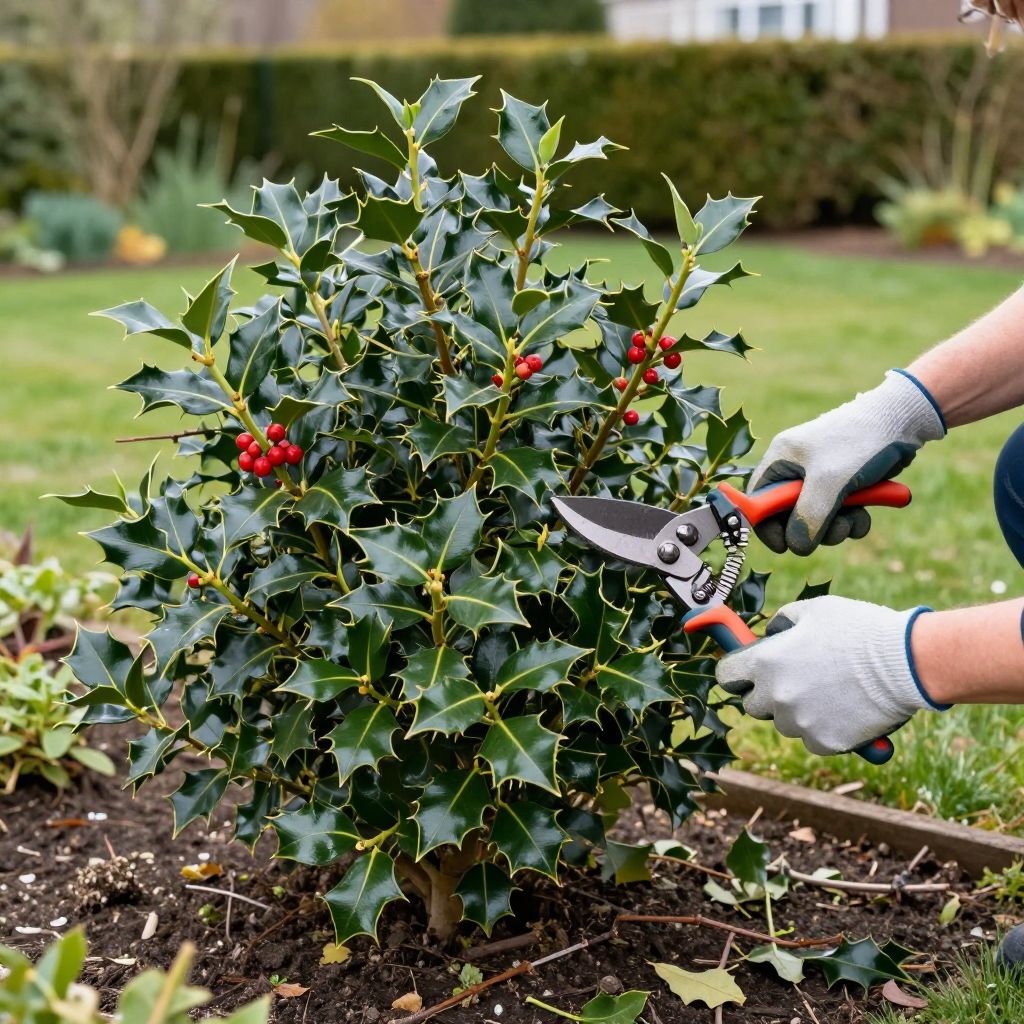
If you’re wondering when to trim holly bushes, timing matters almost as much as technique. Pruning at the wrong time can remove berries, reduce next season’s growth, or leave tender new shoots exposed to weather stress. The good news: most hollies are forgiving if you trim them at the right point in the season and avoid heavy cuts at the wrong time.
In general, the best time to prune holly is late winter to early spring, just before new growth starts, with light shaping possible after the first flush of growth. The exact timing depends on whether your holly is grown for berries, formal hedging, or natural shape, and on your local climate.
When to trim holly bushes?
Trim holly bushes in late winter or early spring before active growth begins. This is usually the safest time for structural pruning because you can see the branch framework clearly, and the plant can respond with fresh growth as temperatures warm. If you want berries, prune lightly and avoid cutting off too much of the current season’s flowering wood.
Why timing matters for holly pruning
Hollies set flower buds on older growth, and many types produce berries only if female plants are pollinated by a nearby male plant. If you prune too late in spring or summer, you may remove buds, flowers, or developing berries. Heavy pruning at the wrong time can also force weak, tender growth that is more vulnerable to heat, cold, or drought.
Best pruning windows by goal
- Late winter to early spring: Best for shaping, thinning, and reducing size.
- After spring growth hardens off: Good for light trimming or hedge tidying.
- After berry display is finished: Useful if you want to enjoy berries before pruning, but avoid cutting too late in the season.
How to tell if your holly is ready for trimming
Look for a few simple signs before you cut. The plant should be dormant or just waking up, with no major flush of tender new leaves underway. If you see swelling buds but no active growth yet, that is often an ideal pruning window. If the shrub is already pushing soft new shoots, limit yourself to small corrections.
Good signs it’s time
- Winter has passed or is nearly over in your area.
- The plant is dormant or only beginning to wake up.
- You can clearly see crossed, damaged, or crowded branches.
- You want to control size before spring growth starts.
Signs to wait
- Flowers are open or just about to open.
- Berries are forming and you want to keep them.
- The shrub is heat-stressed, drought-stressed, or recently transplanted.
- Hard frost is still likely in your area and you plan a major cutback.
How much can you trim at once?
For most home landscapes, light to moderate pruning is best. Remove dead, damaged, or crossing branches first, then shorten overlong stems as needed. Avoid taking off more than about one-third of the shrub in a single season unless you are renovating an overgrown plant and are prepared for slower recovery.
If your holly is severely overgrown, it is usually better to rejuvenate it gradually over two or three years instead of cutting it back hard all at once. This helps preserve plant health and keeps the shrub from looking bare for too long.
Step-by-step holly pruning guide
- Choose the right day. Pick a dry day when the plant is dormant or just before spring growth starts.
- Inspect the shrub. Remove dead, broken, diseased, or rubbing branches first.
- Decide on the shape. Step back and look at the whole plant before making cuts.
- Make clean cuts. Cut just above a leaf node or side branch, not in the middle of a long stub.
- Thin crowded areas. Open the center slightly if the shrub is dense and airless.
- Shape lightly. Trim the outer growth to maintain a natural outline or formal hedge line.
- Clean up debris. Remove cuttings, especially if you suspect disease or pest problems.
Tools that make the job easier
- Hand pruners for stems up to about 1/2 inch thick
- Loppers for thicker branches
- Hedge shears for formal hedges, used carefully
- Gloves and long sleeves, since many hollies have sharp leaves
Different pruning approaches for different holly types
Not all hollies should be trimmed the same way. A naturally rounded shrub, a clipped hedge, and a berry-producing specimen each need a slightly different approach. If you know the plant’s habit, you can prune in a way that keeps it healthy and attractive.
Natural-shape hollies
For shrubs grown as specimens, use selective pruning rather than shearing. Remove a few stems back to a side branch to keep the plant full and natural-looking. This method preserves the foliage texture better than a hard haircut.
Holly hedges
Formal hedges can be lightly trimmed more often during the growing season, but major pruning should still be timed for late winter or early spring. Keep the base slightly wider than the top so lower branches receive enough light.
Berries and wildlife value
If berries are important for winter interest or wildlife, prune sparingly after flowering and avoid removing too much of the current season’s growth. Remember that many hollies need both male and female plants nearby for berry set, so pruning is only one part of berry production.
What happens if you trim holly at the wrong time?
Wrong-timed pruning does not always kill a holly, but it can reduce flowering, berry production, and overall vigor. Late summer or fall cuts may stimulate tender new growth that is more likely to be damaged by cold. Heavy pruning during active growth can also stress the plant and make it look ragged for longer.
Common mistakes to avoid
- Shearing too hard and removing all the outer foliage
- Pruning during flowering if you want berries
- Cutting back into old bare wood and expecting quick regrowth
- Ignoring dead or diseased branches
- Pruning during drought, extreme heat, or freezing weather
How to renovate an overgrown holly bush
If your holly has become too large, do not try to force it into shape in one day unless you’re willing to accept a temporary bare look. A gradual renovation is usually safer and more attractive.
- Remove dead or weak stems first.
- Shorten the longest branches by one-third in year one.
- Repeat selective reduction the following year.
- Keep the plant watered during dry spells while it recovers.
- Mulch around the root zone to help conserve moisture.
Important: Some hollies do not respond well to severe cutbacks into old wood. Before making a drastic cut, check whether your plant is known to resprout well from older stems.
Aftercare following pruning
After trimming, give the shrub time to recover. Water deeply if the weather is dry, especially for plants that were cut back more than lightly shaped. A 2- to 3-inch layer of mulch can help moderate soil moisture and temperature, but keep mulch a few inches away from the trunk.
Healthy hollies prefer well-drained soil and steady moisture, not soggy roots. If the site stays wet after rain, pruning alone will not solve the problem; improving drainage may be necessary to prevent decline.
Watch for stress after pruning
- Leaf drop beyond the cut area
- Scorched or browned new growth
- Slow recovery in very hot or dry weather
- Pest issues such as scale or spider mites on stressed plants
When to call a halt and leave the shears alone
Sometimes the best pruning decision is to wait. If your holly is newly planted, drought-stressed, recently transplanted, or already struggling with pests or disease, postpone major trimming until it has recovered. Light removal of dead wood is usually fine, but avoid adding more stress than necessary.
Likewise, if you are unsure whether the shrub blooms on old wood or how much berry display you want to preserve, start with conservative cuts. You can always remove more later, but you cannot replace wood you have already cut away.
Conclusion: the safest timing is usually before spring growth
For most gardeners, the best answer to when to trim holly bushes is late winter to early spring, before new growth begins. Keep cuts selective, avoid heavy pruning during flowering or berry formation, and adapt the timing to your local weather and the plant’s condition. If you’re unsure, start with light shaping and deadwood removal, then reassess next season.
If you want to keep refining your shrub care, consider reading more about how to prune shrubs correctly and choosing the right mulch for landscape plants.