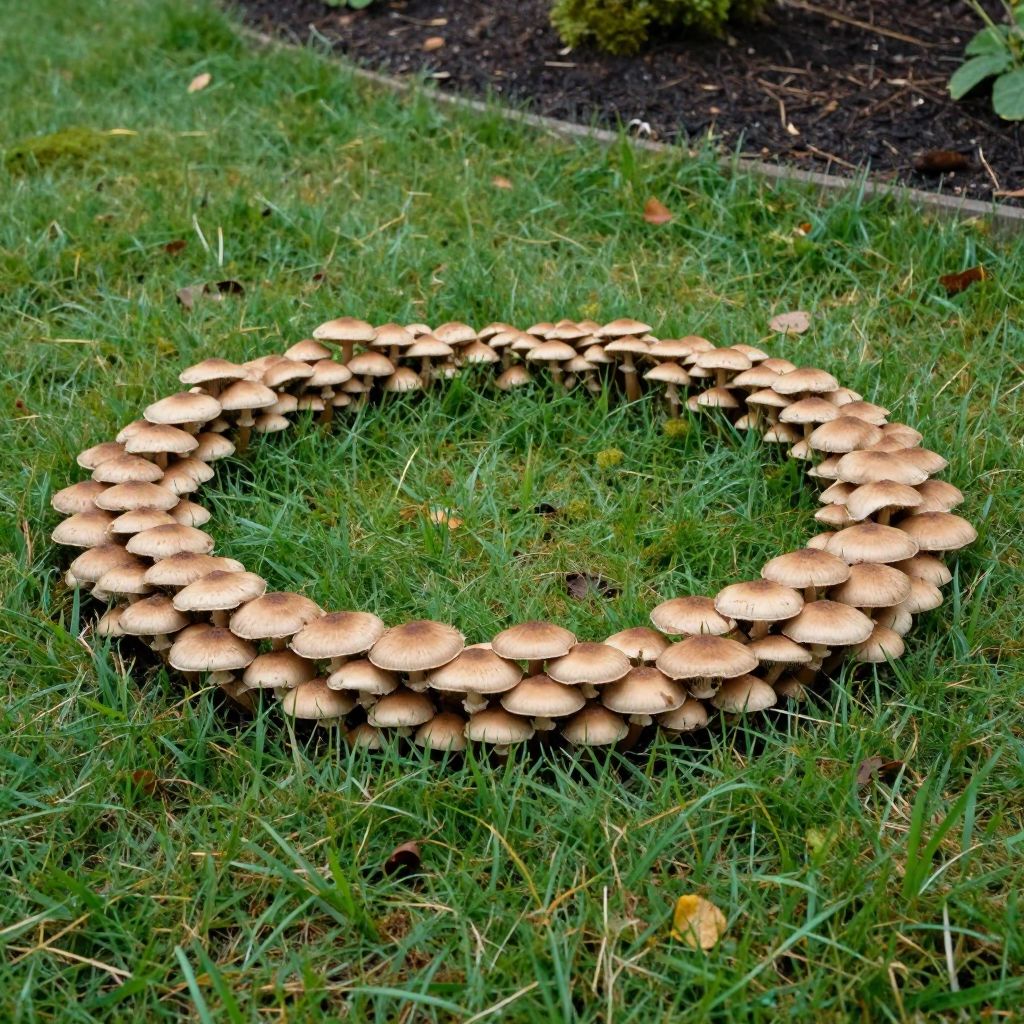
Why do mushrooms grow in a circle in your lawn or garden bed? In most cases, it’s because a fungal colony is expanding outward underground and fruiting at the edge where conditions are right. The visible mushrooms are only the short-lived “fruiting bodies”; the real organism is the hidden mycelium in the soil or wood.
That circle pattern is often called a fairy ring, and it can be harmless or a sign of a moisture, thatch, or buried-wood issue. The right response depends on what is growing, where it is growing, and whether your turf, plants, or soil are being affected.
Why do mushrooms grow in a circle?
Mushrooms grow in a circle because the underground fungus spreads outward from one starting point, using up organic matter as it goes. The oldest center may become less active, while the outer edge produces mushrooms where moisture, oxygen, and food are available. This creates a ring, arc, or full circle in lawns, mulch, and garden beds.
What a mushroom circle usually means
A ring of mushrooms is usually a sign that fungi are decomposing something in the soil. That “something” may be buried wood, old roots, thick thatch, compost, or rich organic debris. In lawns, the pattern is often called a fairy ring, though not every ring causes damage.
Common causes of circular mushroom growth
- Buried wood or roots that feed the fungus for years.
- Thick thatch in lawns, which holds moisture and organic matter.
- Mulch beds with decomposing bark or wood chips.
- Compacted soil that limits drainage and encourages fungal activity near the surface.
- Old compost or buried debris left from construction or landscaping.
Why the ring shape forms
The fungus grows outward from the original food source in all directions. As the center becomes depleted, the edge becomes the most active zone, so mushrooms appear in a widening ring. If the fungus is feeding on a buried stump, the circle may stay in roughly the same place for a long time.
Are circular mushrooms harmful?
Not always. Many mushrooms are simply decomposers doing useful work by breaking down organic material. In a garden bed or mulch layer, a ring of mushrooms can be mostly cosmetic. In a lawn, however, some fairy rings can cause dry patches, dark green growth, or dead turf if the fungus changes how water moves through the soil.
Signs the ring is mostly harmless
- Mushrooms appear after rain or watering and then disappear quickly.
- The lawn or plants around them still look healthy.
- The ring is in mulch, compost, or a wood-rich bed.
Signs the ring needs attention
- Grass inside the ring turns dry, patchy, or stunted.
- The soil becomes water-repellent and hard to re-wet.
- You notice repeated rings in the same area over several seasons.
- There may be a buried stump, old roots, or construction debris underneath.
How to tell if it’s a lawn fairy ring or a mulch fungus
Look closely at the growing site. In lawns, fairy rings often show as a circle of mushrooms, a dark green ring of grass, or a dead brown center. In mulch beds, mushrooms usually appear where wood chips are breaking down, and the ring is less likely to damage nearby plants.
Simple inspection checklist
- Check whether the mushrooms are in turf, mulch, or bare soil.
- Look for buried wood, old stumps, or root zones nearby.
- Notice whether the grass is greener, drier, or dead in the ring.
- See if the mushrooms return after rain or irrigation.
- Dig a small test hole only if needed to confirm buried debris.
What to do when mushrooms grow in a circle
The best fix depends on whether the fungus is feeding on surface mulch or something buried deeper. In many cases, you do not need to “kill” the mushrooms at all. Focus instead on improving drainage, reducing excess organic buildup, and correcting lawn care problems that favor fungal growth.
Step-by-step response for garden beds and mulch
- Remove the visible mushrooms if you want the area to look tidy.
- Rake back overly thick mulch so it is no deeper than needed for the planting area.
- Check for buried wood, old roots, or chunks of undecomposed debris.
- Let the bed dry slightly between waterings if the soil stays soggy.
- Top up mulch only when it has broken down significantly.
Step-by-step response for lawns
- Pick or mow off the mushrooms before they spread spores, if desired.
- Water deeply but less often so the soil is not constantly wet at the surface.
- Aerate compacted turf if the lawn drains poorly.
- Reduce thatch if the layer is thick and spongy.
- Inspect for buried wood or old construction debris if the ring keeps returning.
How to reduce future mushroom rings
You cannot always prevent fungi from appearing, especially in rich, organic garden soil. But you can make your garden less inviting to repeated rings by improving airflow, drainage, and soil structure. The goal is not to sterilize the soil; it is to prevent persistent wet, food-rich pockets that favor mushrooms.
Helpful prevention habits
- Do not bury wood under soil or mulch unless you want it to decompose there.
- Keep mulch at a moderate depth, especially around lawns and shallow-rooted plants.
- Avoid overwatering, particularly in cool or shaded areas.
- Improve drainage in low spots where water lingers after rain.
- Rake up heavy layers of leaves or clippings before they mat down.
Soil and lawn conditions that encourage rings
- Heavy clay with poor drainage.
- Compacted soil from foot traffic or equipment.
- Shady areas that dry slowly after rain.
- Excess organic debris under turf or mulch.
When you should leave mushrooms alone
In many gardens, mushrooms are part of a healthy decomposition cycle. If the ring is not harming plants and the area is not a play space for children or pets, you may choose to simply remove the fruiting bodies when they appear and let the fungus continue breaking down organic matter underground.
Reasons to leave them in place
- They help decompose organic material.
- They often disappear on their own as conditions change.
- They are a sign that your soil contains active life.
Important: Do not eat wild mushrooms unless you have had them positively identified by a qualified expert. Many look similar, and some are toxic.
How to handle mushrooms in mulch without harming plants
Mulch mushrooms are usually a sign that your mulch is doing its job and breaking down. If the mushrooms bother you visually, rake the mulch lightly, remove the fruiting bodies, and avoid piling fresh mulch too thickly. In most cases, replacing the entire bed is unnecessary.
Good mulch management practices
- Use the right mulch depth for the plantings.
- Break up compacted mulch so air can move through it.
- Replace only the top layer when mulch becomes matted or heavily decomposed.
- Keep mulch pulled back slightly from stems and trunks.
When to call a professional
If a fairy ring keeps expanding, kills turf, or appears over a buried stump you cannot remove, a landscape professional can help assess the site. This is especially useful if the area is large, the soil is badly compacted, or the problem returns after you improve watering and drainage.
Get help if you notice
- Large dead patches in the center of the ring.
- Repeated mushroom circles in the same lawn area.
- Signs of buried construction debris or a stump.
- Drainage problems that do not improve with basic care.
Quick summary: what the circle means and what to do
A circle of mushrooms usually means a fungus is spreading outward through soil, mulch, or buried wood. The pattern itself is normal, but the underlying cause may need attention if it affects your lawn or plants. Start by checking moisture, drainage, and organic debris, then decide whether the area needs cleanup or simple observation.
If you want to learn more about managing fungal growth in the garden, you may also find related lawn and soil care reading helpful.