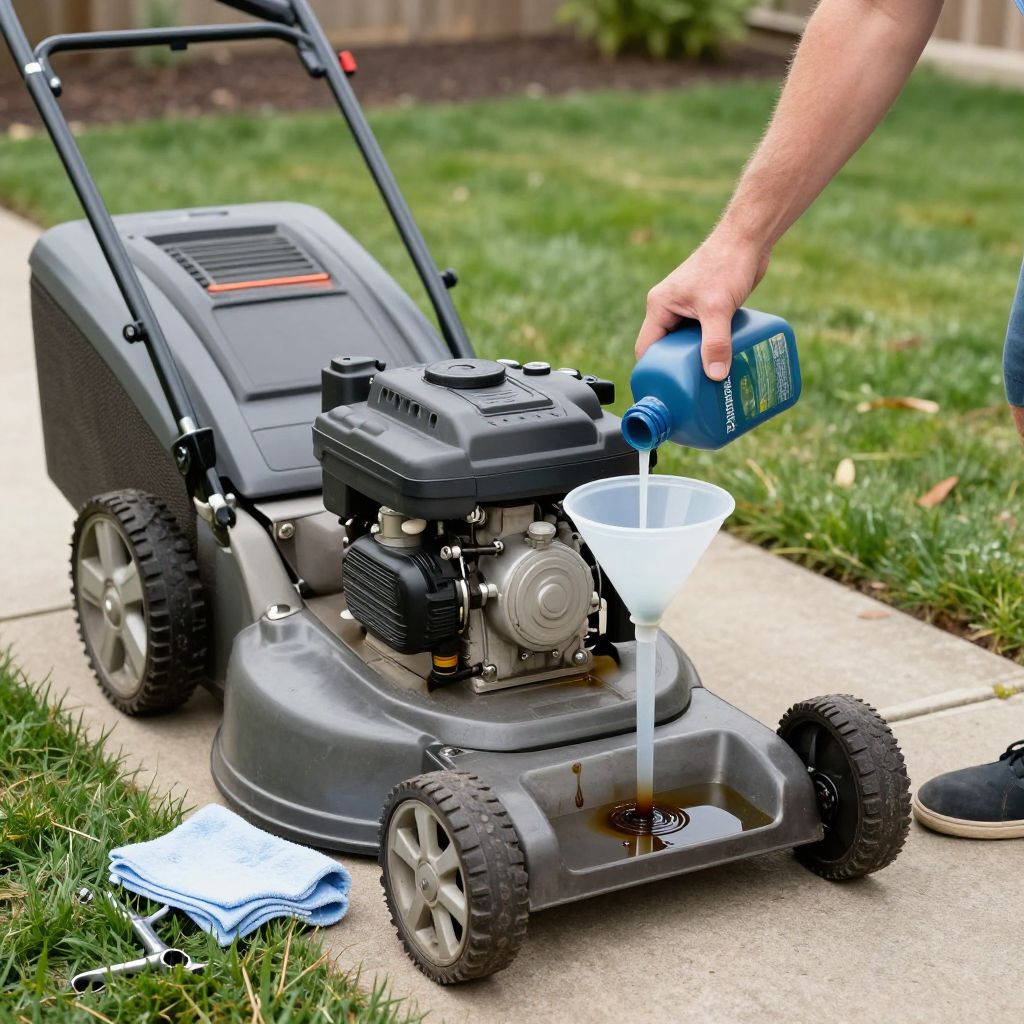
If you’re asking what kind of oil for lawn mower use, the safest answer is usually the oil grade listed in your mower’s manual—most four-stroke walk-behind mowers use SAE 30, 10W-30, or 5W-30 depending on temperature. The right oil keeps the engine lubricated, starts easier, and helps prevent wear.
Choosing the wrong oil can make a mower harder to start, smoke more, or run poorly in hot or cold weather. The good news is that once you know whether your mower has a four-stroke or two-stroke engine, picking the right oil becomes straightforward.
What kind of oil for lawn mower should you use?
Use the oil type and viscosity recommended in your mower’s owner’s manual. Most modern four-stroke lawn mowers use detergent motor oil such as SAE 30 for warm weather, or 10W-30 or 5W-30 for wider temperature ranges. Two-stroke mowers do not use crankcase oil; they need fuel mixed with two-cycle oil.
First: identify your mower engine
Before you buy oil, confirm whether your mower is a four-stroke or two-stroke model. This matters because the oil system is completely different.
Four-stroke mowers
These are the most common walk-behind and many riding mowers. They have a separate oil fill and dipstick, and you add oil directly to the crankcase.
Two-stroke mowers
These are less common in modern lawn mowers but still appear in some older or smaller machines. They usually do not have a separate oil reservoir. Instead, the oil is mixed with gasoline at the ratio specified by the manufacturer.
- Four-stroke: separate engine oil reservoir
- Two-stroke: oil mixed into the fuel
- If you are unsure, check the manual or look for an oil fill cap and dipstick
Common oil types for lawn mowers
Most lawn mower engines use standard detergent motor oil, but the best viscosity depends on your climate and the machine’s design. The label on the oil bottle should match the manual’s recommendation.
SAE 30
This is a very common choice for small four-stroke mower engines in warmer weather. It performs well when temperatures are consistently mild to hot.
10W-30
This multi-grade oil flows better during cooler starts and still protects the engine when it warms up. It is a practical option for areas with changing spring and fall temperatures.
5W-30
This is often used where mornings are cool or the mowing season starts early in the year. It can help with easier starting in colder conditions.
Synthetic oil
Some mowers can use synthetic or synthetic-blend oil if the manual allows it. Synthetic oil may handle temperature swings well, but it is not automatically better for every mower.
- Always follow the manual first
- Use the viscosity range recommended for your outdoor temperatures
- Choose oil intended for small engines or gasoline engines
How temperature affects mower oil
Oil needs to flow at startup and stay protective once the engine is hot. That is why climate matters so much when choosing what kind of oil for lawn mower maintenance.
Warm climates
If you mow mainly in hot weather, SAE 30 is often a dependable choice for many four-stroke engines. It helps maintain lubrication when the engine is working hard in heat.
Cooler climates
If your spring and fall mowing happens in cooler air, a multi-grade oil such as 10W-30 or 5W-30 may start more easily and circulate faster after startup.
Wide temperature swings
When your local weather changes a lot through the mowing season, a multi-grade oil can be more convenient than a single-grade oil, as long as your mower manual approves it.
Tip: If your mower is hard to start on cool mornings, the issue may be oil viscosity, stale fuel, a dirty air filter, or a spark plug problem—not just the oil alone.
How to check and change lawn mower oil
Changing oil regularly is one of the simplest ways to protect a mower engine. Fresh oil reduces friction, helps the engine run cooler, and can extend the life of the machine.
- Run the engine briefly so the oil warms slightly and drains more easily.
- Turn off the mower and disconnect the spark plug wire for safety.
- Drain the oil according to the mower design, usually through a drain plug or by tipping the mower as the manual allows.
- Refill with the correct oil type and amount listed in the manual.
- Check the dipstick, if equipped, and top off carefully without overfilling.
- Wipe up spills and restart the mower to confirm it runs normally.
How often should you change it?
Oil-change intervals vary by mower type, engine size, and how hard you use the machine. Many home mowers need an oil change at least once per season or after a set number of operating hours. New engines may also need an early first oil change.
Because conditions differ, use the owner’s manual as your main guide. If you mow in dusty conditions, on slopes, or for long stretches, more frequent checks are wise.
How to tell if the oil level is wrong
Both low oil and overfilled oil can cause problems. Checking the level before mowing is a simple habit that can prevent engine damage.
Signs the oil may be low
- Engine runs hot or shuts down unexpectedly
- Hard starting or rough running
- Oil warning light on some riding mowers
- Visible oil level below the dipstick mark
Signs the oil may be overfilled
- White or blue smoke from the exhaust
- Oil leaking from the air filter housing
- Foamy oil on the dipstick
- Engine running unevenly after a refill
If the oil is overfilled, drain the excess to the proper level. Too much oil can be just as harmful as too little.
Common mistakes to avoid
Most mower oil problems come from simple mix-ups. A few careful habits will save you time and reduce wear on the engine.
- Using car oil without checking the label instead of the mower manual’s recommendation
- Mixing two-stroke and four-stroke oil systems
- Ignoring the temperature rating for your climate
- Overfilling the crankcase
- Using dirty or contaminated oil
- Skipping oil changes for multiple seasons
What about synthetic oil, high-mileage oil, or mower-specific oil?
Synthetic oil can be a good option if the mower manufacturer allows it. It may hold up well under heat and repeated use, especially in demanding conditions.
High-mileage oils are usually designed for cars and trucks, not small engines, so they are not the first choice for most lawn mowers. Mower-specific or small-engine oils are often the simplest and safest choice because they are formulated for the job.
If the label says it is suitable for four-stroke small engines, gasoline engines, or lawn equipment, that is usually a better match than an automotive oil chosen at random.
Special note for riding mowers and older equipment
Riding mowers often have larger engines and may have different oil capacity and service intervals than push mowers. Some older machines also have specific oil recommendations based on engine wear, seals, or climate.
For older equipment, check the manual if you have it, or look for the engine model number and service instructions from the manufacturer. Do not assume every mower uses the same oil.
Troubleshooting oil-related mower problems
If your mower is acting up after an oil change, the issue may be simple to fix.
- Smokes after refilling: Check for overfill and confirm the mower was not tipped the wrong way
- Hard to start: Confirm the oil type is correct for the temperature and check the air filter and spark plug
- Oil looks milky: Moisture may be present; change the oil and inspect for storage or sealing issues
- Oil smells like gasoline: Fuel may be leaking into the crankcase; stop using the mower and inspect it
If the mower continues to smoke, lose power, or leak after you correct the oil level, it may need a professional service check.
Simple buying checklist for mower oil
When you are standing in the store or ordering online, use this quick checklist to make the right choice.
- Check whether the mower is four-stroke or two-stroke
- Match the viscosity grade to the manual and your climate
- Choose oil intended for small engines if possible
- Confirm the bottle size is enough for your mower’s capacity
- Keep the receipt and note the oil type for next season
Conclusion
The best answer to what kind of oil for lawn mower use is the oil your mower’s manual recommends, matched to your local temperature and engine type. For most four-stroke mowers, that means SAE 30, 10W-30, or 5W-30; for two-stroke mowers, it means the correct fuel-oil mix.
Before your next mow, check the manual, inspect the oil level, and make sure you are using the right product for your engine. If you want to keep your mower in top shape, a clean air filter and fresh spark plug are smart next checks too.