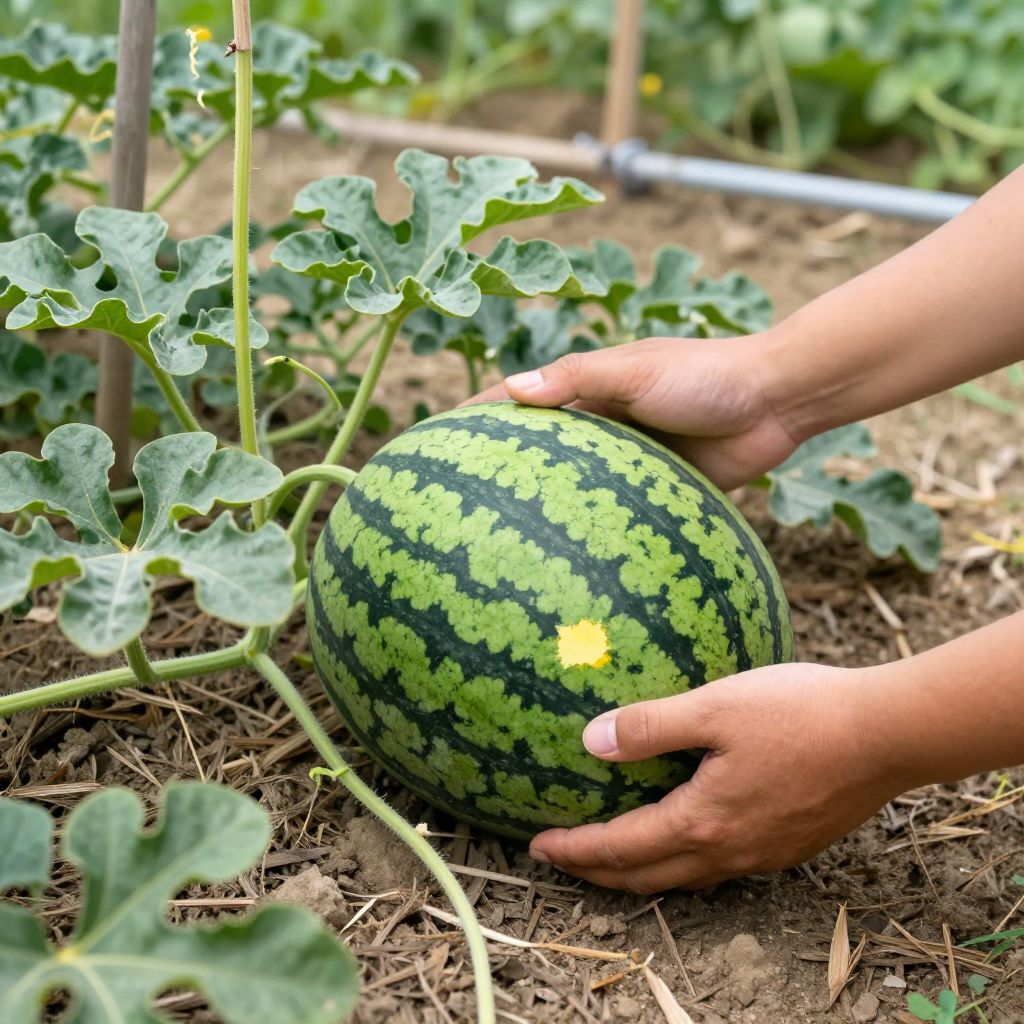
Wondering when to pick Sugar Baby watermelon so you don’t harvest too early or let it get mealy on the vine? The right timing matters more than the calendar, because this small, fast-maturing melon changes quickly once it’s ripe.
With a few simple checks, you can harvest at peak sweetness and avoid the guesswork. Sugar Baby watermelons are one of the easiest melons for home gardeners to time correctly once you know what to look for.
When to pick Sugar Baby watermelon?
Pick Sugar Baby watermelon when the fruit has fully matured on the vine: the nearest tendril has dried, the underside has turned creamy yellow, and the rind looks dull rather than shiny. Most fruits are ready about 70 to 90 days after planting, but visual ripeness signs are more reliable than the calendar.
How to tell Sugar Baby watermelon is ripe
Watermelons do not ripen much after harvest, so you want to pick at the right moment. Sugar Baby is a small, round watermelon, and ripe fruit usually shows several signs at once.
Check these ripeness clues together
- Curly tendril near the fruit dries up. Look at the small curly vine closest to the melon. When it turns brown and dry, that is one of the best signs.
- Ground spot changes color. The part resting on the soil should be creamy yellow to deep yellow, not white or pale green.
- Rind loses its shine. A ripe Sugar Baby often looks duller and less glossy than an immature melon.
- Skin resists scratching. Press a fingernail lightly into the rind. A ripe melon is harder to mark.
- Fruit size is full for the variety. Sugar Baby is naturally smaller than many watermelons, so do not expect a giant fruit. Size alone is not enough to judge ripeness.
What the calendar can and cannot tell you
Seed packets often list days to maturity, but weather, soil warmth, watering, and sunlight can shift that timing. In cool summers, fruit may take longer; in hot, sunny weather, it may mature sooner. Use the calendar as a rough guide, then rely on the vine and rind signals.
Seasonal timing for harvesting Sugar Baby watermelon
The best harvest window depends on when you planted and how your season is progressing. In many gardens, Sugar Baby ripens in mid to late summer, but local climate matters more than a fixed date.
What changes through the season
- Early season: Fruit is still swelling, and the rind stays glossy and easier to scratch.
- Midseason: The melon fills out, the ground spot begins to yellow, and the vine starts to slow down.
- Late season: Tendrils dry, the rind dulls, and flavor is usually at its best if the fruit has been developing in warm weather.
If your area has short summers, you may need to start seeds early indoors or choose a sheltered, warm planting site. In cooler climates, ripening can lag if nights stay cold or the plant has not received enough direct sun.
Growing conditions that affect ripening
Healthy plants are more likely to ripen fruit on time. Poor growing conditions can delay maturity, reduce sweetness, or cause fruit to stop sizing up before it is ready.
Sunlight and warmth
Sugar Baby watermelon needs full sun. Aim for at least 6 to 8 hours of direct sunlight daily, and more is better in cooler regions. Warm soil helps the plant establish quickly and set fruit well.
Soil and drainage
Watermelons prefer fertile, well-drained soil. Heavy, soggy ground can slow growth and increase disease risk. If your soil is clay-heavy, mix in compost to improve structure and drainage rather than planting in a low, wet spot.
Watering
Keep plants evenly moist while they are growing and setting fruit, but avoid constantly wet soil. Irregular watering can stress the plant and affect fruit quality. Once fruit is close to maturity, many gardeners reduce watering slightly to help flavor concentrate, but do not let the plant wilt badly.
Mulch and vine health
A layer of mulch can help hold soil moisture and keep fruit cleaner. It also reduces weed competition, which matters because watermelon vines need room and resources to mature fruit properly.
How to harvest Sugar Baby watermelon correctly
Once you see the ripeness signs, harvest carefully. A ripe watermelon can bruise if dropped, and a slightly under-ripe one will not improve much off the vine.
- Choose a dry day if possible.
- Inspect the fruit and confirm several ripeness signs, not just one.
- Use clean pruners, a sharp knife, or garden shears.
- Cut the stem, leaving a short stub attached to the fruit.
- Lift the melon with both hands to avoid cracking or bruising it.
Do not twist or yank the fruit off the vine. That can damage the stem and nearby vines, and it may shorten storage life.
Common mistakes when deciding when to pick
Many gardeners harvest too early because they are worried about overripening, or too late because they wait for the melon to get larger.
Picking too early
An immature Sugar Baby may have pale flesh, weak sweetness, and a firmer texture. Once picked early, it will not become sweeter on the counter.
Waiting for a bigger melon
Size is not a reliable ripeness test. Sugar Baby has a naturally compact size, so a smaller melon can still be fully ripe if the vine signs are right.
Ignoring the ground spot
The yellow field spot is one of the easiest clues to miss. If the underside is still white or very pale, the melon often needs more time.
Checking only one fruit
On a vine with several melons, each fruit can mature at a slightly different pace. Check each one individually rather than assuming they are all ready at once.
What if the vine is declining before the melon is ripe?
Sometimes the plant starts yellowing, wilting, or showing disease before the fruit is fully mature. In that case, assess the fruit carefully and act fast.
- If the fruit shows strong ripeness signs, harvest it promptly.
- If the fruit is close but not quite ready, keep the plant healthy with consistent moisture and protect it from further stress.
- If disease is spreading quickly, remove severely affected foliage only if needed to reduce pressure on the plant, but avoid excessive pruning.
Common issues that can interfere with ripening include powdery mildew, cucumber beetles, and poor pollination. A fruit that formed poorly or stopped growing early may never reach ideal sweetness, even if left longer on the vine.
Can you grow Sugar Baby watermelon in containers?
Yes, if the container is large enough and the plant gets strong sun. Container-grown watermelons often need more attention to watering and fertility because the root zone dries out and depletes faster than in-ground beds.
Container basics
- Use a very large pot or grow bag with drainage holes.
- Choose a rich, well-draining potting mix.
- Place the container where it gets full sun.
- Support the vine’s spread with room around the pot.
Container plants may mature a little differently from in-ground plants, so the same ripeness checks still matter. Do not rely on days alone.
Simple harvest checklist
Before you cut, run through this quick checklist:
- The tendril nearest the fruit is brown and dry.
- The underside is creamy yellow.
- The rind looks dull, not shiny.
- The skin is hard to scratch with a fingernail.
- The fruit feels full-sized for Sugar Baby.
If most of these are true, your melon is likely ready. If only one sign is present, give it a little more time and check again in a day or two.
After harvest: what to do next
After picking, place the melon in a cool spot out of direct sun. If you are not eating it right away, handle it gently and keep it dry to help preserve quality.
For the next planting cycle, note when you planted, when the plant flowered, and when the first fruit ripened. Those notes help you fine-tune timing for your own climate and garden conditions.
If you want to improve next season’s harvest, read more about watermelon planting, vine care, and fruit ripening so you can match your growing conditions to the plant’s needs.