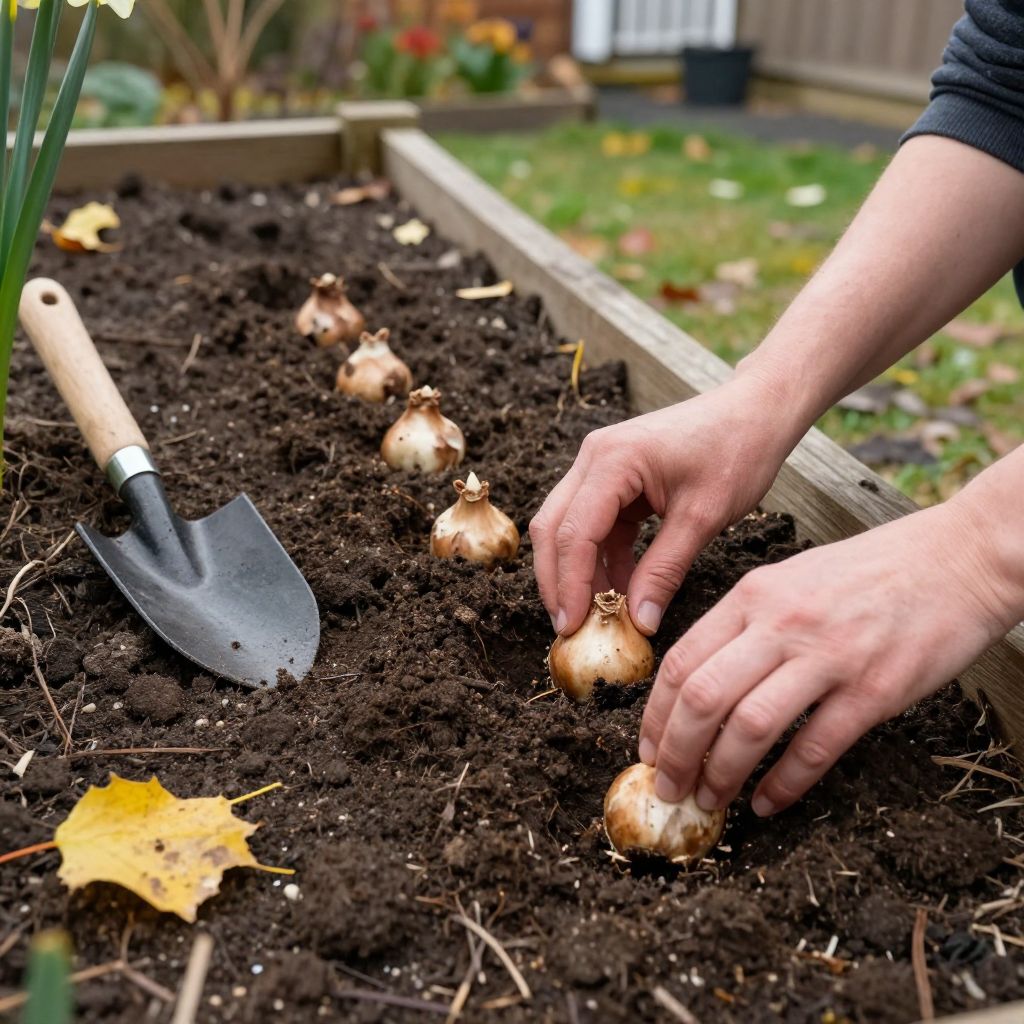
Wondering when to plant daffodil bulbs so they bloom well in spring? The best time is usually in fall, while the soil is still workable and before it freezes. Planting at the right time gives bulbs a cool period to root before winter, which leads to stronger growth and better flowering.
If you miss the ideal window, you can still plant in many climates as long as the ground is not frozen solid. The key is to give bulbs enough time to settle in before deep cold arrives, and to choose a site with good drainage and the right amount of sun.
When to plant daffodil bulbs?
Plant daffodil bulbs in fall, typically 2 to 4 weeks before the ground freezes in your area. In cooler regions, that often means early to mid-fall; in milder climates, it may be later in fall or even early winter. The goal is cool soil and enough time for roots to form before winter dormancy.
Why fall planting works best
Daffodils, or Narcissus, need a cold period to develop properly and bloom on schedule. Fall planting lets the bulbs root in while soil temperatures are still moderate, then they rest through winter and push up leaves and flowers in spring.
Planting too early in hot soil can encourage premature top growth, while planting too late may leave bulbs with weak roots. Weak roots often mean fewer flowers, smaller blooms, or delayed flowering the following year.
How to judge the right timing in your climate
- Cold climates: Plant in early fall, before the ground becomes cold and hard to work.
- Temperate climates: Mid-fall is often ideal, once summer heat has passed.
- Mild-winter climates: Plant later in fall or early winter if soil stays workable and well drained.
If you are unsure, watch your local weather rather than relying on a fixed calendar date. A good rule is to plant when daytime temperatures have cooled and the soil is no longer warm from summer.
How to plant daffodil bulbs for the best results
Choose a sunny or lightly shaded spot with soil that drains well. Daffodils dislike soggy ground, so avoid places where water pools after rain or where soil stays wet for long periods.
- Loosen the soil to a depth of at least 8 to 10 inches.
- Mix in compost if the soil is poor or heavy, but do not overdo it in very rich soil.
- Plant bulbs pointy side up, about 2 to 3 times as deep as the bulb is tall.
- Space bulbs a few inches apart so they have room to multiply.
- Water once after planting to settle the soil around the bulbs.
In many gardens, that means planting daffodils around 6 inches deep, though larger bulbs may need a little more depth and smaller ones a little less. When in doubt, deeper planting is usually safer than too shallow, especially in colder regions.
Soil and drainage matter more than perfection
Daffodils are adaptable, but they perform best in loose, moderately fertile soil. If your garden soil is heavy clay, improve drainage by adding compost and planting in raised beds or slightly elevated areas.
In very sandy soil, compost helps hold moisture and nutrients. The aim is a soil that stays evenly moist in winter and spring but never becomes waterlogged.
Should you plant daffodil bulbs in spring?
Spring is not the ideal time to plant daffodil bulbs, because they need cold weather to trigger proper growth and flowering. Bulbs planted in spring may produce leaves but often fail to bloom well that year.
If you find bulbs late in the season, you can still plant them if the ground is workable, but treat them as a long-term investment rather than expecting immediate flowers. In some cases, they may bloom the following spring after a full season of root development.
What to do after planting
Once planted, daffodil bulbs need very little attention. In most climates, natural rainfall is enough after the initial watering, especially during fall and winter.
Watering guidance
- Water after planting to settle the soil.
- After that, only water if conditions are unusually dry.
- Avoid keeping the planting area constantly wet.
Overwatering is a common mistake, especially in containers or heavy soil. Too much moisture can cause bulb rot before roots are fully established.
Mulching
A light mulch can help regulate soil temperature and reduce weed competition. Apply mulch after planting, but keep it from sitting directly on the bulbs if you are planting shallowly.
In colder areas, mulch also helps protect bulbs from freeze-thaw cycles. Remove or thin the mulch in spring if it becomes too thick for shoots to emerge easily.
Sunlight and site selection
Daffodils bloom best in full sun to light shade. A spot that gets morning sun and some afternoon shade can work well, especially in warmer climates where spring weather heats up quickly.
Under deciduous trees is often a good choice, because daffodils can grow and bloom before the trees leaf out. By the time the canopy fills in, the bulbs are already storing energy for next year.
Common mistakes to avoid
- Planting too late: Bulbs may not root well before winter.
- Planting in soggy soil: This increases the risk of rot.
- Planting too shallow: Bulbs may heave out of the soil or flower poorly.
- Cutting leaves too early: Leaves must stay until they yellow naturally.
- Overcrowding: Crowded clumps eventually bloom less.
One of the biggest mistakes is removing foliage too soon after flowering. The leaves feed the bulb for next year’s bloom, so let them fade naturally before tidying them away.
How to care for daffodils after bloom
After flowering, deadhead spent blooms so the plant does not waste energy making seed. Leave the foliage in place until it turns yellow or straw-colored.
If the clump becomes crowded after a few years, lift and divide bulbs in late summer or early fall when the foliage has died back. Replant them promptly at the proper depth.
Feeding daffodils
In many gardens, daffodils do not need much fertilizer if the soil is reasonably healthy. A light top-dressing of compost in fall or a balanced bulb fertilizer used according to label directions can support growth, especially in poor soil.
Avoid heavy feeding with high-nitrogen fertilizer, which can encourage leaves at the expense of flowers.
Pests and diseases that can affect bulbs
Daffodils are generally reliable and less appealing to deer and rodents than many other spring bulbs, which is one reason gardeners value them. Still, they can suffer from rot and a few pests if conditions are poor.
Watch for these problems
- Bulb rot: Often caused by wet, poorly drained soil.
- Narcissus bulb fly: Can damage bulbs in some areas.
- Leaf damage or distortion: May indicate disease or stress.
The best prevention is simple: buy firm, healthy bulbs, plant them in well-drained soil, and avoid overcrowding. Remove any soft, moldy, or damaged bulbs before planting.
Can you grow daffodils in containers?
Yes, daffodils grow well in pots if the container has drainage holes and the bulbs are planted in a free-draining potting mix. Container bulbs usually need a little more attention to moisture than in-ground bulbs because pots dry out and freeze more quickly.
Plant bulbs in fall just as you would in the garden, then keep the pot in a protected outdoor location. In colder climates, containers may need extra insulation or a sheltered spot to prevent repeated freezing and thawing.
Simple timing checklist
- Wait until summer heat has passed.
- Plant before the ground freezes hard.
- Choose a well-drained site with sun or light shade.
- Set bulbs at the proper depth and water once.
- Let foliage die back naturally after bloom.
Conclusion
If you are planning daffodils, the best time to plant daffodil bulbs is in fall, before the soil freezes and while roots can still develop. Focus on drainage, depth, and timing for your local climate, and your bulbs will have a much better chance of blooming beautifully next spring.
For more spring bulb planning, you may also find it helpful to read about spring bulb planting tips and how to care for bulbs after flowering.