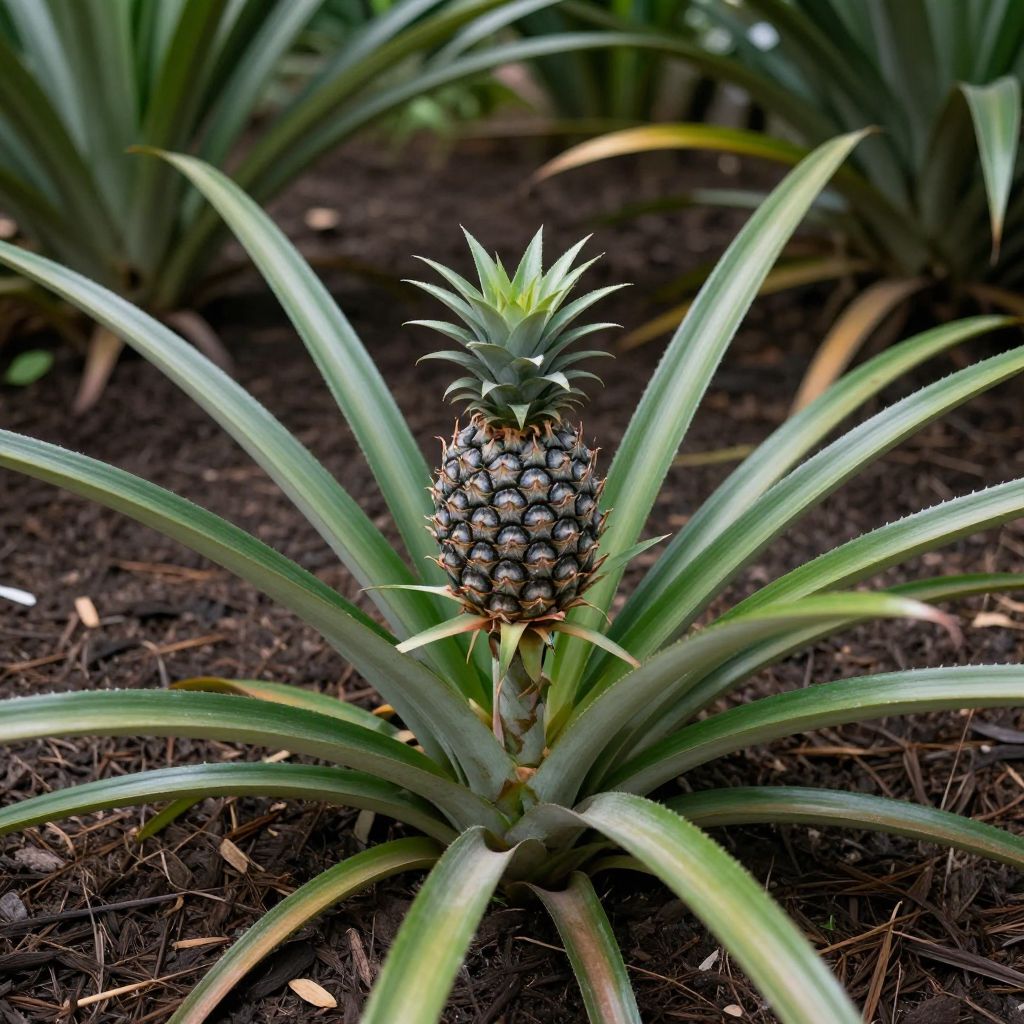
What do pineapples grow on? If you’ve only seen them in the grocery store, it’s easy to picture a tropical tree or a vine. In reality, pineapples grow on a low, spiky plant close to the ground, with one fruit developing from the center of a rosette of leaves.
That makes pineapple a very manageable plant for home gardeners, whether you grow it in a pot, greenhouse, or warm outdoor bed. The key is giving it bright light, excellent drainage, and enough warmth to keep it actively growing.
What do pineapples grow on?
Pineapples grow on a tropical perennial plant called Ananas comosus. The fruit forms on a short stalk that rises from the center of a leafy rosette, not on a tree or vine. Each plant usually produces one main fruit, then can be propagated from offsets, slips, or the leafy crown.
How pineapple plants grow
A pineapple plant starts as a compact rosette of stiff, sword-like leaves. Over time, the plant matures and sends up a central flower stalk that develops into the familiar pineapple fruit.
The fruit is actually made from many small flowers fused together. That is why pineapples have a textured, segmented surface rather than a smooth skin.
The plant structure you should know
- Crown: the leafy top of the fruit, which can be rooted to start a new plant.
- Rosette: the main body of the plant, made of long, pointed leaves.
- Central stalk: the stem that supports the flower and fruit.
- Offsets or pups: small side shoots that can be separated and planted.
Best growing conditions for pineapples
Pineapples are tropical plants that prefer warmth, sun, and fast-draining soil. They tolerate container growing well, which is helpful if your climate is too cool for year-round outdoor planting.
Light
Give pineapples full sun whenever possible. In very hot climates, a little afternoon shade can help prevent leaf scorch, especially for young plants or newly rooted crowns.
Temperature
Pineapples grow best in consistently warm conditions. They dislike frost and slow down in cool weather, so outdoor planting only makes sense where temperatures stay mild for most of the year.
Soil
Use loose, well-draining soil that does not stay soggy after watering. A sandy or gritty mix is better than heavy clay, which can lead to root rot.
- Add compost to improve structure, but do not make the mix overly rich or heavy.
- If growing in a pot, choose a container with drainage holes.
- A slightly acidic soil is generally suitable, but drainage matters more than exact pH for most home gardeners.
How to plant a pineapple from the crown
One of the easiest ways to grow a pineapple plant is from the leafy crown of a store-bought fruit. This does not guarantee fast fruiting, but it is a simple and satisfying way to start a plant at home.
- Twist or cut off the crown from a ripe pineapple.
- Remove a few of the lowest leaves to expose a short section of stem.
- Let the crown dry for a day or two so the cut end can callus.
- Place it in a small pot of well-draining mix, or root it in water briefly before potting up.
- Keep the mix lightly moist, not wet, until roots form.
Important: do not bury the leafy crown too deeply. The exposed stem should be just below the soil surface, while the leaves stay above it.
Container growing tips
Pineapples are excellent container plants because they do not need a huge root system. A pot that is too large can hold excess moisture, so start with a modest container and repot only as needed.
- Use a pot with drainage holes.
- Choose a gritty potting mix made for fast drainage.
- Place the plant where it gets strong light for much of the day.
- Rotate the pot occasionally so the plant grows evenly.
Watering and feeding pineapple plants
Pineapples need regular moisture while they are establishing, but they do not like wet feet. Water deeply, then let the top layer of soil dry slightly before watering again.
For established plants, it is better to water less often and more carefully than to keep the soil constantly damp. Overwatering is one of the most common causes of failure.
Feeding
A light, balanced feeding routine is usually enough. Heavy fertilizing can push leafy growth at the expense of fruiting and may stress young plants.
- Use compost sparingly in the planting mix.
- Feed container plants lightly during active growth if the plant looks pale or growth is slow.
- Avoid piling fertilizer against the stem or crown.
When and how pineapples fruit
Pineapples are slow compared with many home garden crops. A healthy plant must mature before it flowers, and the timing depends heavily on warmth, light, and overall vigor.
Once flowering begins, the fruit develops over time from the center of the plant. After harvest, the main plant usually declines gradually, but it often produces pups that can be grown into new plants.
How to know a pineapple is ready
- The fruit develops a fuller shape and strong color for its type.
- The fragrance becomes noticeable as it ripens.
- The fruit gives slightly when gently pressed, but should not feel mushy.
Do not pick too early if you want the best flavor. Pineapples do not ripen much after harvest, so timing matters.
Pruning, maintenance, and cleanup
Pineapple plants do not need complicated pruning, but they do benefit from basic cleanup. Remove dead or damaged leaves as needed, and keep the base free of debris that could trap moisture.
If the plant produces pups, you can leave them in place for a fuller clump or remove and pot them separately once they are large enough to handle.
Simple maintenance routine
- Check the plant regularly for soggy soil.
- Trim only dead or badly damaged leaves.
- Watch for pups forming around the base.
- Keep the growing area free of weeds and fallen plant matter.
Common pineapple growing problems
Most pineapple problems come from too much water, too little light, or cold stress. If you catch issues early, the plant often recovers well.
Yellowing leaves
Yellow leaves can indicate overwatering, poor drainage, nutrient stress, or natural aging of older leaves. Check the soil first. If it stays wet for long periods, improve drainage before doing anything else.
Soft or rotting base
A soft base usually means rot. This is often caused by water sitting around the crown or roots. Remove affected tissue if possible, let the plant dry slightly, and adjust watering and soil drainage immediately.
Slow growth
Slow growth is common in cool weather or low light. Move the plant to a brighter location and keep temperatures as warm and stable as your climate allows.
Pests
Pineapples can occasionally attract mealybugs, scale, or other sap-sucking pests, especially indoors or in sheltered spots. Inspect leaf bases and undersides regularly.
- Wipe small infestations off by hand.
- Isolate affected plants from others.
- Improve airflow around the plant.
How to propagate new pineapple plants
After the main fruit is harvested, the most useful next step is propagation. Pineapples commonly produce offsets, also called pups, which are often easier and faster to grow than starting from seed.
You can also root the crown from a harvested fruit. This is a good beginner project, especially if you want to grow pineapples in containers.
Best propagation options
- Crown: easiest to find, good for beginners.
- Pups: often the strongest choice once the parent plant matures.
- Slips: side shoots that can be removed and planted.
Wait until pups are large enough to handle before separating them. Tiny shoots are more likely to fail if moved too soon.
Indoor vs outdoor pineapple growing
Indoor pineapple growing works well if you can provide bright light and warmth. A sunny window, conservatory, or greenhouse is often better than a dim room.
Outdoor growing is best in frost-free climates or during the warm season in cooler regions. If nights turn chilly, move container plants indoors or protect them from cold stress.
Choose the right setup for your climate
- Warm climates: grow in the ground or in large containers with excellent drainage.
- Cool climates: grow in pots so you can move plants as temperatures change.
- Low-light homes: expect slower growth and less reliable fruiting.
Common mistakes to avoid
Many first-time growers treat pineapple like a thirsty tropical houseplant and keep it too wet. That is usually the fastest way to lose it.
- Do not plant in heavy, poorly drained soil.
- Do not overwater a newly planted crown.
- Do not expect fast fruit from a young plant.
- Do not expose the plant to frost or prolonged cold.
- Do not crowd the crown under soil or mulch.
Final takeaways
Pineapples grow on a low, tropical plant, not on a tree, and they are easier to grow than many gardeners expect if you focus on warmth, sun, and drainage. Start with a healthy crown or pup, keep the soil lightly moist, and be patient while the plant matures.
If you want to keep learning about tropical container plants and fruiting care, look for more guides on container fruit growing and how to root plant crowns and offsets.