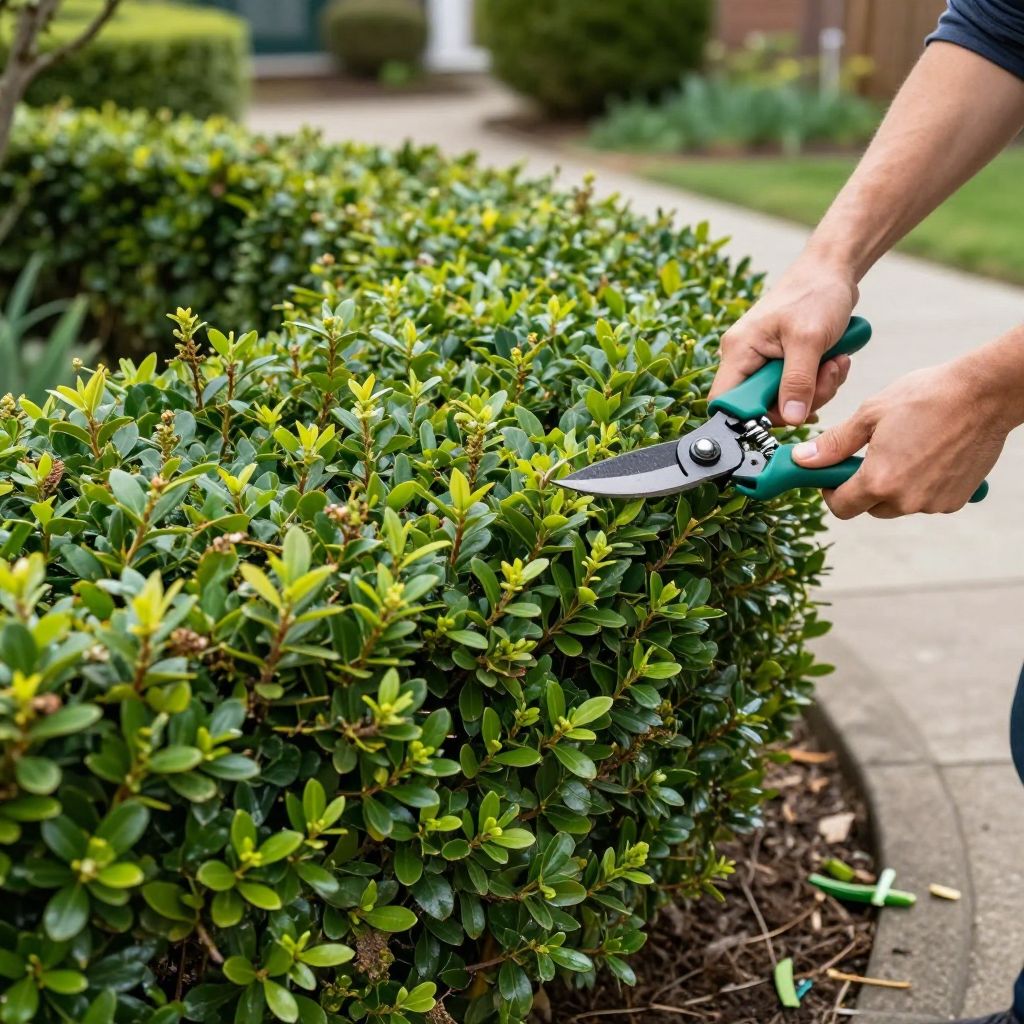
Wondering when to trim boxwoods without ruining their shape or stressing the plant? The best timing depends on how hard you want to prune and how fast your boxwood grows in your climate. In general, light shaping is safest in late spring or early summer, while heavier pruning is best done before active growth begins or spread over more than one season.
Boxwoods are forgiving, but they respond best when you trim with a purpose. A little planning helps you keep dense, healthy foliage, avoid winter damage, and prevent the thin, bare look that can happen after a hard cutback.
When to trim boxwoods?
The best time to trim boxwoods is usually late spring to early summer, after the first flush of growth has hardened off. You can also do a light touch-up in mid to late summer if needed. Avoid major pruning in late fall, since tender new growth may not harden before cold weather.
Best timing for boxwood pruning
Boxwoods can be trimmed at different times depending on your goal. The main rule is simple: trim when the plant is actively growing enough to recover, but not so late that new growth is exposed to stress.
Late spring to early summer
This is the most reliable window for most home gardeners. By then, the plant has pushed out fresh growth, and you can shape it without encouraging a long, weak flush before winter.
For many boxwoods, this is the ideal time for:
- Light shaping
- Maintaining formal hedges
- Removing stray shoots
- Making small size reductions
Mid to late summer
A second light trim can be useful if your boxwood grows quickly or if you want crisp edges on a hedge. Keep it light, though. The later in the season you trim, the more important it is to avoid encouraging soft growth that may be damaged by early frost.
Late winter to early spring
This can be a good time for structural pruning or a moderate shaping cut in regions with cold winters, especially before new growth starts. It is also easier to see the plant’s framework when leaves are sparse or growth is still dormant.
However, avoid pruning too early during a warm spell if your area still gets hard freezes. New cuts and emerging buds can be damaged by sudden cold snaps.
When not to trim boxwoods
Try to avoid these situations:
- Late fall trimming, which can trigger tender growth before winter
- Pruning during drought stress, when the plant is already struggling
- Heavy pruning in extreme heat, which can scorch exposed inner foliage
- Shearing too often, which can create a dense outer shell and sparse interior
How much should you trim?
For routine maintenance, remove only the soft new growth at the tips. A light trim of 1 to 3 inches is often enough for shaping. If you need to reduce size, do it gradually over multiple seasons rather than cutting the plant back severely all at once.
Boxwoods do not always respond well to hard renovation pruning. Some types can push new growth from older wood, but recovery is slower and less predictable than with a light, regular trim.
Light shaping vs. hard pruning
- Light shaping: Best for healthy, established plants and formal hedges.
- Moderate reduction: Best done slowly over time, especially on older shrubs.
- Hard pruning: Use only when necessary, and expect a longer recovery period.
How to trim boxwoods correctly
Good pruning technique matters as much as timing. Boxwoods stay healthier and fuller when you trim them in a way that lets light reach the whole plant.
Step-by-step pruning method
- Start with clean tools. Use sharp hand pruners or hedge shears, and disinfect blades if the plant has had disease issues.
- Remove dead or damaged branches first. Cut back to healthy wood or to a branching point.
- Shape the plant lightly. Snip back the longest shoots to keep the outline even.
- Keep the base slightly wider than the top. This helps sunlight reach lower leaves and prevents bare bottoms.
- Step back often. Check the overall shape from a distance so you do not overcut one side.
Tools that work best
- Hand pruners: Best for selective cuts and small shrubs
- Hedge shears: Useful for formal hedges and quick shaping
- Loppers: Helpful for thicker stems on older plants
For finer control, hand pruning is often better than shearing. Shearing creates a very neat surface, but repeated shearing can leave the outer layer dense while the interior becomes thin and woody.
Pruning boxwoods by plant type and purpose
Not all boxwoods are maintained the same way. The right timing and method depend on whether you are growing a clipped hedge, a rounded foundation shrub, or a more natural-looking specimen plant.
Formal hedges
Trim formal hedges more often, but lightly. Many gardeners shear them once or twice during the growing season to preserve a crisp line. The key is to stay on top of growth rather than waiting until the hedge is overgrown.
Individual shrubs
Single boxwood shrubs usually look best with selective pruning rather than repeated shearing. Remove a few long shoots and thin out crowded growth if needed, while keeping the natural form intact.
Older, overgrown boxwoods
If an older boxwood has become leggy or too large, reduce it gradually. Remove no more than about one-third of the plant in a season, and focus on thinning and shaping rather than drastic cutting.
Growing conditions that affect pruning
Boxwoods recover best when they are growing in suitable conditions. Pruning is less stressful if the plant already has good soil, drainage, and moisture balance.
Soil and drainage
Boxwoods prefer well-drained soil. Waterlogged roots make pruning stress worse and can lead to yellowing, decline, or root problems. If your soil stays wet after rain, improve drainage before relying on pruning to fix the plant’s appearance.
Watering after trimming
After pruning, water deeply if the soil is dry, especially during warm weather. Avoid overwatering, but do not let the plant dry out completely while it is pushing new growth.
Sun and exposure
Most boxwoods grow well in partial shade to full sun, depending on the variety and climate. In hot regions, afternoon shade can reduce stress after trimming. In colder or windy sites, exposed plants may need more careful timing to avoid winter burn.
Common mistakes to avoid
Many pruning problems come from trimming boxwoods at the wrong time or cutting too much at once. A few simple habits can protect the plant’s shape and health.
- Don’t shear too late in the season. Late cuts can produce soft growth that winter may damage.
- Don’t cut into bare old wood unless necessary. Some boxwoods backbud poorly from leafless stems.
- Don’t make the top wider than the base. That blocks light and causes thinning below.
- Don’t prune a stressed plant. Wait if it is drought-stressed, newly planted, or recovering from disease.
- Don’t remove too much at once. Gradual pruning is safer and looks better.
Signs your boxwood needs trimming
You do not need to prune boxwoods on a rigid calendar. Watch the plant itself and trim when you see clear signs that it needs shaping.
- New shoots are sticking out beyond the desired outline
- The hedge is losing its crisp shape
- Branches are crossing or crowding the center
- The plant is becoming too tall or too wide for the space
- Dead tips or winter-damaged growth need cleanup
If the plant still looks balanced and compact, you may only need a light touch-up, or none at all.
What to do after pruning
After trimming, give the plant basic support rather than extra stress. Keep the root zone evenly moist, mulch lightly if needed, and monitor for signs of scorch or decline over the next few weeks.
- Check moisture during dry spells
- Keep mulch a few inches away from the stems
- Watch for browning, leaf drop, or dieback
- Clean up clippings to improve airflow and appearance
If you notice widespread browning after pruning, the cause may be drought, winter injury, poor drainage, or a pruning cut made too late in the season rather than the trim itself.
Simple pruning schedule to follow
If you want an easy plan, use this general approach and adjust for your climate:
- Late winter to early spring: Remove dead wood and make light structural cuts if needed.
- Late spring to early summer: Do the main shaping trim after the first flush of growth hardens.
- Mid to late summer: Make a light touch-up only if the plant needs it.
- Fall: Stop major pruning and let the plant harden off for winter.
In warmer climates, the window may stretch longer. In colder climates, stop earlier so the plant has time to settle before frost.
Conclusion
If you are asking when to trim boxwoods, aim for late spring to early summer for most shaping, with only light touch-ups later in the season. Prune gradually, keep the base slightly wider than the top, and avoid late-fall cuts. With the right timing, your boxwoods will stay fuller, healthier, and easier to maintain.
For more practical shrub care, you may also want to read about boxwood pruning basics and general shrub pruning tips.