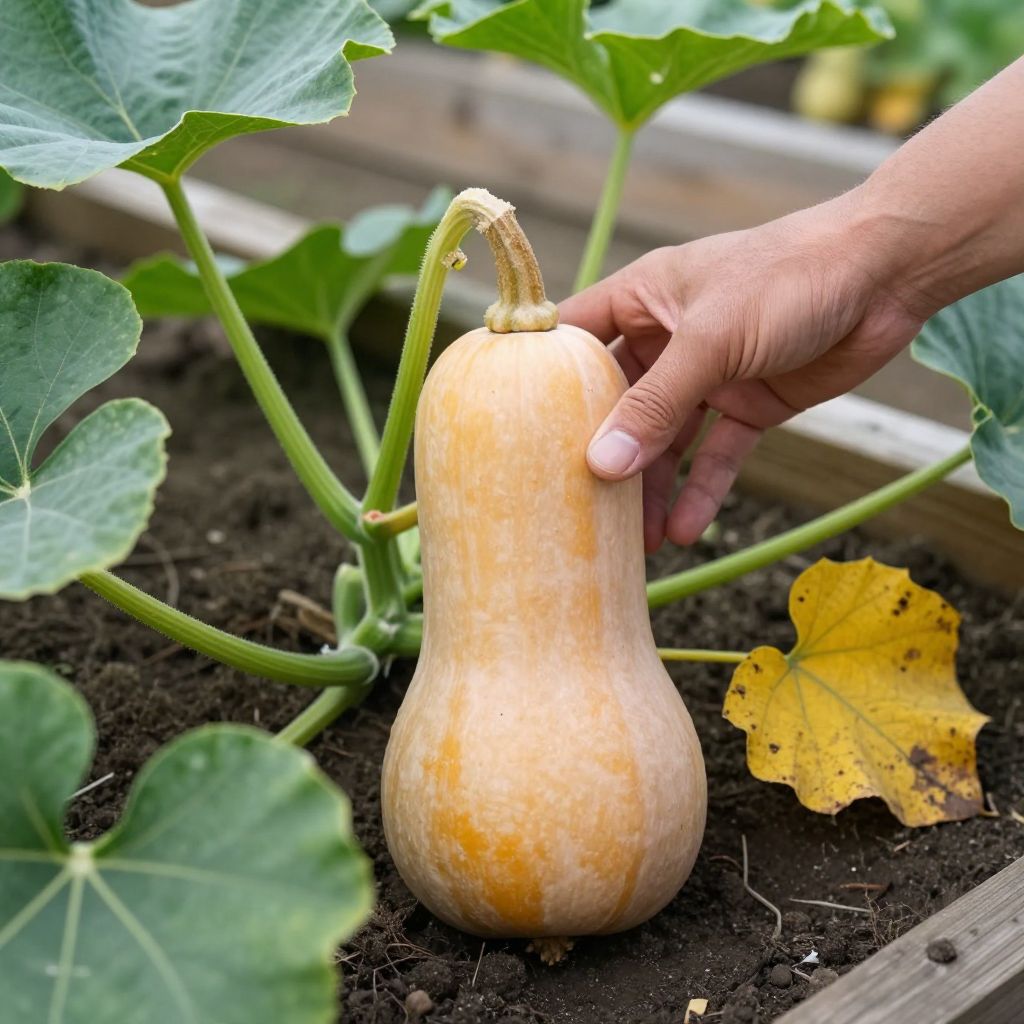
Wondering when to pick butternut squash so it tastes sweet, stores well, and doesn’t rot on the vine? The best harvest time is usually in late summer to fall, once the skin is fully hardened, the color has deepened, and the stem has begun to dry. Picking too early gives bland, watery squash; waiting too long risks frost damage.
Because weather and planting time vary, the right harvest window depends on your local climate and the maturity of the fruit. A few simple checks will tell you when your butternut squash is ready, and how to harvest and cure it for the best flavor and storage life.
When To Pick Butternut Squash?
Pick butternut squash when the rind is hard enough that you cannot easily dent it with a fingernail, the skin has turned a deep tan, and the stem is dry and corky. Most fruits are ready in about 85 to 110 days from planting, but weather, variety, and growing conditions can shift that timing.
How to tell butternut squash is ready
Don’t rely on calendar dates alone. Look for several ripeness signs together, because one cue by itself can be misleading.
Ripeness signs to check
- Color: The squash should be a uniform tan or buff color, not mostly green.
- Skin firmness: Press a fingernail into the rind. A mature squash resists puncture.
- Stem condition: The stem should be dry, hard, and starting to cork over.
- Size and shape: The squash should look full-sized for its variety, with a solid, heavy feel.
- Vine condition: The vine may begin to yellow and decline as fruit finishes maturing.
A hard rind is one of the most reliable signs. If you can scratch the skin easily, the squash is usually not fully mature yet, even if it looks close.
What if the squash is partly green?
Light green shoulders or patches can happen, especially in cooler weather or on fruits that matured unevenly. If the squash is otherwise large and the skin is firm, you can still harvest it and let it cure indoors. If the rind is soft or the stem is still very green, give it more time if frost is not near.
Seasonal timing: late summer, fall, and frost
Butternut squash is a warm-season crop, so harvest timing usually falls in late summer through fall. In cooler regions, fruit may need to come off before the first hard frost. In longer, warmer seasons, squash can stay on the vine longer to finish coloring and sweetening.
How frost changes the timing
Butternut squash is not frost-tolerant. A light frost can damage leaves, and a hard freeze can ruin fruit in storage. If frost is forecast, harvest even slightly immature squash rather than risk losing them.
- Watch local overnight temperatures as autumn approaches.
- Harvest before repeated nights near freezing.
- If a frost has already touched the vines, pick all sound fruit immediately.
Why local conditions matter
Cool summers, short seasons, poor pollination, or nutrient stress can slow maturity. In hot climates, vines may grow fast but still need enough time for the fruit to harden properly. Use the plant’s condition, not just the date, to guide harvest.
Step-by-step: how to harvest butternut squash
Harvest carefully to avoid bruising the rind or tearing the stem. Damaged fruit stores poorly, even if it looks fine at first.
- Choose a dry day if possible, since wet fruit is more likely to develop storage problems.
- Inspect the squash for full color, hard skin, and a dry stem.
- Use clean pruners, garden snips, or a sharp knife to cut the stem.
- Leave 1 to 2 inches of stem attached to the fruit.
- Handle the squash gently and avoid lifting it by the stem alone.
- Set harvested squash in a single layer in a warm, dry spot for curing.
Never twist or yank the fruit off the vine. A broken stem creates an entry point for rot and shortens storage life.
Should you pick butternut squash early?
Sometimes you have to. If frost, heavy rain, disease, or vine decline is threatening the crop, it is better to harvest slightly early than lose the squash entirely. Mature-but-not-fully-cured fruit can still be edible after a short curing period.
Signs it may be okay to harvest a little early
- The squash is close to full size.
- The skin is mostly tan and firm.
- The stem is starting to dry.
- The fruit sounds solid when tapped, not hollow and soft.
Early-picked squash may not store as long and may have less developed sweetness. Cure it well and use those fruits first.
How to cure butternut squash after harvest
Curing helps the rind harden, minor surface scratches heal, and flavor improve. It is one of the most useful steps if you want better storage life.
Basic curing conditions
- Warm location: around room temperature or slightly warmer.
- Dry air and good airflow.
- Out of direct sun, which can overheat or scald the skin.
- Single layer, not piled on top of each other.
Leave the squash to cure for about 1 to 2 weeks, or longer if the rind still feels soft. Turn them gently once or twice so all sides dry evenly.
After curing
Store squash in a cool, dry place with airflow. Check regularly for soft spots, mold, or shriveling. Use any fruit with damaged skin or a broken stem first.
Growing conditions that affect harvest timing
Healthy vines produce better-ripened squash. If your plants struggle during the season, harvest quality and timing can suffer.
Sunlight and heat
Butternut squash needs full sun to grow and ripen well. In partial shade, vines may survive but fruit often matures slowly and may stay pale or undersized.
Soil and drainage
Plant in fertile, well-drained soil enriched with compost. Poor drainage can stress roots and increase disease pressure, which may force an early harvest before fruit is fully mature.
Watering
Consistent moisture helps vines grow steadily, especially while flowering and sizing up fruit. Irregular watering can lead to stress, poor fruit fill, or blossom-end issues that reduce harvest quality.
Feeding and vine growth
Too much nitrogen can push leafy growth at the expense of fruit ripening. If vines are lush but squash stays small or green late in the season, the plant may be overfed or not getting enough time and sun.
Common problems that delay ripening
Several garden issues can make it harder to know when to harvest or can slow maturity enough that the fruit never fully finishes on the vine.
Poor pollination
If flowers were not well pollinated, fruit may be misshapen, small, or abort early. Well-formed squash that actually fills out is more likely to ripen properly.
Powdery mildew and vine decline
Late-season leaf diseases can weaken plants before fruit is fully mature. If the vines are collapsing from disease, inspect the squash closely and harvest sound fruit promptly.
Squash bugs and vine borers
These pests can damage stems and reduce the plant’s ability to finish ripening fruit. If the vine is declining fast, pick any nearly mature squash before the plant fails completely.
What not to do when harvesting butternut squash
- Do not harvest based on size alone.
- Do not pick when the rind is still soft if you can wait safely.
- Do not leave fruit on the ground in wet conditions after cutting.
- Do not store squash with broken stems or visible rot.
- Do not assume all fruits on one vine mature at exactly the same time.
It is common for larger, more exposed fruits to ripen first while smaller ones need more time. Check each squash individually.
Quick harvest checklist
Before you cut, confirm these points:
- The skin is tan and not mostly green.
- Your fingernail cannot easily pierce the rind.
- The stem is dry or corky.
- Frost is not imminent, or you are harvesting to protect the crop.
- You have clean cutting tools ready.
Conclusion: the best time to pick is when the squash tells you it is ready
When to pick butternut squash comes down to maturity signs, not just the calendar. Check the rind, stem, color, and weather forecast, then harvest with a clean cut and cure the fruit before storage. If you want to improve next season’s harvest, keep notes on planting date, first fruit set, and harvest timing for your garden.
For more practical seasonal growing help, you may also want to read about how to cure winter squash for storage and common squash pests and how to manage them.