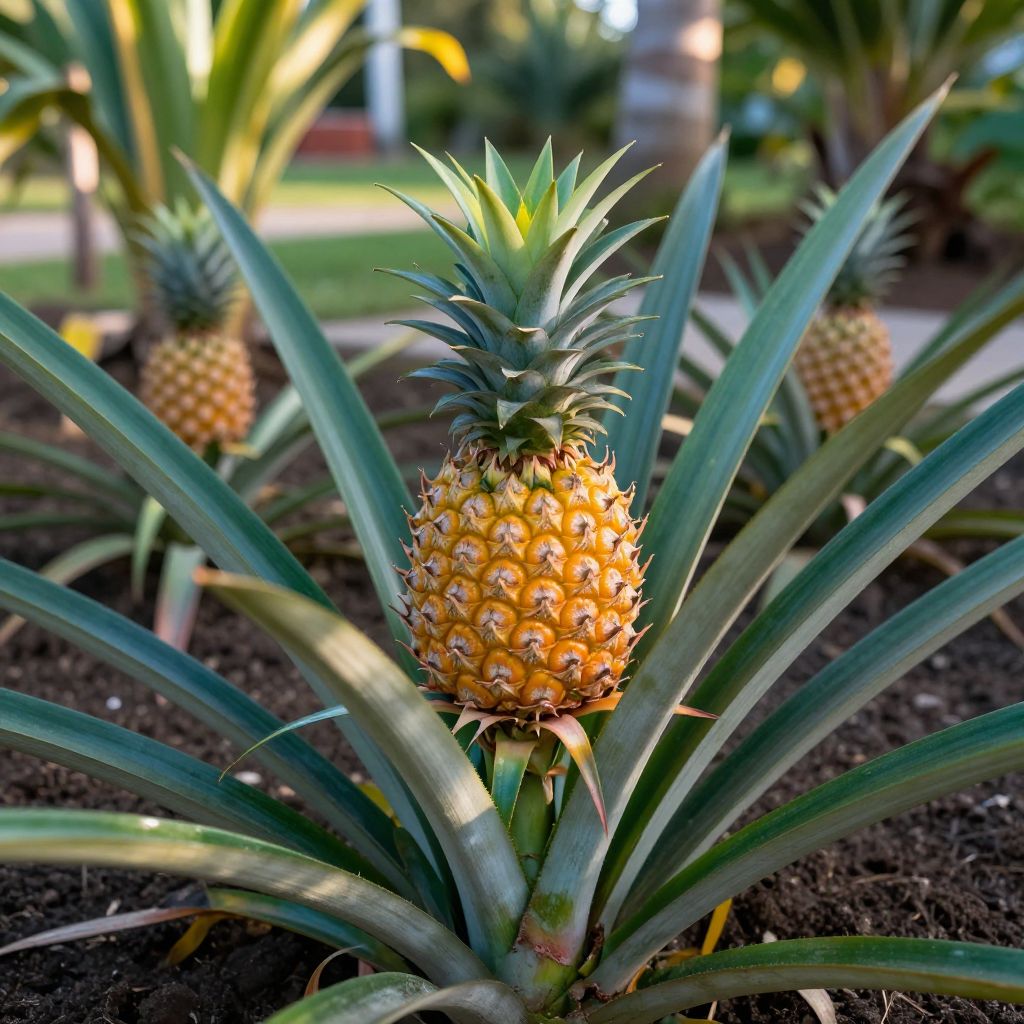
When are pineapples in season? If you grow them, the answer depends less on a calendar date and more on plant maturity, warmth, and how evenly the fruit develops. Pineapples do not ripen all at once in every climate, so the “season” is usually the period when the fruit is fully colored, fragrant, and easy to harvest.
For home gardeners, that means learning to read the plant rather than relying on a fixed month. With the right light, warmth, drainage, and patience, a pineapple plant can produce a sweet fruit at the right stage for your local conditions.
When are pineapples in season?
Pineapples are in season when the fruit has reached full size, shows a golden-yellow color from the base upward, and gives off a sweet aroma. In warm tropical and subtropical climates, harvest can happen year-round, but many homegrown pineapples ripen most often in late spring through summer, depending on planting time and temperature.
How pineapple season works in the garden
Pineapple plants (Ananas comosus) do not behave like many temperate fruits with a short, predictable harvest window. A single plant usually flowers once, then matures its fruit over several months.
Because of that, your “season” is really the ripening period after flowering. In warm climates, different plants may flower at different times, so harvest can be staggered across much of the year.
What affects ripening time
- Temperature: Pineapples grow best in consistently warm conditions.
- Sunlight: More light generally supports stronger growth and better fruit development.
- Plant age: Young plants need time to mature before flowering.
- Water management: Too much water slows growth and can cause rot.
- Local climate: Cooler nights and seasonal changes can delay ripening.
How to tell when a pineapple is ready to harvest
Do not judge ripeness by color alone. A pineapple can begin to yellow before it is fully sweet, especially in warm weather. Instead, use several signs together.
Ripeness signs to watch for
- Color change: The fruit shifts from green to golden-yellow, usually starting at the base.
- Fragrance: A ripe fruit smells sweet at the base.
- Fruit eyes: The “eyes” become flatter and the fruit looks plumper.
- Firm but slightly yielding texture: It should not feel hard as a rock or mushy.
- Easy detachment: A ripe pineapple may twist off with a gentle turn, depending on the variety and plant.
If you harvest too early, the fruit will not become sweeter after picking. Pineapples can soften a little off the plant, but they do not truly ripen like bananas or tomatoes.
Best growing conditions for homegrown pineapples
If you want your pineapple to ripen on time, the plant needs steady growth from the start. Slow, stressed plants often delay flowering and produce smaller fruit.
Sunlight and temperature
Pineapples prefer full sun in most climates, though very hot inland areas may benefit from light afternoon shade. They grow best in warm conditions and are sensitive to frost, so outdoor planting is only suitable where winters stay mild.
Indoors or in containers, place the plant in the brightest window you have or move it outdoors during warm weather if conditions allow.
Soil and drainage
Good drainage is essential. Pineapples dislike soggy soil and are prone to root and crown rot when water sits around the base.
- Use a loose, well-draining potting mix for containers.
- In the ground, improve heavy soil with compost and coarse material to open it up.
- A slightly acidic to near-neutral soil is usually suitable.
Drainage matters more than rich soil. A pineapple in wet, compacted ground will usually struggle more than one in moderately fertile, airy soil.
Planting and growing pineapples for a better harvest window
You can grow pineapples from the crown of a store-bought fruit, slips, suckers, or pups from an existing plant. For home gardeners, pups and suckers often give the most reliable start because they are already part of a mature plant’s growth cycle.
Simple propagation steps
- Choose a healthy crown, pup, or sucker with firm leaves and no rot.
- Let the cut end dry for a day or two before planting.
- Plant in a well-draining mix or prepared garden bed.
- Keep the plant warm and lightly moist while roots establish.
- Wait patiently; flowering usually comes much later than many beginners expect.
New plants often take many months to a few years to flower, depending on growing conditions and the type of planting material used. That means your first harvest season may be far off, but steady care improves the odds of a good crop.
Watering and feeding without causing problems
Pineapples like even moisture during active growth, but they should never sit in water. Overwatering is one of the most common mistakes, especially in pots.
Practical watering guidance
- Water when the top layer of soil begins to dry.
- Water deeply, then let excess drain away.
- Reduce watering in cool weather or when growth slows.
- Avoid watering the crown late in the day if air circulation is poor.
Feeding should be moderate. Too much nitrogen can produce lush leaves but delay flowering and fruiting. Compost or a balanced, light feeding approach is usually better than heavy fertilizing.
Common pests and diseases that affect harvest timing
Problems with pests or disease can delay ripening, reduce fruit quality, or cause the plant to decline before harvest. Catching issues early helps keep the fruit on track.
Watch for these problems
- Mealybugs and scale: These sap-sucking pests weaken plants and may attract ants.
- Root rot: Often caused by poor drainage or overwatering.
- Crown rot: Can occur if water sits in the center of the plant or if conditions stay too wet.
- Sun scorch: Leaves or fruit may bleach or burn in intense heat without acclimation.
Remove badly affected leaves, improve airflow, and correct watering habits first. If a container plant is declining, check the roots and repot into fresh, free-draining mix if needed.
How to harvest at the right time
The best harvest time is when the fruit is fully colored, fragrant, and still firm. If you are unsure, it is usually better to wait a little longer than to pick too early.
Harvesting steps
- Check the base for a sweet smell.
- Look for a noticeable yellow-gold color, not just a hint of change.
- Use clean pruners or a sharp knife if the fruit does not twist off easily.
- Handle the fruit gently to avoid bruising.
- Leave the plant in place if it may produce pups for future propagation.
After harvest, the mother plant often slows down or declines, but it may produce offsets around the base. These pups are useful for starting the next cycle of growth.
Seasonal care by climate type
Because pineapple season depends on your climate, it helps to adjust care to where you garden.
Warm tropical and subtropical gardens
In frost-free areas, pineapples can grow outdoors year-round. Your main task is protecting them from waterlogging during rainy periods and ensuring enough light for fruit development.
Cooler climates and container growing
In cooler regions, grow pineapples in pots so you can move them indoors before cold weather arrives. Keep them in the brightest possible spot and avoid cold drafts, which can slow growth and delay fruiting.
Common mistakes that delay pineapple season
- Planting in heavy, poorly drained soil.
- Keeping the plant too wet, especially in cool weather.
- Giving too much shade, which slows fruit development.
- Expecting fruit to ripen after picking.
- Using oversized fertilizer doses instead of steady, moderate care.
If your plant seems stuck, review the basics first: light, drainage, warmth, and root health. Those factors usually matter more than any special treatment.
Conclusion: the best way to know pineapple season in your garden
When are pineapples in season? In the garden, they are in season when the fruit itself tells you it is ready. Watch for color, fragrance, and firmness rather than relying on a fixed month, then adjust care to your climate so the plant can ripen well.
If you are planning your next tropical fruit project, it can also help to read more about container growing, drainage, and warm-climate fruit care so you can time your planting and harvest more confidently.