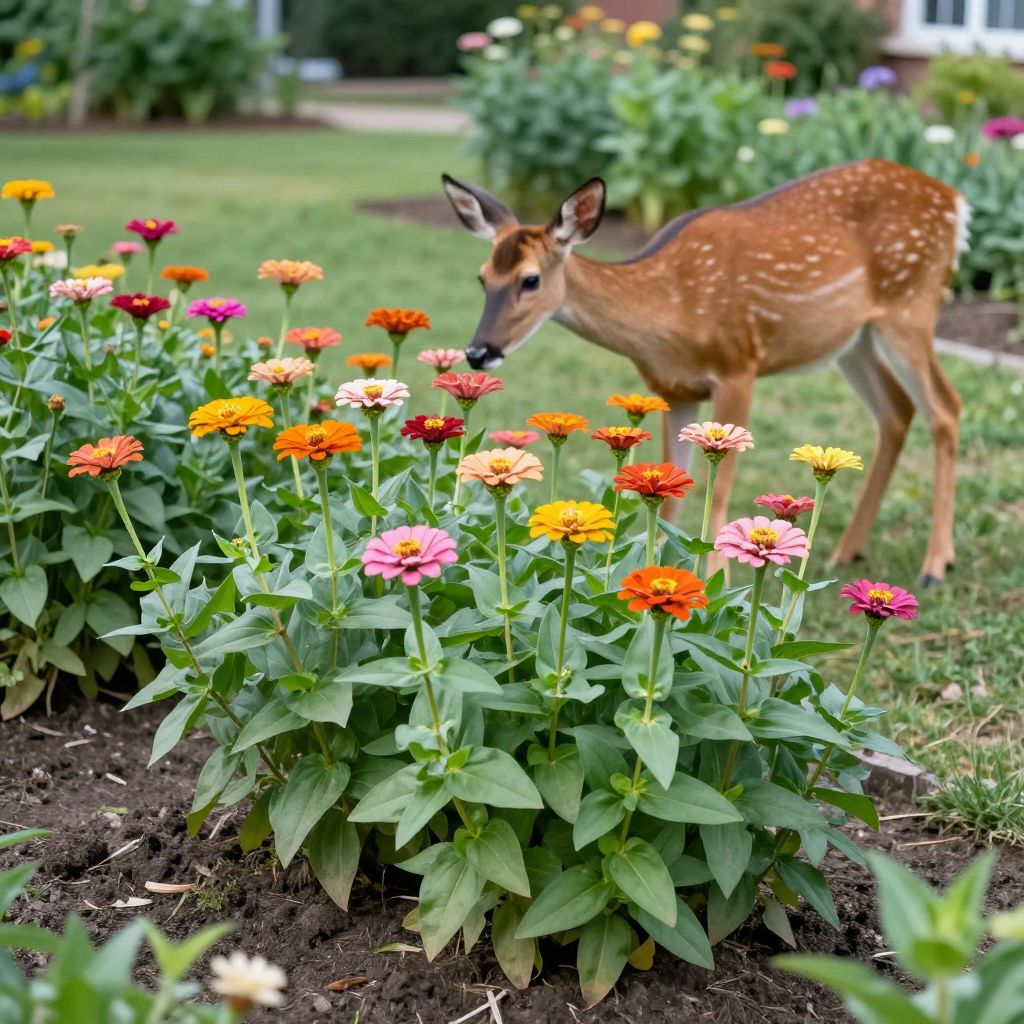
Wondering, “Are zinnias deer resistant?” If deer browse your garden, zinnias are often a smart flower to try. They are not deer-proof, but they are usually less tempting than many tender ornamentals, especially when plants are healthy and the garden has other food sources nearby.
That said, deer behavior changes with pressure, season, and local food availability. A hungry deer may sample almost anything, so the best results come from combining zinnias with good placement, healthy growth, and a few simple protection tactics.
Are zinnias deer resistant?
Zinnias are generally considered deer resistant, not deer proof. Deer often avoid them because of their rougher foliage, upright stems, and less palatable texture, but they may still nibble young plants, flower buds, or stressed plants if food is scarce. In areas with heavy deer pressure, expect occasional browsing unless you add protection.
Why deer usually leave zinnias alone
Deer tend to prefer soft, tender, high-moisture plants. Zinnias have a sturdier texture and a scent and leaf structure that many deer find less appealing than hostas, impatiens, or roses.
What makes zinnias less attractive
- Coarser foliage than many bedding plants
- Upright, sturdy stems that are less easy to graze
- Fast growth that can outpace light browsing
- Strong garden scent and texture that deer often ignore
Even so, deer resistance is never absolute. A plant that is ignored in one yard may be eaten in another, especially during drought, late winter, or when deer populations are high.
When zinnias still get eaten
If you are seeing damage, the issue may not be that zinnias are “not deer resistant” so much as that local conditions are changing deer behavior. Young seedlings and fresh new growth are the most vulnerable.
Common situations that increase browsing
- Heavy deer pressure with limited natural forage
- Gardens near woods, fields, or travel corridors
- Dry weather that reduces wild food options
- Newly planted beds with tender growth
- Plants fertilized heavily with nitrogen, which can make soft, lush growth
Deer may also sample flower heads, especially if zinnias are planted in open, easy-to-reach beds. If you notice repeated damage, treat the plants as “resistant but vulnerable,” not fully protected.
How to grow zinnias so deer are less likely to bother them
Healthy zinnias are more likely to recover from light browsing and less likely to become the soft, overgrown target deer prefer. Give them the right growing conditions so they stay sturdy and productive.
Sunlight and site
Zinnias bloom best in full sun, with at least 6 hours of direct light daily. Strong sun helps plants grow compactly and bloom well, while shady, stretched plants are more attractive and easier for deer to reach.
Choose a spot with good air movement and enough room for the mature size of the variety you are growing. Tall, floppy zinnias are easier to damage and more likely to need staking.
Soil and drainage
Zinnias prefer soil that drains well. They do not like soggy roots, and stressed plants can become weak and more vulnerable to pests and browsing.
- Work in compost if your soil is poor or compacted.
- Aim for loose, well-drained garden soil.
- Avoid planting in low spots where water collects.
If your soil is heavy clay, raised beds or mounded planting areas can help. Good drainage supports stronger stems and steadier flowering.
Watering
Water zinnias at the base rather than overhead when possible. This keeps foliage drier and helps reduce disease, which matters because stressed, spotted, or collapsing plants are more likely to be ignored by you and browsed by deer.
Water deeply when the top inch or two of soil dries out, but adjust for your weather, soil type, and plant size. Young transplants usually need more consistent moisture than established plants.
Feeding
Use compost or a balanced, moderate feeding approach rather than pushing lush growth with too much nitrogen. Overfed zinnias can become tall and soft, which may make them easier for deer to browse and more prone to flopping.
If your soil is already rich, you may not need much supplemental fertilizer at all. Healthy but not overly lush growth is the goal.
Best planting and maintenance habits for deer-prone gardens
Good garden design can make a big difference. Since zinnias are only moderately deer resistant, place them where deer are less likely to linger and where you can monitor them easily.
Smart placement ideas
- Plant zinnias near the house, patio, or high-traffic areas.
- Use them in mixed borders rather than as isolated single rows.
- Place them among less-palatable plants if you have a deer problem.
- Avoid planting them right along wooded edges if deer are active there.
Deadheading and pruning
Regular deadheading encourages more blooms and helps keep plants tidy. Removing spent flowers can also reduce the amount of tender, overgrown growth that deer may notice.
If plants become leggy, lightly pinch or trim them back early in the season. This can encourage branching and a sturdier shape, though avoid heavy cutting once plants are stressed by heat or drought.
Using deer protection with zinnias
If deer are a regular problem in your area, even deer-resistant flowers benefit from protection. The most effective approach is usually a combination of methods rather than relying on one tactic alone.
Practical protection options
- Physical barriers: Fencing is the most reliable option if deer pressure is high.
- Row covers or netting: Useful for young plants, though less practical once zinnias are large and flowering.
- Repellents: Can help, but they need reapplication and may work best before deer start feeding.
- Garden layout: Put zinnias closer to protected areas and less attractive plants at the outer edge.
Repellents are most effective when used preventively and rotated if needed. Deer can get used to a single scent or taste deterrent over time, especially when food is scarce.
What not to rely on
- One-time spraying and then forgetting about it
- Assuming all deer avoid the same plants
- Planting zinnias alone as a “deer-proof” bed
- Using only scent deterrents during periods of heavy browsing
Common problems that can look like deer damage
Not every missing leaf is from deer. Before you assume browsing, check for other causes that can affect zinnias in the garden.
Look for these clues
- Deer damage: ragged stems, torn leaves, clipped tops, and browsed buds at a height deer can reach
- Insects: holes, stippling, or distorted new growth
- Disease: yellowing, spotting, powdery coatings, or wilting
- Weather stress: heat scorch, drought stress, or storm breakage
If the damage is cleanly clipped and repeats overnight, deer are a likely culprit. If leaves are spotted or curling, inspect for disease or insect pressure before changing your deer strategy.
Propagation and seasonal care for stronger plants
Zinnias are usually grown from seed, and starting them well can improve their resilience. Strong seedlings produce sturdier plants that are better able to recover if deer sample them.
Starting from seed
Sow seeds after frost danger has passed in your area and when soil is warm enough for good germination. In cooler climates, you can also start seeds indoors if you have enough light and can transplant carefully.
- Use fresh seed for better germination.
- Plant in a sunny, well-drained site.
- Thin seedlings so plants have room to branch.
Overcrowded zinnias are more likely to become weak, disease-prone, and floppy. Good spacing helps air flow and makes the plants less attractive to deer and other pests.
Seasonal expectations
Deer behavior can shift through the season. In spring, they may sample soft new growth. In late summer or fall, they may browse more aggressively if natural forage is limited. In winter, zinnias are usually gone in colder climates, but in mild areas any remaining growth may still be nibbled.
Best zinnia care tips if deer are part of the picture
To get the most from zinnias in a deer-prone garden, focus on keeping plants vigorous without making them overly lush.
- Give full sun for compact growth.
- Use compost and well-drained soil.
- Water deeply, not constantly.
- Avoid excess nitrogen.
- Deadhead regularly.
- Protect young plants if deer pressure is high.
Healthy, upright zinnias are the best defense because they recover faster from minor browsing and are less likely to collapse into soft, tempting growth.
Conclusion
So, are zinnias deer resistant? Yes, usually to a degree, but not enough to count on them as deer-proof. If deer visit your garden, grow zinnias in full sun, keep them healthy, and use fencing or repellents when browsing is common. Start by protecting young plants, then watch how deer behave in your yard and adjust from there.
If you want to plan a broader deer-aware garden, you may also find it helpful to read more about what deer feed on so you can choose plantings that are less likely to be damaged.