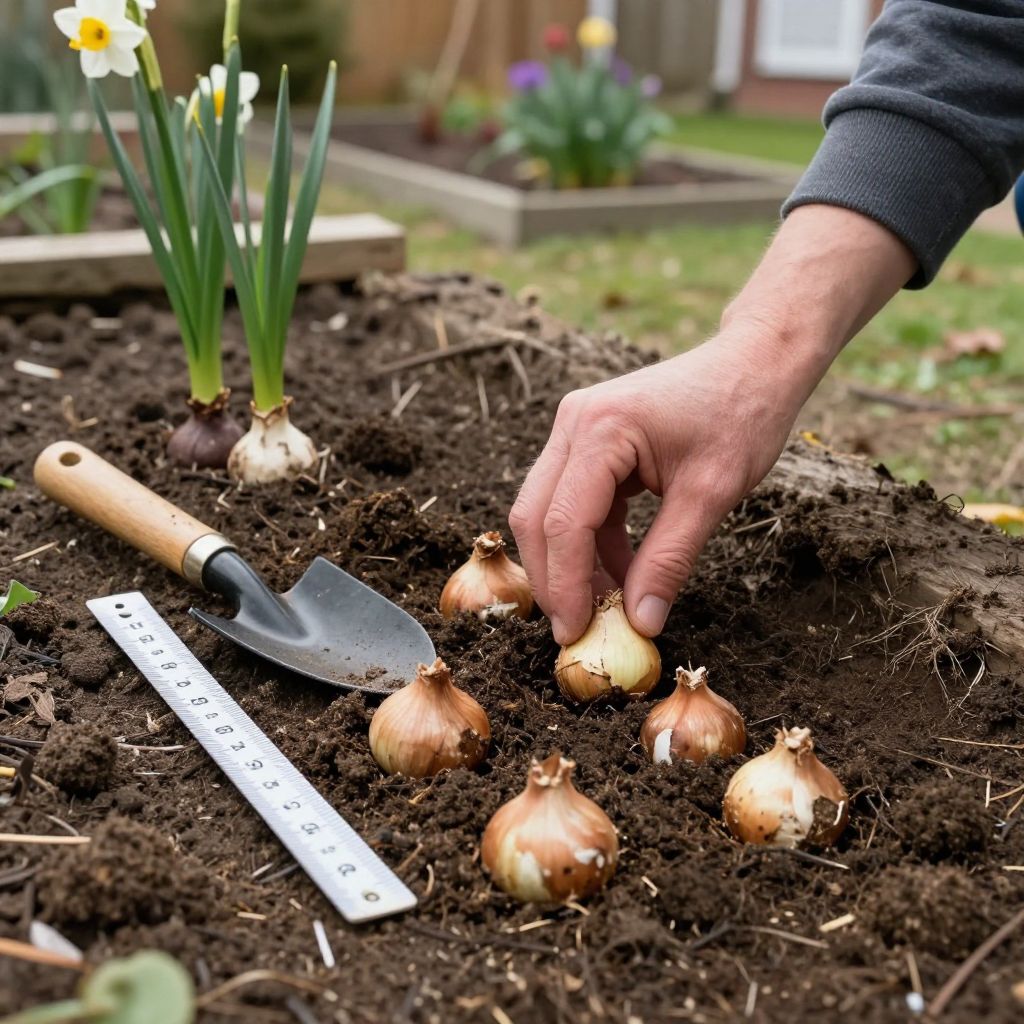
Wondering when to plant daffodils so they bloom well in spring? The short answer is to plant daffodil bulbs in autumn, several weeks before the ground freezes, while the soil is still workable and cool. That timing gives the bulbs time to root before winter without pushing top growth too early.
Exact planting time depends on your climate, but the goal is the same: cool soil, good drainage, and enough time for roots to establish. If you plant too early in hot soil or too late after the ground has frozen, daffodils usually still survive, but they may bloom poorly the first year.
When to plant daffodils?
Plant daffodil bulbs in fall, ideally when daytime temperatures have cooled and soil temperatures are consistently below about 60°F (16°C). In many regions, that means September through November, but the best window is usually 2 to 4 weeks before the ground freezes so roots can form before winter.
Why fall planting works best
Daffodils need a cold period to trigger spring flowering, and planting in autumn lets them settle in naturally. The bulbs store energy from the previous season, then use fall root growth to support strong blooms the following spring.
Spring planting is usually not ideal because daffodils need time in the ground before they can perform well. If you find bulbs late in the season, plant them anyway if the soil is still workable, but expect less reliable flowering the first year.
How to adjust timing by climate
- Cold climates: Plant earlier in fall so bulbs can root before hard freezes.
- Mild climates: Plant later in fall or early winter if soil stays cool and unfrozen.
- Warm-winter areas: Choose varieties suited to your region and plant when autumn weather finally cools down.
How to plant daffodil bulbs correctly
Good planting technique matters as much as timing. Daffodils are forgiving, but they bloom best when planted in well-drained soil at the right depth and spacing.
- Choose a sunny or lightly shaded site with soil that drains well.
- Loosen the soil and mix in compost if it is heavy or poor, but avoid creating a soggy planting hole.
- Plant bulbs with the pointed end up, about 6 inches deep, or roughly 2 to 3 times the bulb’s height.
- Space bulbs about 4 to 6 inches apart for a natural clump effect.
- Water once after planting to settle the soil, then let autumn rains do the rest unless conditions are very dry.
If your soil is clay-heavy, plant a little shallower or in raised beds to improve drainage. Daffodil bulbs rot more easily in waterlogged ground than they do in dry, loose soil.
Best soil and site conditions
- Sunlight: Full sun to light shade is best.
- Soil: Loose, fertile, and well-drained.
- pH: Slightly acidic to neutral soil is usually fine.
- Moisture: Moist in fall and spring, but never soggy.
Should you water daffodils after planting?
Yes, water once after planting if the soil is dry. That helps settle the bulbs and encourages root growth. After that, only water if fall weather is unusually dry and the soil is not naturally moist.
Once daffodils are established, they usually need little extra watering outdoors. Too much water, especially in winter, can cause bulb rot or weak growth.
What to do if you missed the ideal planting time
If you missed fall planting, you still have a few options. Plant bulbs as soon as possible if the ground is not frozen, or pot them up and keep them in a cool, protected place until conditions improve.
Late planting tips
- Plant immediately if the soil is workable.
- Mulch lightly after planting to buffer temperature swings.
- Expect smaller blooms or fewer flowers the first spring.
- Do not store bulbs in a warm, dry room for long periods.
Bulbs that have dried out, softened, or molded should be discarded. Firm bulbs with intact papery skins have the best chance of rooting and blooming well.
How to care for daffodils after they bloom
After flowering, leave the foliage in place until it yellows naturally. The leaves feed the bulb for next year’s bloom, so cutting them too soon weakens the plant.
Deadhead spent flowers by removing the faded bloom head, but keep the leaves. If you want a tidy bed, you can hide the fading foliage among later-emerging perennials, but do not braid or tie the leaves tightly, since that reduces sunlight exposure.
Post-bloom care checklist
- Remove spent flowers before seed pods form.
- Keep foliage intact for 6 weeks or more after bloom.
- Water only if spring is very dry.
- Allow leaves to yellow and die back naturally before removing them.
Common problems when planting daffodils
Most daffodil problems come from poor drainage, planting too shallow, or choosing the wrong time. If bulbs fail to bloom, the issue is often not the bulb itself but the growing conditions around it.
Typical mistakes to avoid
- Planting in hot soil: Can delay rooting and reduce flowering.
- Planting in soggy ground: Encourages rot.
- Cutting foliage too early: Weakens next year’s bloom.
- Overcrowding bulbs: Can reduce flowering over time.
- Too much shade: Leads to fewer flowers and floppy growth.
Pests and diseases
Daffodils are usually trouble-free, but bulbs can be affected by rot, narcissus bulb fly in some areas, or damage from rodents if conditions are favorable. Healthy bulbs, clean tools, and well-drained soil are your best defenses.
If bulbs are mushy, foul-smelling, or covered in mold, remove them and improve drainage before replanting. If foliage looks healthy but flowers are sparse, the bulbs may need another season to recover or may be crowded.
Can you grow daffodils in pots?
Yes, daffodils grow well in containers if the pot has drainage holes and the bulbs are planted deeply enough. Container-grown bulbs still need fall planting, and the pot should be kept cool through winter so the bulbs can root properly.
Use a free-draining potting mix, and avoid letting containers sit in standing water. In very cold climates, pots may need some winter protection because container soil freezes faster than garden soil.
How to make daffodils come back year after year
To keep daffodils perennial, give them the right planting depth, enough sun, and decent soil drainage. Naturalizing varieties often do best in lawns, borders, or woodland edges where the foliage can mature undisturbed after bloom.
Every few years, crowded clumps may bloom less. If that happens, lift and divide the bulbs after the foliage has died back, then replant them in fresh soil in autumn.
Final planting advice
The best time to plant daffodils is in fall, when the weather has cooled and the soil is still workable. If you can plant before the ground freezes, you are giving the bulbs the best chance to root well and bloom strongly in spring.
For more bulb planting guidance, you may also find these helpful: when to plant daffodil bulbs and when to plant tulip bulbs in pots.