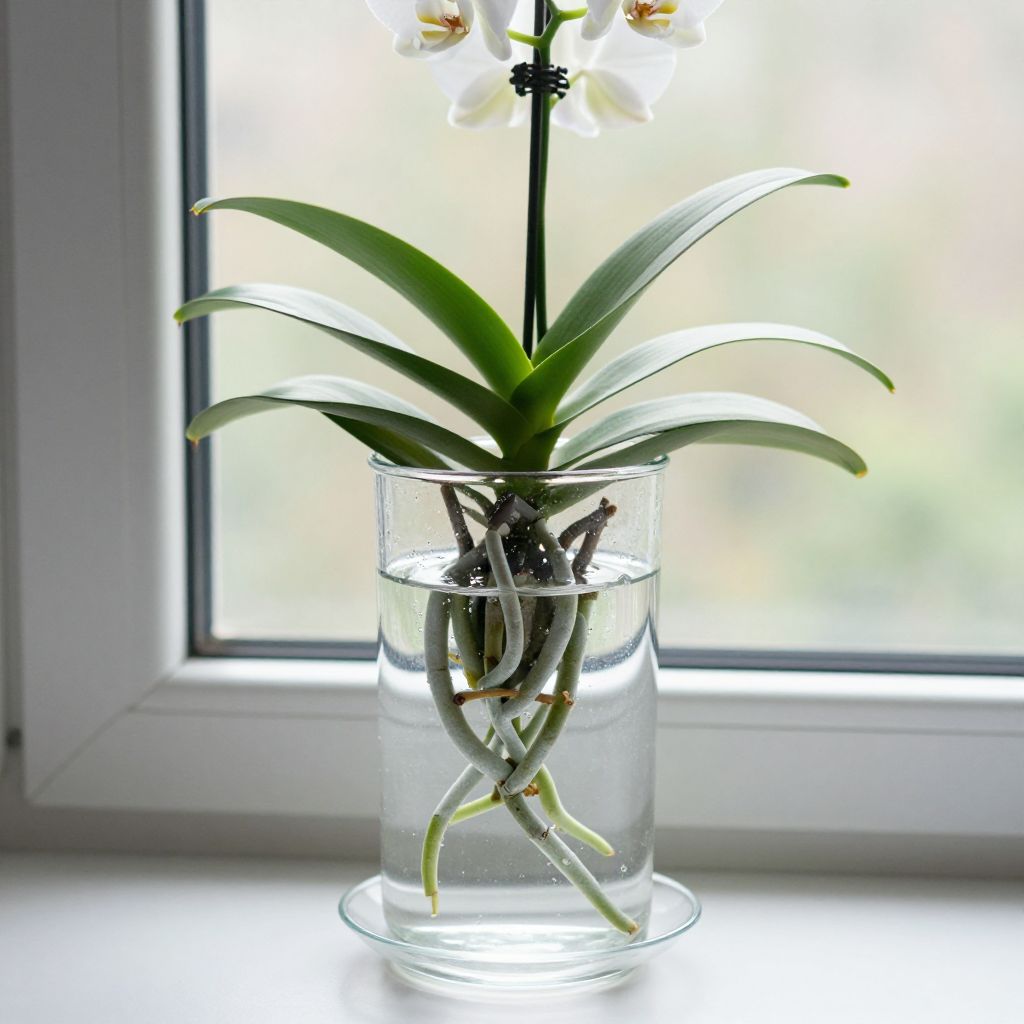
Can orchids grow in water? Yes, some orchids can survive and even root in water for a time, but most orchids do not grow best as fully aquatic plants. They usually do better with air around the roots, so water culture works only when you manage moisture, oxygen, and cleanliness very carefully.
If you want to try it, the key is choosing the right orchid, using clean water, and watching the roots closely. Done well, water culture can help rescue a stressed plant or simplify care indoors, but it is not the easiest method for long-term success.
Can orchids grow in water?
Yes, orchids can grow in water temporarily or in semi-hydro setups, but most epiphytic orchids such as Phalaenopsis need a lot of oxygen at the roots. Pure water culture can work for some plants, yet it carries a higher risk of rot, weak roots, and leaf decline if the water is stale or the roots stay submerged too long.
How orchid roots work in water
Orchid roots are different from the roots of typical houseplants. Many orchids grow naturally attached to bark, rocks, or trees, where roots dry quickly after rain and still get plenty of air.
That is why keeping them constantly wet is often the main problem. Healthy orchid roots need moisture and oxygen, so the best water-based methods usually let the roots cycle between wet and airy conditions.
Why roots rot so easily
- Stagnant water limits oxygen around the roots.
- Old potting media can hold too much moisture.
- Damaged roots are more vulnerable to bacteria and fungi.
- Cold conditions slow drying and increase rot risk.
Which orchids are most likely to handle water culture?
Not every orchid adapts well to water. Phalaenopsis is the most common orchid people try in water because it is widely grown indoors and can sometimes adapt to wet-dry routines. Other orchids may be more sensitive and less forgiving if roots stay wet too long.
If you are experimenting, start with a healthy plant that already has a strong root system. A weak, newly purchased, or recently repotted orchid is a poor candidate for water culture.
Best candidates for beginners
- Healthy Phalaenopsis orchids with firm green or silvery roots
- Plants with several active roots and no major crown damage
- Orchids that are already stable in your indoor conditions
Plants to be cautious with
- Orchids with severe root rot
- Plants that are already stressed from heat, cold, or pests
- Species that prefer very airy, fast-drying conditions
How to grow orchids in water the right way
If you want to try water culture, the safest approach is usually a controlled soak-and-dry method rather than leaving the roots submerged all the time. This gives the plant moisture without suffocating the roots.
- Remove the orchid from its pot and gently wash away old bark, moss, or debris.
- Trim dead roots with sterilized scissors. Dead roots are mushy, hollow, brown, or papery.
- Rinse the roots in lukewarm water to remove residue.
- Place the plant in a clean glass or container with enough room for roots to spread.
- Add water only to cover the lower root zone, not the crown or the base of the leaves.
- Soak briefly, then drain and allow the roots to breathe before the next watering.
Many growers prefer to keep the water level low and change it often. The exact timing depends on temperature, light, container size, and how quickly your home dries out.
Water quality matters
Use clean, room-temperature water whenever possible. Very hard water, heavily chlorinated water, or water with lots of dissolved salts can leave residue on roots and containers over time.
If your tap water is questionable, let it sit out briefly if appropriate for your local supply, or use filtered water. The goal is not perfection; it is to avoid buildup and stress.
Can orchids grow in water permanently?
Some orchids can be maintained in water for long periods, but permanent full-water culture is not the easiest or most reliable method for most home gardeners. Many orchids do better in semi-hydro setups or traditional orchid mix because those methods provide a better balance of moisture and air.
If you want a lower-risk option, consider a very airy orchid medium instead of pure water. Bark-based mixes, sphagnum moss used carefully, or semi-hydro systems with inert media often give better long-term results.
Water culture vs. traditional orchid mix
- Water culture: simpler to observe roots, but higher rot risk if mismanaged
- Bark mix: better airflow, usually safer for most orchids
- Sphagnum moss: holds moisture well, but can stay too wet if packed tightly
- Semi-hydro: more stable moisture with better aeration than plain water
Light, temperature, and humidity for orchids in water
Water-grown orchids still need the same basic growing conditions as potted orchids. Good light, moderate warmth, and decent humidity help the plant use water properly and grow new roots.
- Light: bright, indirect light is usually best indoors
- Temperature: stable indoor temperatures are safer than cold drafts or hot windows
- Humidity: moderate humidity helps, but stagnant air should be avoided
Avoid direct hot sun on a glass container. It can overheat the roots and encourage algae growth in the water.
Common mistakes when growing orchids in water
Most problems come from trying to treat an orchid like a water plant instead of a root-aerated tropical plant. A few simple mistakes can quickly turn healthy roots into mush.
What to avoid
- Leaving the crown sitting in water
- Using dirty containers or old water
- Submerging all roots continuously without airflow
- Moving a stressed orchid into water too soon
- Putting the plant in low light and expecting new root growth
The crown should stay dry. If water collects in the center of the leaves, the plant can rot from the top down even if the roots look fine.
How to tell if your water-grown orchid is doing well
Healthy orchids usually show firm roots, steady leaves, and gradual new growth. You should not expect instant recovery after changing the growing method.
Good signs
- Roots stay firm and plump rather than mushy
- Leaves remain turgid, not wrinkled
- New root tips appear over time
- No sour smell from the container
Warning signs
- Roots turn brown, soft, or hollow
- Leaves become floppy or yellow rapidly
- Water smells stale or looks cloudy
- Algae or slime builds up on roots or container walls
How often should you change the water?
There is no single schedule that fits every home. The right timing depends on temperature, container size, light, and how quickly the water becomes cloudy or stagnant.
As a practical rule, change the water whenever it looks dirty, smells off, or develops slime. In warm conditions, that may be more often than in a cool room. Clean containers and fresh water are more important than a rigid calendar.
Can orchids be propagated in water?
Orchids are not usually propagated in water the way some houseplants are. Most orchid propagation is done through division, keikis, or specialized methods depending on the type. Water may help a stressed plant recover roots, but it is not a dependable propagation method for most home gardeners.
If your orchid produces a keiki, you can usually root it in a suitable orchid medium rather than keeping it submerged. That gives the young plant better access to air and reduces rot risk.
When to switch an orchid out of water
If the plant declines, smells sour, or develops soft roots, move it back to a better-draining orchid setup. A traditional orchid mix is often the safest choice when a plant needs recovery.
Repot into fresh medium if:
- Roots are rotting or collapsing
- The plant is losing leaves quickly
- Water stays cloudy despite frequent changes
- You want a more stable long-term growing method
When repotting, use clean tools and remove all dead tissue. A fresh start in airy bark or another orchid medium often gives the plant a better chance to recover.
Bottom line for orchid care in water
Can orchids grow in water? Yes, but usually only with careful management and the right expectations. For most home gardeners, water culture is best viewed as an experiment or a recovery method, not the easiest permanent setup.
If you want the highest chance of success, keep the crown dry, use clean water, provide bright indirect light, and watch the roots closely. For more help diagnosing problems, you may also find why your orchid is dying useful, and if you enjoy experimenting with indoor plants, see can you propagate a money tree?