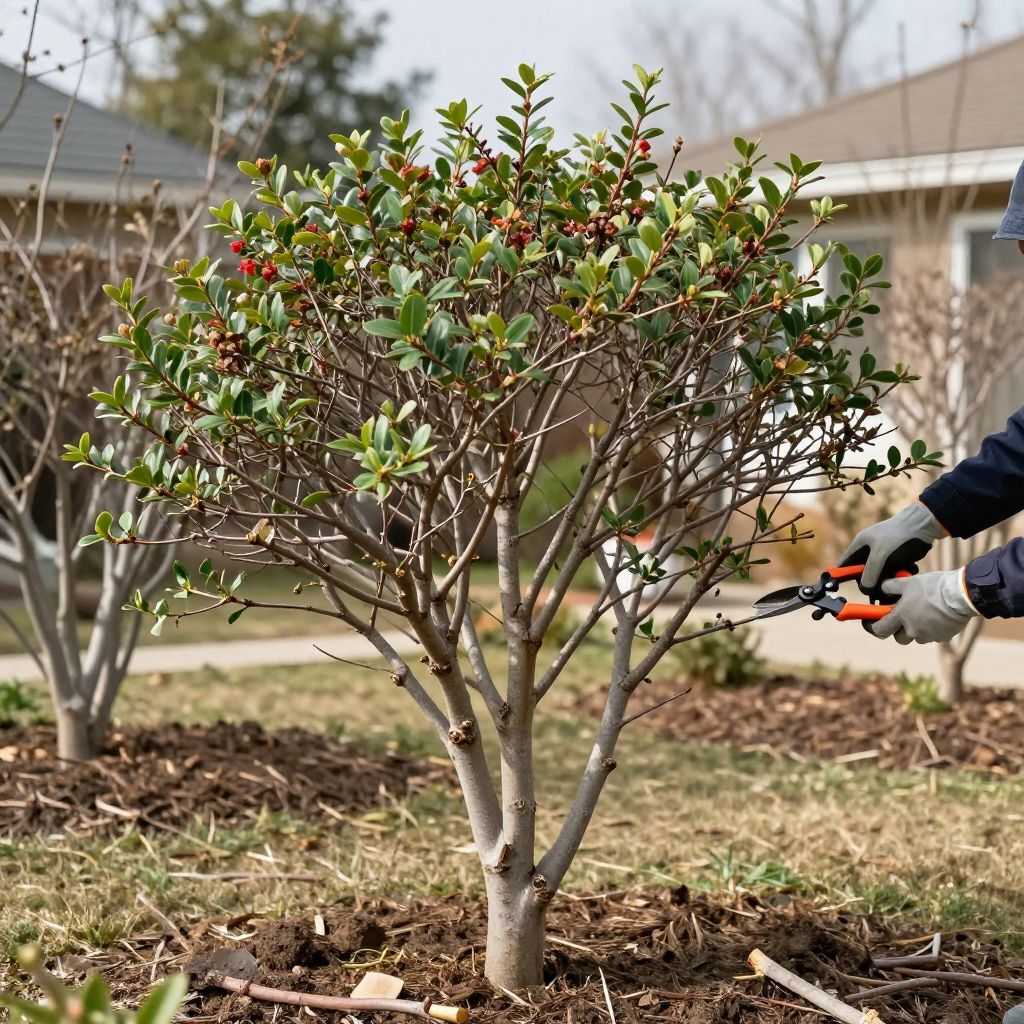
If you’re wondering when to prune crepe myrtles, timing matters as much as technique. Prune at the wrong time and you can encourage weak new growth, reduce flowering, or leave the plant vulnerable to winter damage.
The good news is that crepe myrtles are forgiving when you make small, thoughtful cuts at the right season. With a few simple rules, you can keep them healthy, shapely, and full of blooms.
When to prune crepe myrtles?
The best time to prune crepe myrtles is late winter to very early spring, before new growth starts but after the coldest weather has passed. In most climates, that means pruning while the plant is still dormant. Avoid heavy pruning in fall, and don’t “top” the tree, since that weakens the structure and can reduce flowering.
Why timing matters for crepe myrtles
Crepe myrtles bloom on new wood, so pruning just before spring growth begins gives the plant time to push out fresh flowering shoots. Pruning too early in winter can expose tender cuts to hard freezes, while pruning too late can remove buds and slow the season’s bloom display.
Timing also affects plant shape. A well-timed prune helps you guide the structure without forcing the tree into a flush of overly vigorous shoots.
What happens if you prune at the wrong time?
- Fall pruning can stimulate soft growth that may be damaged by cold.
- Midwinter pruning may leave fresh cuts exposed to freeze injury.
- Late spring pruning can remove developing flower shoots and delay bloom.
- Repeated heavy pruning often creates weak, crowded growth and ugly knobby stems.
How to tell the right pruning window in your area
Because climates vary, use your local weather rather than a calendar alone. In colder regions, wait until the worst freezes are likely over. In mild climates, you can often prune during the dormant season anytime before buds begin to swell.
A simple rule: prune when the tree is still leafless, but winter’s harshest weather is mostly behind you.
Signs it’s time to prune
- Buds are still tight and not actively growing.
- The plant is dormant or nearly dormant.
- You can clearly see the branch structure.
- There is no immediate hard freeze forecast after pruning.
How much should you prune?
For most home gardens, crepe myrtles need only light to moderate pruning. Remove dead, damaged, rubbing, or crossing branches first, then shape the plant as needed. Avoid cutting the main trunks back to stubs unless you are correcting severe damage and understand the long recovery that follows.
If you’re working with a mature tree, less is usually better. The goal is to improve structure and airflow, not to force a drastic size reduction every year.
Good pruning goals
- Remove dead or broken wood.
- Thin crowded interior branches.
- Lift low branches for clearance, if needed.
- Maintain a natural vase or tree form.
- Keep suckers from crowding the base.
Step-by-step pruning tips for crepe myrtles
Use clean, sharp tools and make each cut with a purpose. The plant responds best to careful pruning that preserves strong framework branches.
- Start by removing dead, diseased, or broken branches.
- Look for branches that cross, rub, or grow inward and remove the weaker one.
- Thin out crowded stems to improve air circulation.
- Shorten overly long shoots by cutting back to a side branch or bud.
- Remove suckers from the base if you want a tree form.
- Step back often and check the overall shape before making more cuts.
Best tools to use
- Hand pruners for small stems and suckers.
- Loppers for thicker branches you can’t cut cleanly by hand.
- Pruning saw for larger limbs.
- Rubbing alcohol or disinfectant for cleaning blades between plants if disease is a concern.
What not to do when pruning crepe myrtles
One of the most common mistakes is “crepe murder,” the practice of cutting large trunks or scaffold branches back to short stubs. This creates a flush of weak, crowded shoots and ruins the plant’s natural form.
It’s also a mistake to shear the plant into a tight hedge unless you are intentionally maintaining a hedge form from the start. Crepe myrtles usually look and perform better with selective pruning.
Common mistakes to avoid
- Do not top the tree.
- Do not leave long stubs after cuts.
- Do not prune heavily every year without a reason.
- Do not prune in late fall if winter cold is coming.
- Do not remove all lower branches unless you want a tree form and the plant is established.
How pruning affects blooms
Crepe myrtles bloom on new growth, so light pruning usually supports flowering. Heavy pruning can delay bloom because the plant spends energy producing new shoots instead of flowers. In some cases, the plant will bloom later and with fewer clusters after severe cuts.
If your crepe myrtle is healthy but not blooming well, pruning is not always the answer. Sunlight, drainage, and overall vigor matter just as much.
Growing conditions that support better pruning results
Pruning works best when the plant is already growing in a good site. Crepe myrtles generally perform best in full sun and well-drained soil. Poor drainage, deep shade, or constant competition from nearby roots can weaken the plant and make pruning stress harder to recover from.
Basic care that helps the plant recover
- Give it full sun for the strongest bloom display.
- Plant in soil that drains well.
- Water deeply during establishment and during drought, rather than giving frequent shallow sprinkles.
- Mulch around the base, but keep mulch a few inches away from the trunk.
Pruning young versus mature crepe myrtles
Young plants need structure more than size reduction. Focus on selecting a few strong trunks and removing weak, crowded, or poorly placed shoots. This helps the plant develop a sturdy framework.
Mature plants usually need maintenance pruning only. Remove crossing limbs, dead wood, and suckers, and make small adjustments to keep the canopy open and balanced.
For young plants
- Choose 3 to 5 strong main trunks if you want a multi-stem form.
- Remove competing stems from the base.
- Encourage a balanced shape early.
For mature plants
- Limit cuts to problem branches and light shaping.
- Thin crowded areas to improve airflow.
- Refresh mulch and monitor for stress after pruning.
What to do after pruning
After pruning, keep the plant steady rather than pushing it with extra fertilizer. A healthy crepe myrtle usually recovers on its own if it has enough sun, drainage, and moisture.
If the weather turns dry, water deeply at the root zone. If you made larger cuts, watch for stress, dieback, or excessive sprouting from the base.
Aftercare checklist
- Clean up pruned debris from around the plant.
- Check for any missed dead or damaged wood.
- Water during dry spells, especially for younger plants.
- Watch for suckers and remove them promptly.
- Inspect for pests or disease if leaves later show unusual spotting or deformity.
Common problems to watch for
Crepe myrtles are generally tough, but pruning stress can make existing problems more noticeable. Aphids may leave sticky honeydew, and sooty mold can appear on that residue. Good airflow from proper pruning helps reduce these issues.
If you notice repeated dieback after pruning, the plant may be stressed by cold, poor drainage, or previous severe cuts. In that case, reduce pruning intensity and focus on improving growing conditions.
Quick seasonal guide
- Late fall: Avoid major pruning.
- Winter: Light pruning is possible in mild climates, but avoid hard freezes.
- Late winter to early spring: Best time for most pruning.
- After leaf-out: Only remove damaged or problem branches unless absolutely necessary.
Conclusion
If you want the best results, prune crepe myrtles in late winter to early spring, while the plant is dormant and before new growth starts. Keep cuts selective, avoid topping, and focus on shape, airflow, and plant health. If you’re unsure about timing in your climate, wait until the coldest weather has passed and then make only the cuts the plant truly needs.
For more pruning guidance, you may also find it helpful to read about when it’s too late to prune crepe myrtles and when to prune hibiscus.