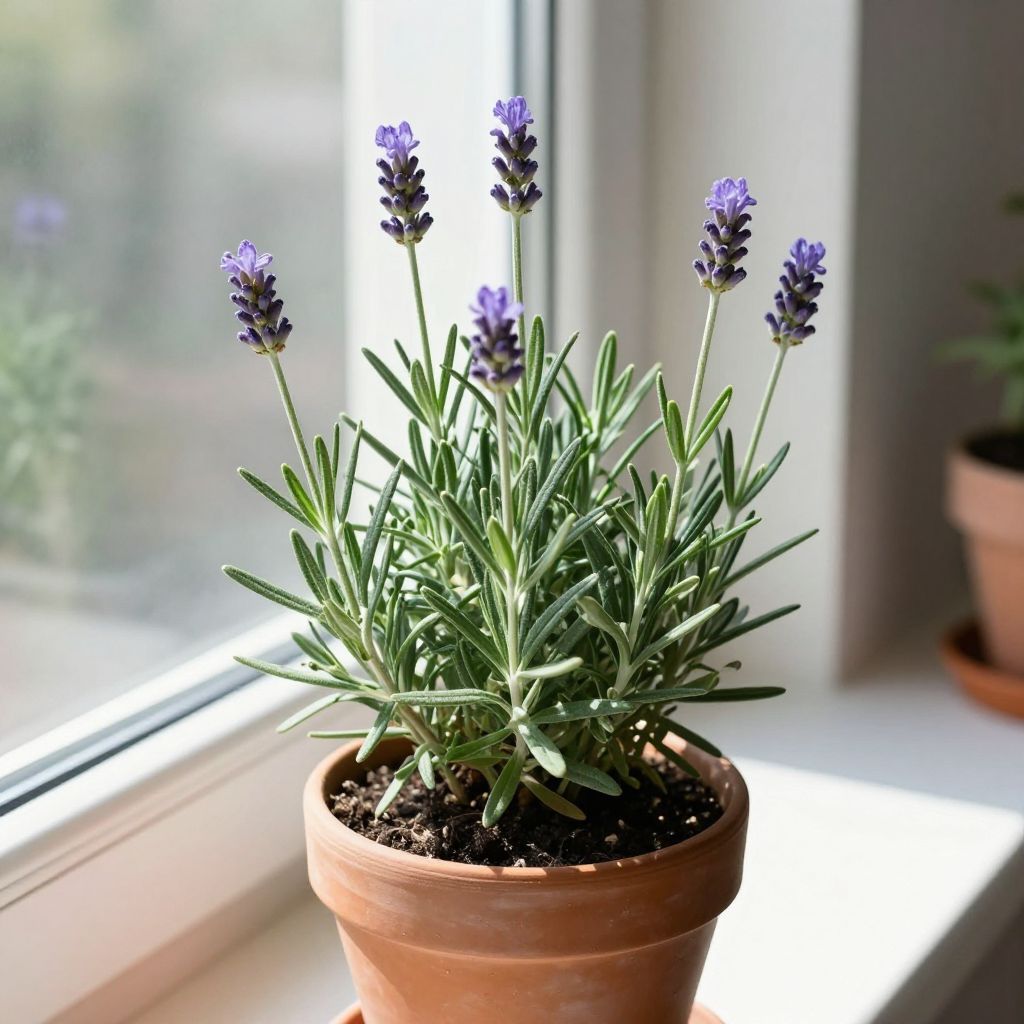
Can you grow lavender indoors? Yes, you can—if you give it very bright light, excellent drainage, and careful watering. Lavender is a sun-loving, Mediterranean herb, so the challenge indoors is not just keeping it alive, but keeping it compact, fragrant, and healthy.
With the right pot, soil, and pruning routine, indoor lavender can do well on a sunny windowsill or under grow lights. The key is to mimic dry, airy outdoor conditions as closely as possible and avoid the most common mistake: too much water.
Can you grow lavender indoors?
Yes, lavender can be grown indoors, but it is usually more challenging than growing it outside. The plant needs strong direct light, fast-draining soil, moderate temperatures, and low humidity. If you can provide those conditions, indoor lavender can survive and even bloom, though it may be less vigorous than outdoor plants.
What lavender needs to thrive indoors
Lavender is not a typical houseplant. It comes from open, sunny, well-drained habitats, so indoor success depends on recreating that environment as closely as possible.
Light
Light is the deciding factor. Lavender needs several hours of direct sun each day. A south-facing window is usually best, though an unobstructed west-facing window can also work in some homes.
- Place the pot right against the brightest window you have.
- Rotate the plant every week or two so it grows evenly.
- If natural light is weak, use a grow light to supplement it.
If your lavender stretches, flops, or produces pale leaves, it is probably not getting enough light.
Temperature and airflow
Lavender prefers cool to moderate indoor temperatures rather than warm, stagnant rooms. Good airflow helps prevent fungal problems and keeps the plant from becoming soft and weak.
- Avoid placing it near heat vents, radiators, or hot appliances.
- Do not crowd it with other plants.
- Open a window occasionally if weather allows, or use a small fan on a gentle setting nearby.
Humidity
Lavender generally dislikes humid conditions indoors. Bathrooms and kitchens can be too damp unless they are very bright and well ventilated. A dry room is usually a better choice.
Choosing the right pot and soil
Container choice matters as much as light. Lavender roots are prone to rot if they sit in wet soil, so drainage should be excellent from the start.
Best pot features
- Use a pot with at least one drainage hole.
- Choose a pot that is only slightly larger than the root ball.
- Terracotta is often a good choice because it dries faster than plastic.
A pot that is too large holds excess moisture and can make root rot more likely.
Soil mix
Use a light, fast-draining mix rather than rich, moisture-holding potting soil. Lavender does best in a leaner medium that lets roots breathe.
- Start with a high-quality potting mix.
- Improve drainage by adding coarse sand, perlite, or fine grit if needed.
- Avoid heavy garden soil indoors, which compacts easily and drains poorly.
You do not need a lot of compost for indoor lavender. In fact, too much rich organic matter can encourage lush, weak growth instead of the compact, aromatic stems you want.
How to water indoor lavender correctly
Watering is where many indoor lavender plants fail. The roots need moisture occasionally, but they should never stay wet for long.
- Check the soil before watering by feeling the top inch or two.
- Water only when the upper soil has dried out.
- Water thoroughly until excess drains out the bottom.
- Empty the saucer so the pot does not sit in water.
How often you water depends on pot size, light, temperature, humidity, and season. In winter, indoor lavender usually needs less water because growth slows. In brighter, warmer conditions, it may dry out faster.
Never water on a fixed schedule without checking the soil first. The plant’s needs change with the weather and the room conditions.
Signs of overwatering
- Yellowing leaves
- Soft, drooping stems
- Musty soil smell
- Blackened or collapsing growth near the base
Signs of underwatering
- Dry, brittle foliage
- Wilting that improves after watering
- Flower buds drying before opening
Planting and repotting lavender indoors
If you are starting with a young plant, choose a healthy nursery plant with compact growth and no signs of rot or pests. If you are bringing an outdoor lavender plant inside, inspect it carefully first.
Steps for potting lavender
- Select a pot with drainage holes.
- Add a fast-draining soil mix.
- Set the plant at the same depth it was growing before.
- Firm the soil lightly without packing it down.
- Water once to settle the mix, then let the excess drain away.
Repot only when needed. Lavender generally prefers being slightly snug in its container, and overly frequent repotting can disturb the roots.
How to prune indoor lavender
Pruning helps indoor lavender stay compact, shapely, and productive. Without pruning, it can become leggy and woody, especially indoors where light is limited.
Basic pruning approach
- Trim after flowering, or when growth becomes long and sparse.
- Remove spent flower stems back to a leafy section.
- Lightly shape the plant rather than cutting into old bare wood.
Lavender usually does not respond well to hard cuts into leafless woody stems. Keep some green growth on each stem when pruning, so the plant can regrow well.
If you want more detail on timing, see when to prune lavender.
Can lavender bloom indoors?
Yes, indoor lavender can bloom, but flowering is less reliable than outdoors. Strong light, cool nights, and a healthy root system improve the chances of buds forming.
To encourage blooms:
- Give the plant as much direct light as possible.
- Avoid overfeeding, which can produce leafy growth instead of flowers.
- Keep the plant slightly on the dry side rather than constantly moist.
- Remove old flower stems after blooming to keep the plant tidy.
If your lavender grows well but never flowers indoors, the most likely reason is insufficient light.
Fertilizing: less is better
Lavender is not a heavy feeder. Indoors, too much fertilizer can lead to weak, floppy growth and fewer flowers.
- Use fertilizer sparingly, if at all.
- If growth is pale and slow in a healthy plant, a very light feeding during active growth may help.
- Do not fertilize a stressed, newly repotted, or overwatered plant.
In many homes, a good potting mix and proper light are enough without regular feeding.
Common indoor lavender problems and fixes
Most indoor lavender problems come from too little light, too much water, or poor air movement. Catching issues early makes a big difference.
Leggy growth
Weak, stretched stems usually mean the plant is reaching for more light.
- Move it to a brighter window.
- Use a grow light if needed.
- Prune lightly to encourage bushier growth.
Root rot
Root rot is one of the biggest risks for indoor lavender.
- Check that the pot drains freely.
- Let the soil dry more between waterings.
- Remove any standing water from saucers or cachepots.
Leaf drop
Lavender may drop leaves if it is stressed by low light, excess moisture, or abrupt changes in temperature.
- Stabilize the plant in one bright location.
- Keep watering consistent but restrained.
- Avoid moving it repeatedly between rooms.
Pests
Indoor lavender can sometimes attract aphids, spider mites, or whiteflies, especially if the air is dry and the plant is stressed.
- Inspect leaf undersides regularly.
- Rinse small infestations off with a gentle spray of water.
- Remove badly infested stems if needed.
Healthy, well-lit plants are usually less vulnerable to pests than weak, overwatered ones.
Propagating lavender indoors
If your indoor lavender is thriving, you may want to make more plants from cuttings. Stem cuttings are the most practical method for home gardeners.
Simple cutting method
- Take a healthy, non-flowering stem with soft but firm growth.
- Remove the lower leaves.
- Place the cutting in a small pot of moist, well-draining mix.
- Keep it in bright light, but out of harsh midday sun until roots form.
Keep the mix lightly moist, not soggy. Too much water can rot the cutting before roots develop.
Harvesting lavender indoors
If your plant flowers, you can harvest stems for fragrance, dried bundles, or simple indoor use. Cut stems when the flower buds are partly open for the best scent and color retention.
- Harvest in the morning after dew has dried.
- Use clean scissors or snips.
- Cut stems above leafy growth so the plant can continue growing.
Dry harvested stems in a cool, airy place out of direct sun to preserve color and aroma.
Is indoor lavender worth growing?
Yes, if you have a very bright window and you enjoy a plant that prefers drier, leaner care than most houseplants. Indoor lavender is not the easiest herb to grow, but it is rewarding when its needs are met.
If your home is dim or humid, you may find it easier to grow lavender outdoors in a container during the warm season and bring it inside only temporarily if your climate requires it. For more practical tips, you may also want to read can lavender grow inside.
Start with a compact plant, give it the sunniest spot you have, and let the soil dry between waterings. Those three habits will do more for indoor lavender than any complicated routine.