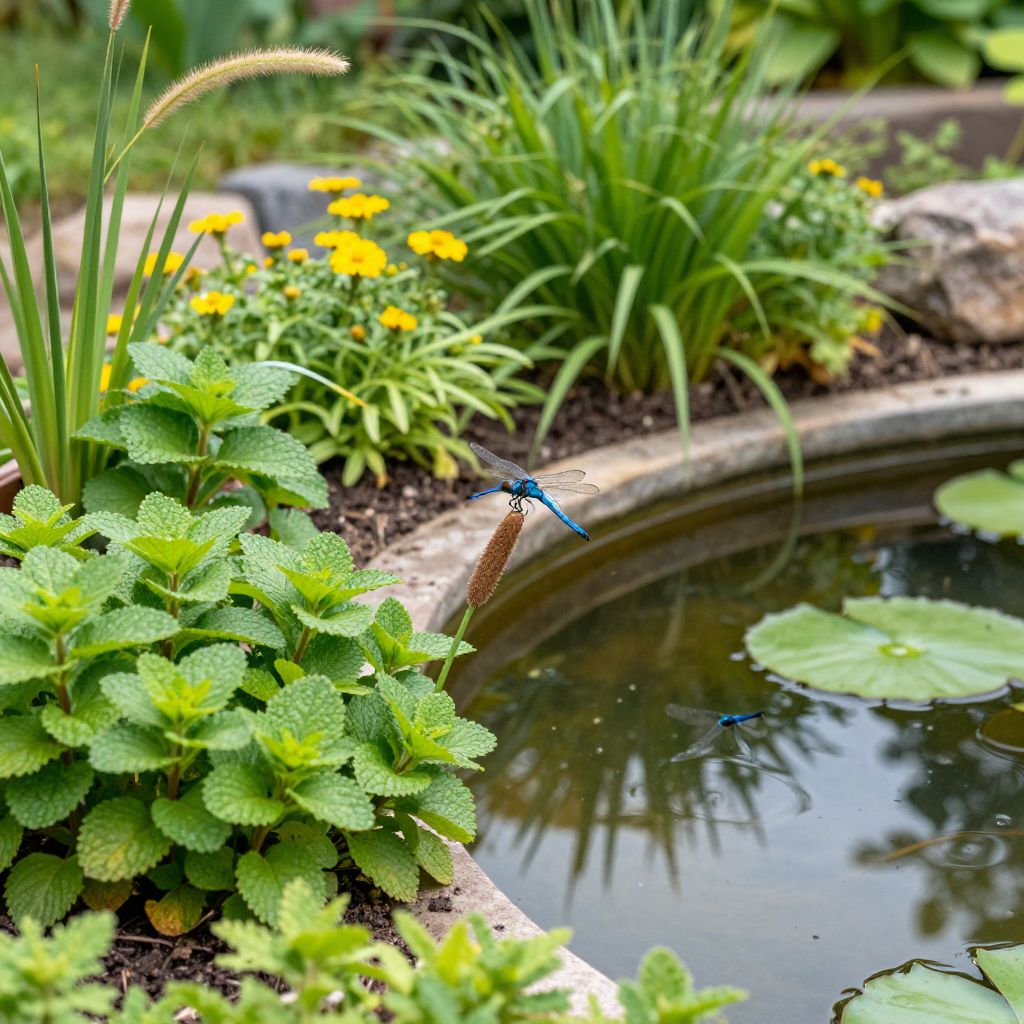
Want to know what plants attract dragonflies to your yard? The short answer is that dragonflies are drawn less to flowers themselves and more to the kind of garden those plants help create: sunny, open spaces near water, with plenty of insects to eat and places to perch. The best planting choices support a healthy habitat rather than “luring” dragonflies with nectar alone.
If you build the right mix of water, shelter, and insect-friendly planting, dragonflies may begin using your garden as hunting territory. The goal is a balanced landscape with native plants, shallow water, and minimal pesticide use so dragonflies can feed, rest, and reproduce nearby.
What plants attract dragonflies?
Dragonflies are most likely to visit gardens with native marginal plants, emergent aquatic plants, tall grasses, and sun-loving perennials near water. These plants support the small insects dragonflies eat, provide perches for resting, and help create the sheltered, sunny habitat they prefer.
Why plants matter for dragonflies
Dragonflies do not feed on flowers the way bees or butterflies do. Instead, they hunt mosquitoes, gnats, flies, and other small flying insects. Plants matter because they shape the habitat: they attract prey, offer landing spots, and help stabilize ponds, bogs, and damp edges where dragonflies breed.
If your garden has no water at all, you may still see dragonflies passing through, but you are less likely to support them long term. A few carefully chosen plants can make a big difference when combined with shallow water and sunny conditions.
The best plant types for dragonfly-friendly gardens
- Marginal pond plants that grow at the water’s edge and provide structure.
- Emergent aquatic plants that rise above the water surface and create perches.
- Tall native grasses and sedges that offer resting places and shelter.
- Sun-loving wildflowers and perennials that attract small insects dragonflies feed on.
- Shrubs near water that give adults protected perches without closing in the pond.
Best plants to include near a pond or water feature
Choose plants that suit your climate and local conditions, especially native species adapted to wet soil or shallow water. The best choices are often those already used by dragonflies in your region because they fit the local ecosystem and are easier to maintain.
1. Pickerelweed (Pontederia cordata)
Pickerelweed is a classic pond-edge plant with upright flower spikes and broad leaves. It grows in shallow water or saturated soil and creates excellent cover and perching structure around a pond.
2. Arrowhead or duck potato (Sagittaria latifolia)
This native aquatic plant works well in shallow margins. Its leaves rise above the water, helping create the kind of layered habitat dragonflies use for resting and hunting.
3. Soft rush (Juncus effusus)
Soft rush is useful in wet edges and rain-garden areas. Its upright stems are especially helpful because dragonflies often perch on vertical plant structures while scanning for prey.
4. Sedges (Carex spp.)
Sedges are excellent for pond margins, bog gardens, and moist borders. They help create dense but natural-looking cover without shading the water too heavily.
5. Cattails (Typha spp.)
Cattails can support dragonflies in larger ponds or wetlands, but they spread aggressively in small water features. Use them only if you have room and can manage their growth.
6. Water lilies (Nymphaea spp.)
Floating leaves help shade part of the water and improve habitat balance, especially in ponds that get intense sun. Leave open water too, since dragonflies need space for flight and egg-laying.
Best plants for the surrounding garden
Plants outside the water are just as important as pond plants. They support the insects dragonflies eat and give adults sunny places to perch, warm up, and patrol.
Native wildflowers and perennials
Look for a mix of long-blooming, insect-friendly plants that fit your region. Good options often include coneflowers, black-eyed Susans, asters, goldenrods, bee balm, and milkweed, depending on your climate and soil.
These plants do not “feed” dragonflies directly, but they help create a lively insect population around the garden. That means more prey for dragonflies and more reasons for them to stay nearby.
Ornamental grasses
Clumping grasses such as little bluestem, switchgrass, or fountain grass in suitable climates can provide vertical structure. Dragonflies often use grass stems as lookout posts.
Avoid letting grasses form a dense wall right at the pond edge. Leave openings so dragonflies can fly in and out easily.
Shrubs and small trees
Low, open shrubs near water can provide shelter from wind and a place to rest. Choose species that do not cast heavy shade over the pond all day.
Too much shade can reduce dragonfly activity by cooling the water and limiting the sunny flight paths they prefer.
How to design a dragonfly-friendly planting area
Successful dragonfly habitat is about layout as much as plant choice. A simple, open design usually works better than a crowded one.
- Keep part of the water open. Dragonflies need clear flight space above and around the pond.
- Plant in layers. Use submerged, emergent, and border plants to create a natural edge.
- Leave sunny spots. Dragonflies are strong fliers and often prefer warm, exposed areas.
- Add perches. Upright stems, reeds, and grasses help adults rest and hunt.
- Use native plants where possible. They usually support more local insects and need less intervention.
How much planting is enough?
You do not need to pack every inch with plants. In fact, overplanting can make a pond too crowded and reduce open water. Aim for a balanced edge with a mix of open water, emergent growth, and surrounding flowering plants.
Soil, water, and sunlight requirements
Most dragonfly-supporting plants do best in conditions that match their natural habitat. Wetland plants need consistently moist soil or shallow water, while border perennials usually want well-drained soil and full sun.
Sunlight
Dragonflies are most active in sunny to partly sunny areas. Many of the best companion plants also flower better with at least several hours of direct sun each day, though exact needs vary by species and climate.
Soil and drainage
For pond-edge plants, use heavy, moisture-retentive soil or aquatic planting media as appropriate for the plant. For surrounding perennials, improve the soil with compost if needed, but do not make it soggy unless the plant is a wetland species.
If your soil drains too quickly, moisture-loving plants may struggle. If it stays waterlogged, choose true bog or marginal plants rather than forcing dry-land flowers into the site.
Water quality
Clean, still, or gently moving water is usually best. Avoid overfertilizing nearby beds, because runoff can feed algae and upset the pond balance. Dragonflies benefit from healthy water because it supports the aquatic life stages of their young and the insects they hunt.
Planting and care tips for success
Once you have chosen the right plants, good establishment care helps them fill in without becoming invasive or stressed. The first season is especially important.
Planting steps
- Prepare the site by removing weeds and unwanted grass from the planting area.
- Match the plant to the right zone: submerged, shallow edge, moist border, or dry border.
- Set aquatic plants at the correct depth for the species, not too deep.
- Water new border plants regularly until roots establish, especially during dry spells.
- Mulch around non-aquatic plants, but keep mulch away from the waterline so it does not wash in.
Pruning and maintenance
Trim back overly aggressive growth as needed, but leave some stems standing through the season. Dragonflies use upright plant material for perching, and too much tidying can remove useful habitat.
In late fall or early spring, remove only dead material that is crowding the pond or causing decay problems. If local wildlife uses the pond, be cautious about cutting everything down at once.
Common mistakes that reduce dragonfly activity
- Using pesticides near the pond. Even products meant for other insects can reduce the dragonflies’ food supply.
- Planting too densely. Thick growth can block flight paths and shade the water.
- Choosing only showy flowers. Pretty blooms help the garden, but habitat structure matters more.
- Letting water become stagnant and polluted. Poor water quality can discourage breeding.
- Removing all stems and debris too early. Some habitat value remains in standing vegetation.
Troubleshooting: if dragonflies are not showing up
If you have added the right plants but still do not see dragonflies, check the habitat as a whole. Plants are only one part of the equation.
Ask these questions
- Is there open water with sunny space above it?
- Are there small flying insects for dragonflies to eat?
- Is the pond free of frequent pesticide drift or runoff?
- Do nearby plants offer perches without crowding the water?
- Is the site warm enough and sunny enough for active flight?
Sometimes the answer is simply time. A newly planted pond or rain garden may take a season or two to develop enough insect life and structure to attract regular dragonfly visits.
Can you attract dragonflies without a pond?
Yes, but your results may be limited. A pond, water garden, or even a small wildlife tub greatly improves your chances. Without water, dragonflies may still pass through if your garden has plenty of insects, sun, and perch plants, but they are less likely to stay and breed.
If you do not have room for a pond, try a shallow water feature with safe edges, native nearby flowers, and a pesticide-free planting bed. Keep the water clean and refresh it as needed for your local conditions.
Conclusion
The best answer to what plants attract dragonflies is: plants that create the right habitat. Use native pond-edge plants, emergent aquatics, grasses, and sunny perennials to support insects and provide perches, then pair them with clean water and open space. Start with one small habitat section this season and build from there.
For more ideas on creating a dragonfly-friendly yard, you may also want to read what attracts dragonflies and explore what flowers bloom in summer for more pollinator-friendly planting options.