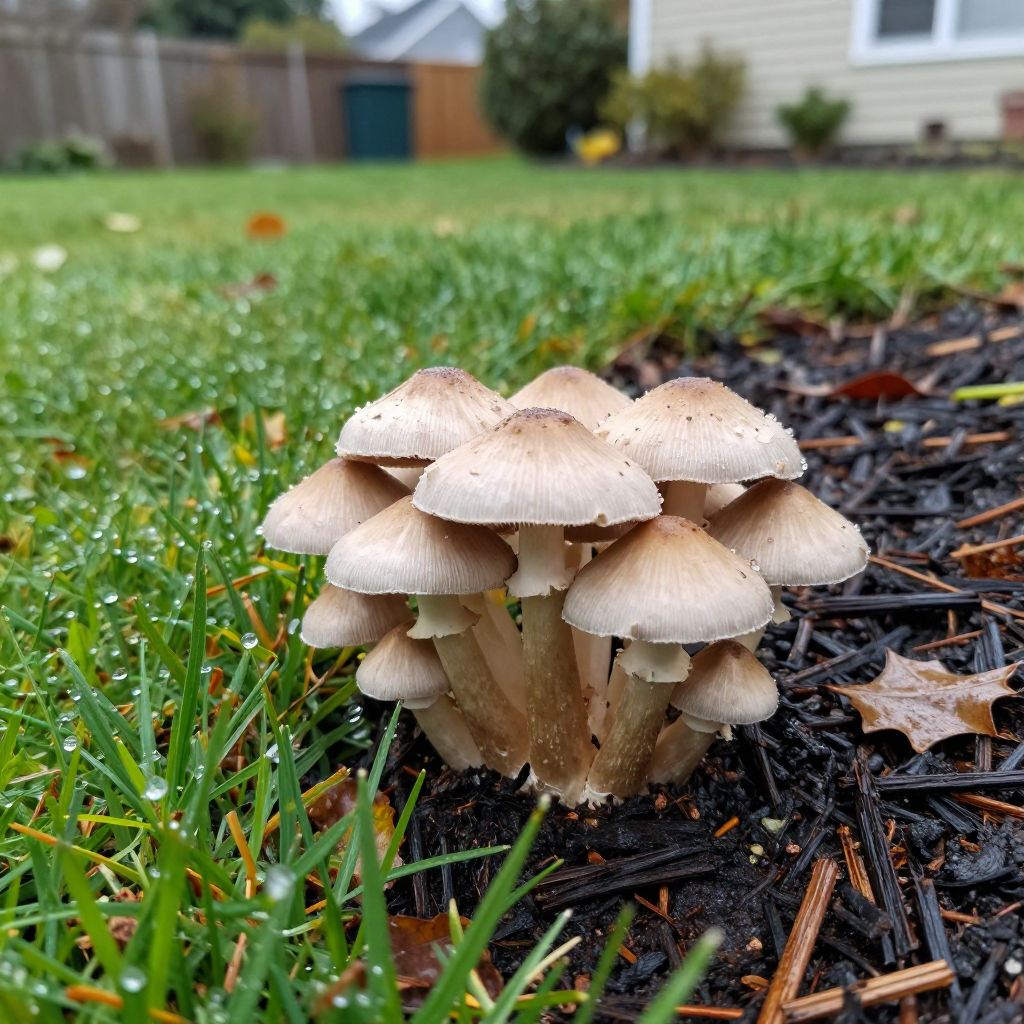
What causes mushrooms to grow in your yard? In most cases, it means the soil is moist, organic matter is breaking down, and fungal spores have found a good place to fruit. Mushrooms are usually a sign of active decomposition, not a disease in your lawn.
They often appear after rain, irrigation, or periods of warm, humid weather. While most yard mushrooms are harmless to turf, some can be toxic, so it helps to identify the conditions that encourage them and decide whether to leave them, reduce them, or remove them.
What causes mushrooms to grow in your yard?
Mushrooms grow in your yard when fungi have enough moisture, shade, and food from decaying organic material such as buried wood, mulch, roots, or thatch. The visible mushroom is only the fruiting body; the fungus itself usually lives in the soil or debris long before you notice it.
Why mushrooms appear in lawns, beds, and mulch
Different parts of the yard create different fungal conditions. A lawn with compacted soil and heavy thatch behaves differently from a mulched bed or a spot where an old stump is buried.
Common triggers
- Moist soil after rain, overwatering, or poor drainage
- Decaying organic matter such as wood chips, roots, buried lumber, or dead leaves
- Shade that keeps the soil damp longer
- Warm temperatures paired with humidity
- Thick thatch or compacted soil that slows drying
- Fresh mulch that is actively breaking down
In many yards, mushrooms show up after a soaking rain and disappear within days. That pattern usually points to temporary moisture, not a serious lawn problem.
Where they are most likely to grow
- Near tree roots or stumps
- Along shaded fence lines
- In mulch beds with woody material
- In low spots where water collects
- In lawns with a lot of buried organic debris
Are mushrooms in the yard a problem?
Usually, no. Most mushrooms in home landscapes are decomposers that help break down dead material and recycle nutrients. They can be unsightly, and some are poisonous if touched or eaten, but they do not automatically mean your lawn is unhealthy.
That said, repeated mushroom flushes can tell you something useful: your yard may be holding too much moisture or hiding decaying wood underground. If mushrooms keep returning in the same place, there is likely a persistent food source for the fungus.
When to pay closer attention
- Mushrooms keep appearing in the same area week after week
- The soil stays soggy long after watering or rain
- You notice a buried stump, root mass, or old lumber
- Grass is thinning in the same spot
- Children or pets may try to eat the mushrooms
How to reduce mushrooms in your yard
The best fix is to change the conditions that favor fungal growth. You usually do not need fungicides. Instead, focus on moisture control, organic debris, and airflow.
- Pick and discard mushrooms safely. Wear gloves, remove the entire mushroom, and place it in the trash or yard waste. Do not compost unknown mushrooms if you have pets or children.
- Reduce excess moisture. Water only when needed, and water deeply rather than frequently. Let the soil surface dry between waterings when appropriate for your lawn or plants.
- Improve drainage. If water pools in a low spot, consider regrading, aerating compacted soil, or adding drainage improvements suited to your site.
- Thin thick mulch. Keep mulch about 2 to 3 inches deep in beds, and pull it back slightly from stems and trunks. Very deep mulch holds moisture and feeds fungi.
- Remove buried wood. If mushrooms keep returning in one area, there may be a stump, root, or construction debris underground. Excavating the source is often the only lasting fix.
- Aerate compacted lawn areas. Core aeration can help water move through the soil and reduce prolonged dampness.
- Rake out heavy thatch. A thick thatch layer can trap moisture and create a favorable fungal environment.
What not to do
- Do not spray mushrooms with household chemicals.
- Do not assume every mushroom means a lawn disease.
- Do not mow over large mushrooms if you want to avoid spreading spores and making a mess.
- Do not eat any wild mushroom from your yard unless it has been positively identified by an expert.
How watering and shade affect mushroom growth
Overwatering is one of the most common reasons mushrooms appear in lawns and beds. Even if you are watering “correctly” for the plant, a shaded area with slow evaporation may stay damp enough for fungi to fruit.
Heavy shade also slows drying after rain. Under trees, along north-facing walls, or in narrow side yards, mushrooms may appear more often simply because the soil surface remains cool and moist longer than in full sun.
Practical watering adjustments
- Water early in the day so foliage and soil surfaces dry faster.
- Check soil moisture before watering again.
- Use drip irrigation or soaker hoses in beds to reduce splashing and excess surface wetness.
- Avoid frequent light watering that keeps the top layer constantly damp.
If your area has frequent rain, you may need to do little or nothing. In drier climates, mushrooms after irrigation often mean the watering pattern is too frequent or the soil drains poorly.
How to tell if the mushrooms are linked to buried wood
One of the most common hidden causes is buried organic material. Old tree roots, stumps, wood chips, and even scraps of lumber can feed fungi for years as they slowly decay.
Signs of buried debris
- Mushrooms appear in a ring or repeated patch
- The area feels soft, uneven, or slightly sunken
- Grass grows differently in the same spot
- You recently removed a tree or shrub nearby
- Construction or landscaping work happened there in the past
If you suspect buried wood, probe carefully with a hand trowel or soil probe. If you find decomposing roots or lumber, removing the material is the most effective long-term solution.
Should you remove mushrooms or leave them?
That depends on the setting. In ornamental beds, you may choose to remove them for appearance and safety. In a naturalized area, you can often leave them alone and let them finish their short life cycle.
Leave them if:
- The area is away from children and pets
- You only see occasional flushes after rain
- The lawn or bed otherwise looks healthy
- You like a more natural landscape
Remove them if:
- They are in a play area or pet area
- You want to reduce the risk of accidental ingestion
- They are crowding a walkway or patio
- You want a tidier appearance in a formal bed
Remember that removing the visible mushroom does not remove the underground fungus. If the conditions stay ideal, new mushrooms can return.
Common mistakes gardeners make
Many people treat mushrooms as if they were the problem itself, when they are really a symptom. Fixing the site usually works better than trying to kill the mushroom.
- Watering too often because the lawn “looks dry” on top
- Adding more mulch than needed and keeping it too deep
- Ignoring drainage issues in low spots
- Leaving buried stumps or roots in place
- Using fungicides without identifying the cause
Another common mistake is assuming all mushrooms are the same. Different species fruit in different conditions, and some form fairy rings, some grow in mulch, and some appear around buried wood. The management approach is often similar, but the clue to the cause may differ.
When to call a professional
Most mushroom problems are manageable on your own, but a landscape professional or local extension office can help if the patch is persistent, large, or associated with a tree decline issue.
Call for help if you notice mushrooms growing at the base of a tree along with dieback, cracking bark, or a leaning trunk. In that case, the fungus may be linked to decaying roots or internal wood damage, and the tree should be assessed.
Simple prevention plan for the next season
If mushrooms keep returning, use a seasonal maintenance approach rather than a one-time cleanup. Small changes to moisture and organic debris often make the biggest difference.
- Inspect the area after rain and note where mushrooms appear.
- Check for pooling water, buried wood, or heavy shade.
- Adjust watering so the soil is moist, not constantly wet.
- Keep mulch at a moderate depth and refresh it only as needed.
- Aerate compacted turf and reduce thatch where appropriate.
- Remove mushrooms promptly if safety is a concern.
Over time, these changes usually reduce how often mushrooms appear, especially in lawns and mulched beds that were staying too wet.
Conclusion
What causes mushrooms to grow in your yard is usually a combination of moisture, shade, and decaying organic matter. If you want fewer mushrooms, focus on drainage, watering habits, mulch depth, and hidden wood in the soil. For more landscape troubleshooting, you may also find why mushrooms grow in a circle helpful, along with other practical yard problem guides.