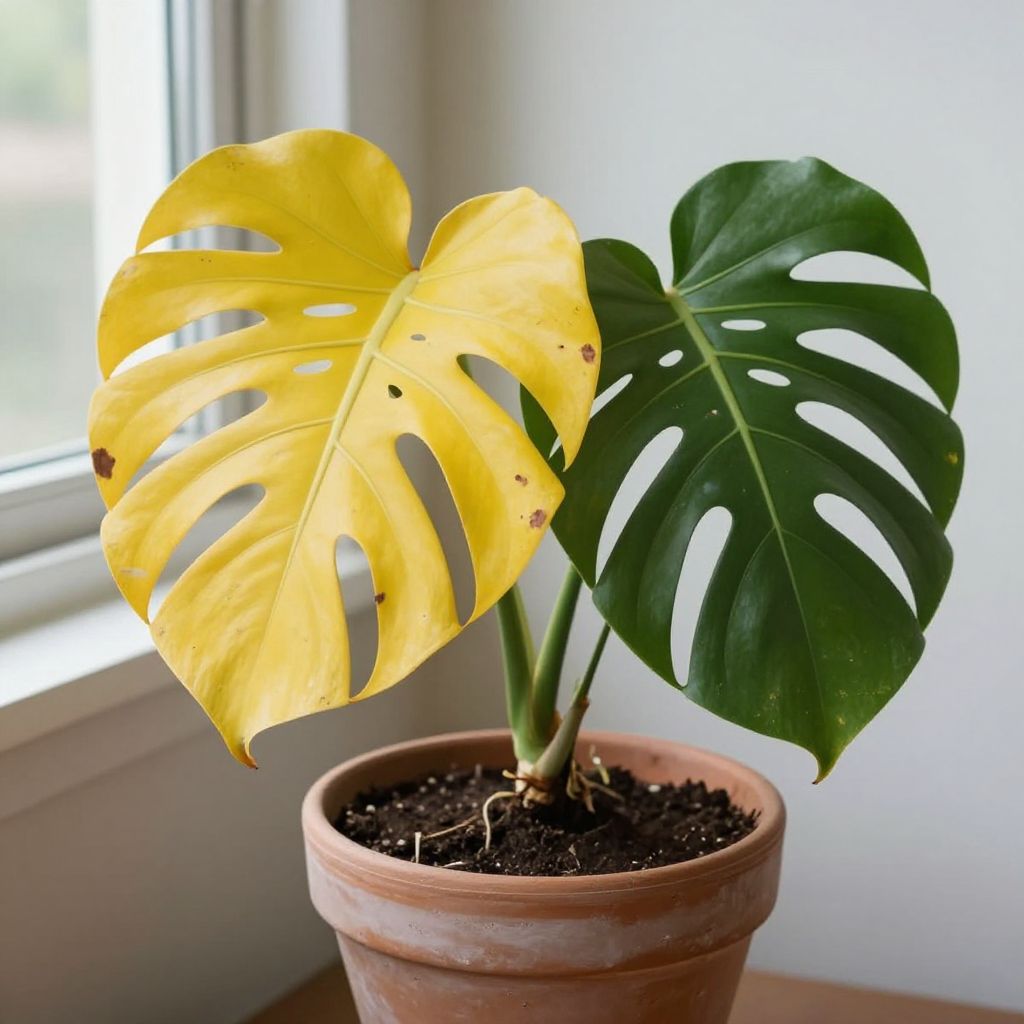
Why is my Monstera turning yellow? Yellow leaves are usually a sign that something in the plant’s care is out of balance, most often watering, light, or drainage. The good news is that Monstera deliciosa and related Monstera types usually recover well once you correct the problem.
The key is to look at which leaves are yellowing, how fast it’s happening, and what the soil feels like. A little yellowing on older leaves can be normal, but widespread yellowing means your Monstera is asking for help.
Why is my Monstera turning yellow?
Most yellow Monstera leaves are caused by overwatering, poor drainage, too much direct sun, underwatering, low light, or root stress. Check the soil first: if it stays wet for days, the roots may be struggling; if it dries out too fast, the plant may be dehydrated. Pests, cold drafts, and nutrient issues can also contribute.
Start with the leaves and soil
Before changing anything, inspect the plant closely. The pattern of yellowing tells you a lot about the cause.
- Lower, older leaves yellow first: often normal aging, or a mild watering issue.
- Several leaves yellow at once: usually watering, drainage, or root problems.
- Yellowing with brown, crispy edges: often underwatering, sun scorch, or dry air.
- Yellowing with soft stems or a musty smell: likely overwatering or root rot.
- Yellow leaves with speckling, webbing, or sticky residue: check for pests.
Also feel the potting mix with your finger. If the top inch is dry but the lower mix is soggy, the roots may be sitting in too much moisture. If the whole pot is bone dry and pulling away from the container, the plant may be too dry.
Common causes of yellow Monstera leaves
1. Overwatering
Overwatering is one of the most common reasons a Monstera turns yellow indoors. When roots stay wet too long, they can’t get enough oxygen, and the leaves begin to yellow and droop.
Signs of overwatering include:
- Yellow leaves that feel soft or limp
- Soil that stays wet for many days
- Potting mix with a sour or swampy smell
- Mushy stems or blackened roots
Fix: Let the top layer of soil dry before watering again, and make sure excess water drains freely. If the soil is staying wet for too long, repot into a chunkier, well-draining mix designed for aroids or houseplants.
2. Poor drainage or root rot
Even if you water carefully, a pot without drainage holes or a dense, compacted mix can trap water around the roots. That often leads to yellowing, especially if the plant sits in a decorative cachepot with no way for water to escape.
If you suspect root rot, slide the plant out of the pot and inspect the roots. Healthy roots are usually firm and pale; rotten roots are dark, mushy, and may break apart easily.
Fix: Trim away rotten roots with clean scissors, repot into fresh mix, and use a pot with drainage holes. Choose a container only slightly larger than the root ball so the mix does not stay wet too long.
3. Underwatering
Monstera can also yellow if it dries out too much between waterings. This is more likely in warm rooms, bright light, or during active growth when the plant uses water faster.
Signs of underwatering include:
- Yellow leaves that become dry or crispy
- Leaves curling or drooping
- Soil pulling away from the pot edges
- Very light pot weight when lifted
Fix: Water thoroughly until excess drains from the bottom, then let the top portion of the mix dry before watering again. Avoid giving small sips too often, because that can keep the upper soil damp while the lower root zone stays dry.
4. Too much direct sunlight
Monsteras like bright, indirect light. Harsh direct sun, especially through a hot window, can bleach or scorch leaves, causing yellow patches that later turn brown.
Signs of sun stress include:
- Yellowing on the side facing the window
- Bleached-looking areas
- Brown, crispy patches after yellowing
Fix: Move the plant back from the window or filter the light with a sheer curtain. Bright indirect light is usually best indoors. Outdoors, place Monstera in dappled shade or morning sun only, depending on your climate.
5. Too little light
Low light can also cause yellowing, especially if the plant is watered too often in response to slow growth. In dim conditions, the soil dries more slowly and the plant uses less water, which increases the risk of root trouble.
Signs of low light include:
- Pale green or yellowing leaves
- Long, stretched stems with wide spaces between leaves
- Slow growth or smaller new leaves
Fix: Move the plant closer to a bright window with indirect light. If natural light is limited, a grow light can help, especially in winter or in darker rooms.
6. Nutrient imbalance
A Monstera that has been in the same pot for a long time may show yellowing from depleted nutrients, especially if it is actively growing. That said, nutrient deficiency is less common than watering or light problems.
Older leaves that yellow gradually can sometimes point to a nitrogen shortage, while yellowing with green veins may suggest other nutrient issues. However, don’t guess too quickly—overfertilizing can make the problem worse.
Fix: Feed lightly during the growing season with a balanced houseplant fertilizer, following the product label. If the plant is rootbound or the soil is exhausted, repotting into fresh mix may help more than adding fertilizer.
7. Temperature stress and drafts
Monsteras prefer stable indoor temperatures. Cold windows, air-conditioning vents, heaters, or sudden temperature swings can stress the plant and lead to yellow leaves.
Fix: Keep the plant away from cold drafts and hot, dry airflow. If you move it outdoors for summer, do so gradually and avoid exposing it to chilly nights.
8. Pests and disease
Spider mites, thrips, and scale can weaken a Monstera and cause yellowing. Pests are more likely if the plant is stressed, dusty, or kept in very dry indoor air.
Look for tiny moving dots, silvery streaks, sticky residue, webbing, or bumps on stems and leaf undersides. Disease is less common indoors, but persistent wet soil can encourage root rot and other fungal problems.
Fix: Isolate the plant, wipe the leaves, and inspect carefully. Treat pests promptly with insecticidal soap or another appropriate houseplant treatment, and improve airflow around the plant.
How to diagnose the problem step by step
- Check the soil moisture. Feel 1 to 2 inches below the surface.
- Look at the yellowing pattern. Is it one older leaf or many leaves at once?
- Inspect the pot. Make sure it has drainage holes and is not sitting in water.
- Examine the roots if needed. Look for rot if the plant is declining quickly.
- Review light exposure. Bright indirect light is usually ideal indoors.
- Check for pests. Look under leaves and along stems.
- Consider recent changes. Repotting, moving the plant, or seasonal shifts can trigger yellowing.
What to do right away
If your Monstera is turning yellow, make one change at a time so you can tell what helps.
- Stop watering until the top layer of soil has dried if the mix is wet.
- Move the plant to brighter indirect light if it is in a dim corner.
- Move it out of harsh direct sun if the leaves look bleached or scorched.
- Repot if the soil is compacted, sour, or the roots are rotting.
- Remove badly yellow leaves with clean pruners if they are not recovering.
Do not remove too many leaves at once. A plant with very little healthy foliage has less energy to recover.
Should you cut off yellow Monstera leaves?
Yes, but only when a leaf is mostly yellow or clearly declining. A leaf that is partly yellow may still be helping the plant photosynthesize, so it can be worth keeping until it is mostly spent.
Use clean, sharp scissors or pruners and cut the leaf stem near the base. If the yellowing is caused by a correctable issue, the remaining healthy leaves should improve once conditions are fixed.
How to prevent yellow leaves in the future
Prevention is mostly about consistent care and good drainage. Monsteras do best when their roots can breathe and the plant gets steady, bright light.
- Use a pot with drainage holes.
- Choose a chunky, airy potting mix that drains well.
- Water only when the top layer of soil has dried a bit.
- Keep the plant in bright, indirect light.
- Rotate the pot occasionally so growth stays even.
- Inspect regularly for pests and wipe dusty leaves.
- Repot when roots become crowded or the mix breaks down.
Seasonal changes matter too. In winter, indoor Monsteras often need less water because growth slows and light levels drop. In spring and summer, they may need more frequent watering and occasional feeding, depending on temperature and light.
When yellowing is normal
Not every yellow leaf means trouble. It is normal for an older bottom leaf to yellow and die off now and then, especially as the plant grows and produces new leaves.
If the plant has one yellow leaf but otherwise looks healthy, with firm stems, new growth, and no signs of pests or rot, you may only need to monitor it. The concern is when yellowing spreads or happens quickly across multiple leaves.
Quick takeaway
If you are asking, “Why is my Monstera turning yellow,” start by checking watering and drainage first, then light, pests, and root health. Correct the most likely issue, give the plant time to respond, and avoid making several changes at once. For more help, you may also find why Monstera leaves turn yellow and common reasons plant leaves turn yellow useful reading.