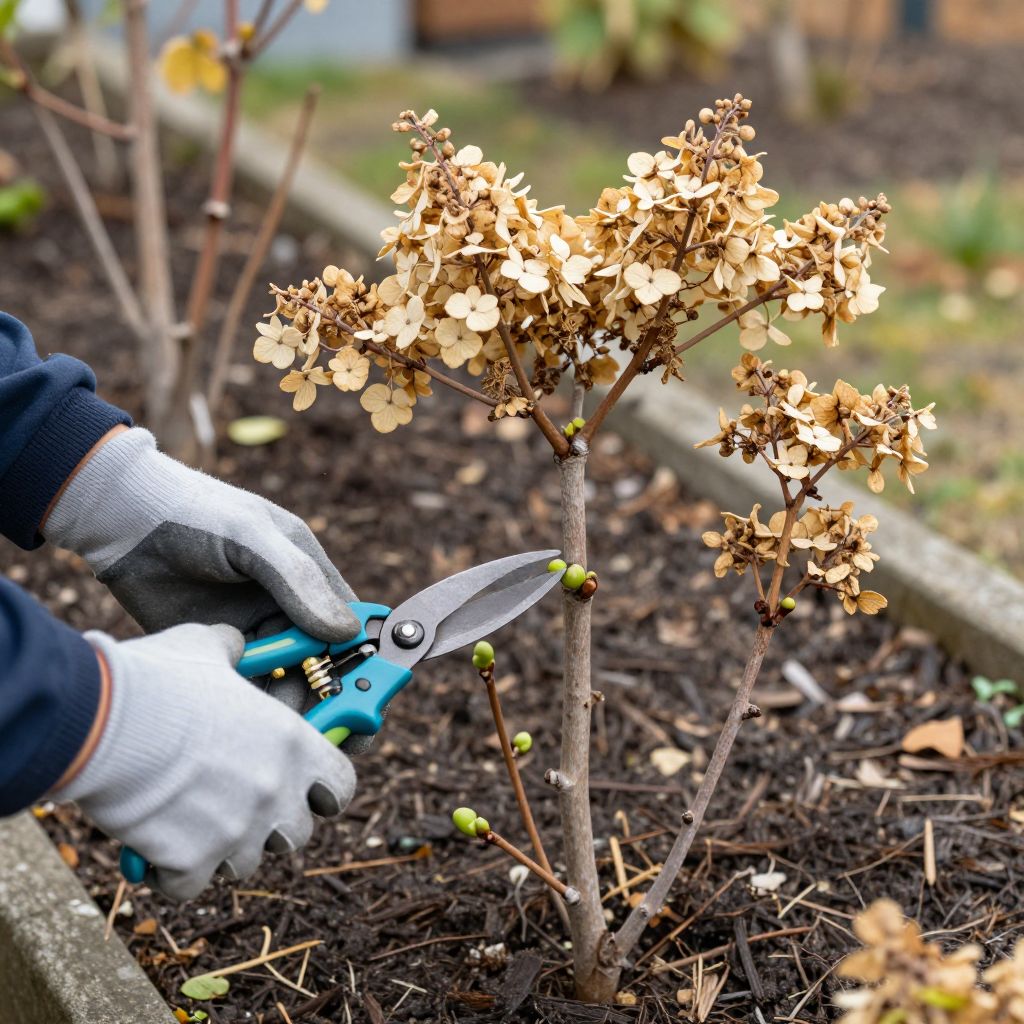
If you’re wondering when to prune Limelight hydrangea, the short answer is late winter to early spring, before new growth starts. This panicle hydrangea blooms on new wood, so you can prune it more confidently than old-wood types, but the exact timing should still fit your climate and the plant’s condition.
The goal is to shape the shrub, encourage sturdy stems, and remove weak or damaged wood without cutting so late that you sacrifice the season’s best growth. A little timing matters, but so does how hard you prune.
When to prune Limelight hydrangea?
Prune Limelight hydrangea in late winter or early spring, just before buds swell and new shoots begin. In most gardens, that means after the worst cold has passed but before active growth starts. Because it flowers on new wood, pruning at this time helps you shape the shrub without reducing the summer bloom display.
Why timing matters for Limelight hydrangea
Limelight hydrangea is a panicle hydrangea, usually grown as Hydrangea paniculata. Unlike hydrangeas that bloom on old wood, this type forms flower buds on the current season’s growth.
That means you are not protecting next year’s flower buds when you prune in late winter. Instead, you are guiding how the plant grows this season.
What happens if you prune too early or too late?
- Too early in winter: In very cold climates, fresh cuts can be exposed to harsh freezes, and you may remove stems that would have helped protect the plant.
- Too late in spring: Once new growth is underway, pruning can remove developing shoots and delay flowering.
- During summer: Heavy pruning after growth has started can reduce bloom size and make the shrub look untidy for longer.
The best season by climate
Local weather matters more than the calendar. Use the plant’s growth stage, not just the month, to decide when to prune.
In cold climates
Wait until late winter or very early spring, after the coldest weather has passed. If your area gets hard freezes, pruning too early can expose tender new cuts to winter damage.
If you see swollen buds or tiny green tips, prune soon if you still need to do it.
In mild climates
You can often prune a little earlier, as long as the shrub is still dormant. Many gardeners in milder regions prune in late winter because the plant begins growing sooner.
If you missed the ideal window
If the shrub has already leafed out, do only light pruning. Remove dead wood, broken stems, and any branches that clearly cross or crowd the center. Save major shaping for next dormant season.
How hard should you prune Limelight hydrangea?
How much you cut depends on the plant’s age, size, and shape. Limelight hydrangea tolerates pruning well, but you do not need to cut it back severely every year.
Light pruning
Light pruning works well for established shrubs that already have a good shape. Remove weak, damaged, or crossing stems and shorten overly long branches to a pair of healthy buds.
Moderate pruning
If the shrub has become large or floppy, reduce the overall framework by about one-third. This can help the plant produce stronger stems and a more balanced form.
Hard pruning
Hard pruning is sometimes used to rejuvenate an overgrown shrub, but it can reduce the plant’s immediate size and may lead to fewer but larger shoots. If you choose this approach, do it in late winter and expect a more vigorous regrowth response.
Avoid cutting every stem to the same height unless you want a very formal look. Natural, varied cuts usually produce a fuller, more attractive shrub.
Step-by-step pruning guide
Use clean, sharp tools and make thoughtful cuts. Good pruning is less about removing as much as possible and more about improving structure.
- Start with dead or damaged wood. Remove stems that are broken, dead, or clearly diseased.
- Look for crossing branches. Take out stems that rub against each other or grow inward toward the center.
- Shorten long, floppy stems. Cut back to a pair of healthy buds or a strong side branch.
- Shape the shrub evenly. Step back often and compare both sides so the plant keeps a natural outline.
- Clean up debris. Remove pruned material from around the base to reduce hiding places for pests and disease.
Where to make the cut
Make each cut just above a healthy bud or branch junction. Cutting too far above a bud leaves a stub that can die back. Cutting too close can damage the bud itself.
Pruning tips for young versus mature plants
Young Limelight hydrangeas need a different approach than older shrubs. The goal is to build a strong framework first, then refine the shape later.
Young plants
For newly planted shrubs, keep pruning light. Remove only broken or weak stems and a few branches that create poor structure. Heavy pruning too early can slow establishment.
Mature plants
Established shrubs can handle more shaping. If stems flop under the weight of flowers, pruning a bit harder in late winter can encourage sturdier growth and better support.
Overgrown shrubs
If the plant has become too tall or wide, reduce it gradually over one or two seasons rather than removing too much at once. This is often easier on the shrub and gives you a better-looking result.
Common pruning mistakes to avoid
- Pruning at the wrong stage: Wait for dormancy or very early spring, not after growth is well underway.
- Using dull tools: Ragged cuts heal poorly and can invite problems.
- Removing too much at once: Severe pruning can create a flush of weak, lanky growth.
- Ignoring plant shape: Random cuts can leave the shrub lopsided or sparse in the middle.
- Forgetting to clean tools: Sanitize blades if you are cutting diseased wood or moving between shrubs.
Tools that make the job easier
You do not need fancy equipment, but the right tools make pruning cleaner and safer.
- Hand pruners: Best for stems up to about pencil thickness.
- Loppers: Useful for thicker canes and awkward branches.
- Pruning saw: Helpful for older, woody stems that loppers cannot handle.
- Gloves: Protect your hands from scratches and rough bark.
Keep blades sharp and clean. A clean cut heals better than a crushed stem.
What else to check while pruning
Pruning is a good time to inspect the whole shrub. A quick check can help you catch problems early.
Look for pests and disease
Check stems and leaf buds for unusual spots, cankers, or insect activity. Hydrangeas are generally sturdy, but stressed plants can still develop issues, especially if airflow is poor or the shrub is crowded.
Check the base of the plant
Remove suckers, dead stems, and any mulch piled directly against the crown. Good airflow around the base helps reduce disease pressure.
How pruning fits into overall Limelight hydrangea care
Pruning works best when the shrub is otherwise growing in decent conditions. Limelight hydrangea does best in full sun to part sun in many gardens, with soil that drains well but stays evenly moist.
If your plant is weak, sparse, or slow to bloom, the issue may be less about pruning and more about site conditions. Poor drainage, too much shade, drought stress, or compacted soil can all affect performance.
Helpful care basics
- Plant in soil that drains well.
- Water deeply during dry spells, especially for young shrubs.
- Mulch to help hold moisture and moderate soil temperature.
- Avoid heavy nitrogen feeding, which can push leafy growth at the expense of flowers.
Should you deadhead Limelight hydrangea?
Deadheading is optional. You can remove spent flower heads for a tidier look, but many gardeners leave them on for winter interest. If you do deadhead, make the cut just above a strong pair of buds or a healthy stem junction.
Deadheading is not the same as the main annual prune. The best structural pruning still happens in late winter or early spring.
Simple rule to remember
If you want an easy memory aid, use this: prune Limelight hydrangea when the plant is dormant or just waking up, before new growth gets going. Then shape lightly to moderately, depending on the shrub’s size and condition.
When in doubt, prune less rather than more. You can always remove a little extra next season, but you cannot put stems back once they are gone.
If you’d like to compare timing for other hydrangea types, you may also find these guides helpful: when to prune hydrangea and when do you trim hydrangeas.