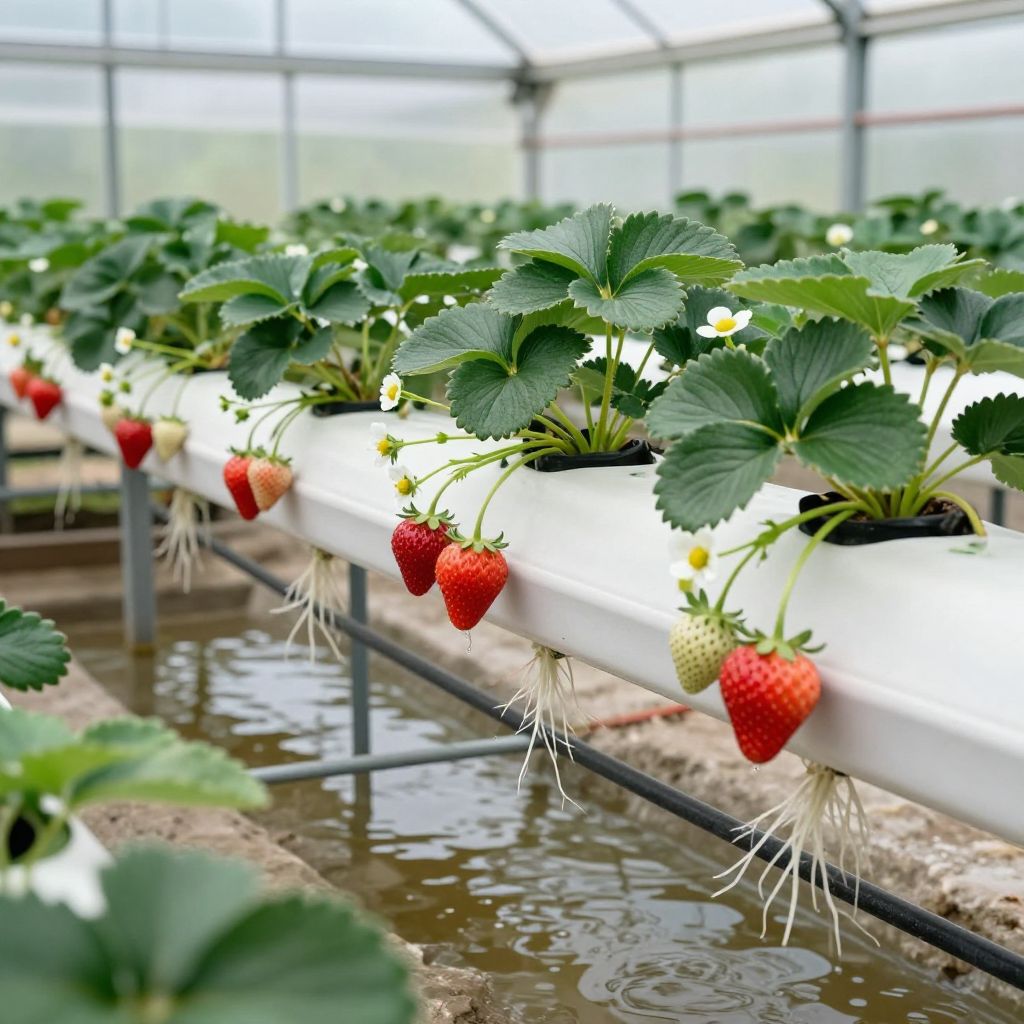
What are hydroponic strawberries? They are strawberry plants grown without soil, with their roots supported in a nutrient-rich water solution instead. This method can be used indoors or in protected outdoor systems, and it lets you control moisture, nutrients, and root conditions much more precisely than in a traditional bed.
For home gardeners, hydroponic strawberries can be a clean, productive way to grow fruit in a small space. Success depends on giving the plants enough light, steady oxygen at the roots, balanced feeding, and good airflow to reduce disease.
What are hydroponic strawberries?
Hydroponic strawberries are strawberry plants grown in a soilless setup, such as nutrient film technique (NFT), deep water culture, drip systems, or vertical towers. Instead of drawing nutrients from soil, the roots receive water mixed with essential minerals, while a support medium like coco coir, perlite, or rockwool holds the plant in place.
How hydroponic strawberries grow
Strawberries are naturally adaptable, which is why they can perform well in hydroponics when their basic needs are met. The key is not the absence of soil, but the consistency of water, oxygen, light, and nutrients.
What the roots need
- Moisture: Roots should stay evenly damp, not waterlogged.
- Oxygen: Healthy roots need air as much as water.
- Nutrients: Plants need a complete hydroponic fertilizer made for fruiting crops.
- Support: A stable medium helps anchor the crown and runners.
Common hydroponic systems for strawberries
- Drip systems: Good for containers and larger home setups.
- NFT channels: Useful for small, shallow-rooted plants if flow stays reliable.
- Vertical towers: Space-saving, but they can dry unevenly if not managed carefully.
- Deep water culture: Less common for strawberries, since roots can be more vulnerable to low oxygen if the system is not well aerated.
Best growing conditions for hydroponic strawberries
Strawberries in hydroponics do best with bright light, moderate temperatures, and stable feeding. If you are growing indoors, you control most of these conditions. If you are growing in a greenhouse or covered patio, you will need to adjust for seasonal changes in heat, humidity, and day length.
Light
Strawberries need strong light to flower and fruit well. Outdoors, they prefer full sun. Indoors, use a high-quality grow light and place it close enough for good intensity without scorching leaves.
Temperature
Moderate temperatures are usually best. Excessive heat can reduce flowering and fruit quality, while cold conditions slow growth. If your growing area gets hot, increase airflow and shade the system during the hottest part of the day.
Humidity and airflow
Good airflow helps prevent fungal problems and supports pollination. Aim for a growing area that is not stagnant or overly humid. In enclosed spaces, a small fan can make a big difference.
How to start hydroponic strawberries
You can start with young transplants, bare-root crowns, or runners rooted in a propagation system. For beginners, healthy nursery plants are usually the easiest option because they establish faster and are less likely to fail than weak seedlings.
- Choose a system that fits your space and maintenance level.
- Use a clean growing medium such as coco coir, perlite, or rockwool.
- Set plants so the crown sits above the medium, not buried.
- Mix a hydroponic nutrient solution designed for fruiting plants.
- Check pH and nutrient strength regularly, especially during establishment.
- Provide strong light and steady airflow from the start.
Planting tips that matter
- Do not bury the crown: A buried crown can rot.
- Do not let roots dry out: Transplant quickly and keep media evenly moist.
- Space plants well: Crowding reduces airflow and makes disease more likely.
Nutrient and water management
Hydroponic strawberries are sensitive to imbalances, so steady management matters more than heavy feeding. The exact nutrient program depends on your system, water source, and plant stage, so adjust based on plant response rather than following a rigid schedule.
What to watch
- Leaf color: Pale leaves may signal low nutrients or poor uptake.
- Flowering: Weak flowering can point to too little light, excess nitrogen, or stress.
- Root health: Brown, slimy roots suggest oxygen problems or disease.
- Fruit quality: Small or bland berries may reflect light, nutrition, or pollination issues.
pH and solution balance
Strawberries generally prefer a slightly acidic root zone in hydroponics. If pH drifts too high or too low, nutrient uptake suffers even when fertilizer is present. Test regularly and correct gradually rather than making sudden large changes.
Common watering mistakes
- Allowing the system to dry out between cycles.
- Keeping roots constantly saturated with no oxygen.
- Using nutrient solution that is too strong for young plants.
- Ignoring evaporation and topping up with plain water only for too long.
Pruning, training, and pollination
Hydroponic strawberries still need basic maintenance. Removing dead leaves, managing runners, and helping with pollination can improve fruit quality and reduce disease pressure.
Pruning and runner control
Many strawberry plants send out runners, especially when they are vigorous. In a fruiting hydroponic system, runners often take energy away from berries, so pinch them off unless you want to propagate new plants.
- Remove yellow, damaged, or diseased leaves promptly.
- Trim crowded foliage to improve airflow.
- Keep the crown open and visible for inspection.
Pollination indoors
Outdoors, insects usually handle pollination. Indoors or in enclosed systems, you may need to assist by gently shaking flower clusters or using a soft brush. Poor pollination can cause misshapen berries with uneven development.
Common pests and diseases
Even without soil, strawberries can still face pests and disease. Cleanliness, airflow, and early inspection are your best defenses.
Pests to watch for
- Aphids
- Spider mites
- Thrips
- Whiteflies
- Slugs or snails in outdoor or greenhouse setups
Diseases and disorders
- Root rot: Often linked to too much moisture and too little oxygen.
- Powdery mildew: More likely in humid, poorly ventilated spaces.
- Gray mold: Can develop on flowers and fruit in damp conditions.
- Nutrient deficiency symptoms: May show as chlorosis, poor growth, or weak fruiting.
Prevention tips
- Keep tools and reservoirs clean.
- Remove fallen leaves and old fruit.
- Maintain airflow around plants.
- Inspect leaves and crowns regularly for early signs of trouble.
- Quarantine new plants before adding them to an established system.
Harvesting hydroponic strawberries
Harvest berries when they are fully colored and fragrant. Strawberries do not ripen much after picking, so wait until they look and taste ready on the plant. Pick gently to avoid bruising the fruit and damaging nearby flowers.
How to harvest correctly
- Check berries daily once ripening begins.
- Use clean scissors or pinch the stem just above the fruit.
- Handle berries lightly and avoid stacking them deeply.
- Remove overripe or damaged fruit to discourage mold.
Indoor vs. outdoor hydroponic strawberries
The same plant can grow in either setting, but the maintenance changes. Indoors, you manage light, pollination, and airflow. Outdoors or in a greenhouse, you must also account for weather, pests, and seasonal temperature swings.
Indoor advantages
- More control over light and temperature
- Cleaner growing environment
- Longer growing season in many climates
Outdoor or greenhouse advantages
- Lower energy needs if sunlight is sufficient
- More natural pollination outdoors
- Potentially larger systems for more plants
Best practices for long-term success
Hydroponic strawberries reward consistency. Small problems can become big ones quickly, so regular observation is more valuable than occasional heavy correction.
- Check plants several times a week for leaf color, pests, and root health.
- Keep records of pH, nutrient changes, and plant performance.
- Replace weak or diseased plants early.
- Refresh or clean system components between crops if buildup occurs.
- Choose varieties known to perform well in containers or protected culture when possible.
Conclusion
What are hydroponic strawberries? They are a soilless way to grow strawberries with precise control over water, nutrients, and root conditions. If you want to try them, start with a simple system, healthy transplants, and careful monitoring of light, airflow, and pH.
If you want to keep learning about strawberry care, see when to fertilize strawberries and whether strawberry plants come back each year.