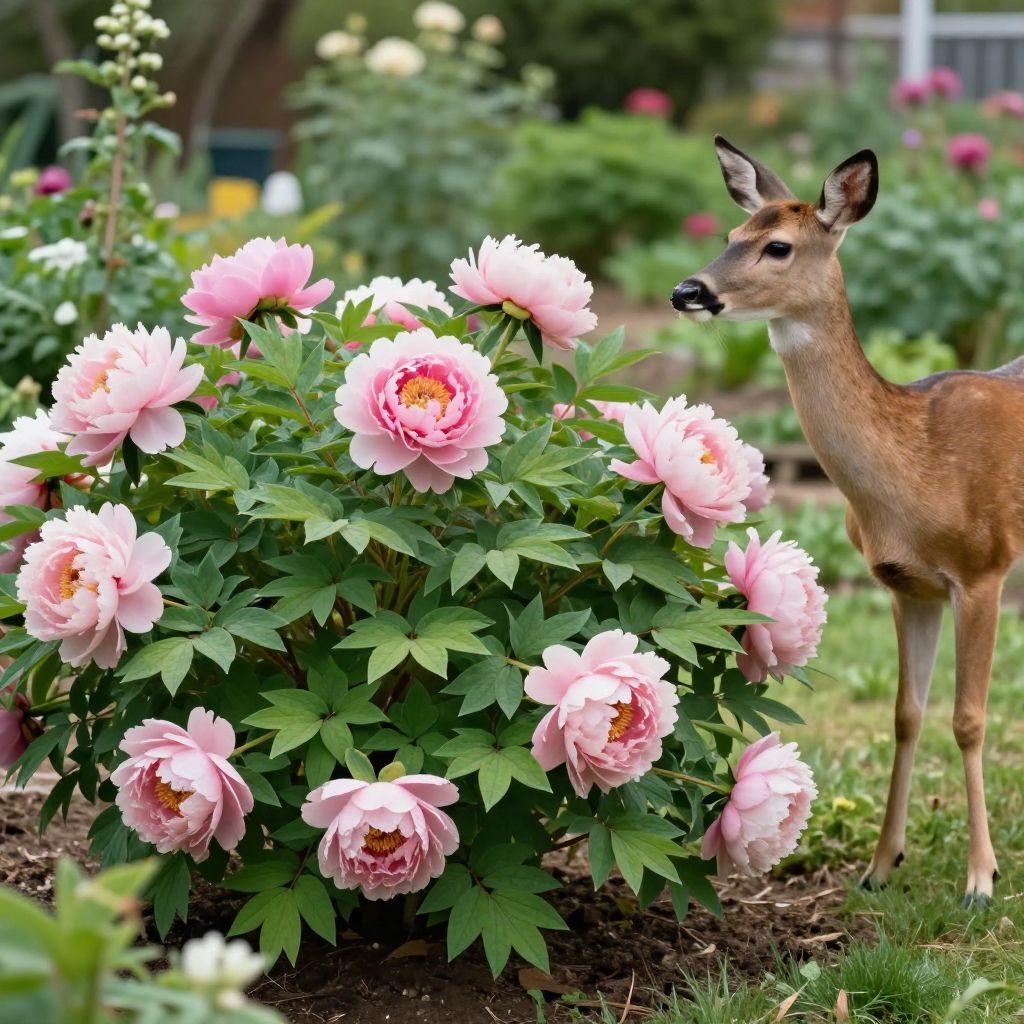
Are peonies deer resistant? In many gardens, yes—peonies are among the flowers deer usually leave alone, especially once the plants are established. That said, “deer resistant” does not mean deer-proof, and hungry deer may still browse peonies if food is scarce.
If you want a long-lived flowering perennial that is less tempting to deer than many other ornamentals, peonies are a smart choice. The key is to grow them well, protect young plants, and understand when deer pressure is most likely to become a problem.
Are peonies deer resistant?
Yes, peonies are generally considered deer resistant because their foliage, stems, and buds are usually unappealing to deer. Most deer prefer softer, tastier plants first. However, in areas with heavy deer pressure or limited natural food, deer may still nibble peonies, especially new growth and flower buds.
Why deer usually avoid peonies
Deer tend to browse plants based on taste, texture, and availability. Peonies are not their first choice because the leaves are somewhat coarse and the plant is not especially palatable compared with many tender ornamentals.
That said, deer behavior changes with the season and local conditions. In spring, when new shoots emerge, deer may sample almost anything. In late summer or drought periods, they may also be less selective.
What deer are most likely to eat
- Soft new shoots in spring
- Flower buds before they open
- Young, newly planted peonies
- Plants in gardens with very high deer traffic
How to grow peonies so they stay healthy and less attractive to deer
Healthy peonies are more likely to recover from minor browsing and less likely to struggle after damage. Give them the right site, good drainage, and enough sun so they grow strong, bloom well, and establish quickly.
Best growing conditions
- Sunlight: Full sun is best in most climates, though light afternoon shade can help in very hot regions.
- Soil: Fertile, well-drained soil is essential. Peonies dislike soggy roots.
- Air circulation: Good spacing helps reduce fungal disease.
- Space: Leave enough room for mature clumps to spread without crowding.
Peonies perform best when planted where water drains away quickly after rain. Heavy clay can work if improved with organic matter and raised slightly, but avoid planting in low spots where roots may sit in water.
Planting tips that matter
- Choose a sunny site with room for long-term growth.
- Work compost into the soil if it is poor or compacted.
- Plant the crown at the correct depth; peonies planted too deeply may fail to bloom well.
- Water thoroughly after planting, then keep the soil evenly moist while roots establish.
- Mulch lightly, but keep mulch away from the crown.
One of the most common peony mistakes is planting too deep. If the crown is buried too far below the soil surface, the plant may grow leaves but produce few or no flowers.
How to protect peonies from deer
Even though peonies are deer resistant, protection is still wise if deer regularly visit your yard. The most effective strategy is to combine several methods rather than rely on one.
Practical deer protection options
- Physical barriers: Fencing is the most reliable protection, especially for young plants.
- Netting or cages: Useful for individual peonies in small beds.
- Repellents: Can help, but usually need reapplication after rain and new growth.
- Garden placement: Plant peonies closer to the house, patio, or other high-activity areas if deer browse the outer edges of the garden first.
If deer are a serious problem in your area, protect peonies early rather than waiting until damage appears. Young growth is easier to defend than a plant that has already been repeatedly nipped back.
What works best in real gardens
For light deer pressure, repellents and strategic planting may be enough. For moderate to heavy pressure, use fencing or cages around new plants and especially around buds in spring. A repellent alone is often not enough when deer are very hungry.
Do deer damage peonies permanently?
Usually, no. Mature peonies are tough perennials and can often recover from occasional browsing. The bigger concern is repeated damage to new growth, which can reduce flowering and weaken the plant over time.
If deer eat the stems before the plant has stored enough energy, you may see fewer blooms the following season. This is especially true for newly planted peonies that are still getting established.
Signs deer have been feeding on peonies
- Cleanly nipped stems or leaves
- Missing flower buds
- Flattened or trampled growth near the plant
- Repeated damage on the outer edge of the bed
Common peony problems that are not deer-related
Sometimes gardeners blame deer when another issue is actually responsible for poor growth or missing blooms. It helps to rule out basic care problems before assuming browsing is the cause.
Why peonies fail to bloom
- Planted too deeply
- Not enough sun
- Recently moved or divided
- Too much nitrogen fertilizer
- Late frost damaging buds
Other common issues
- Botrytis blight: A fungal disease that can cause blackened buds or collapsing stems in cool, wet weather.
- Powdery mildew: More common in crowded plantings or during humid conditions.
- Ants on buds: Usually harmless and not a sign of disease or deer damage.
Good spacing, clean garden hygiene, and proper watering at the base of the plant can reduce many of these problems. Avoid overhead watering late in the day if your garden is prone to fungal disease.
Watering, feeding, and seasonal care for deer-resistant peonies
Peonies are low-maintenance once established, but they still need consistent care to perform well. Strong plants are better able to tolerate occasional browsing and recover from stress.
Watering
Water newly planted peonies regularly during their first growing season, especially during dry spells. Established plants usually need less frequent watering, but they benefit from deep watering during prolonged drought rather than frequent shallow sprinkles.
Always adjust to your soil and climate. Sandy soil dries faster than clay, and hot, windy sites need more attention than cool, sheltered ones.
Feeding
Use compost or a balanced, light feeding approach if your soil is poor. Too much fertilizer can push weak, leafy growth and reduce flowering. In rich garden soil, peonies often need very little supplemental feeding.
Pruning and cleanup
- Remove spent blooms if you want a tidier look.
- Cut back foliage in fall after it has died back naturally.
- Dispose of diseased leaves rather than composting them if fungal problems are present.
Fall cleanup is especially useful in gardens where botrytis or leaf spot has been a problem. Clean debris helps reduce disease carryover into the next season.
Can you propagate peonies?
Yes, but peonies are not the easiest perennial to divide. Herbaceous peonies are usually propagated by division when plants are dormant, while tree peonies are handled differently. Because peonies dislike disturbance, division should be done only when necessary.
If you divide a peony, expect it to take time to re-establish. A newly divided plant may bloom poorly for a season or two while roots recover. That also means fresh divisions can be more vulnerable to deer until they settle in.
Best landscaping uses for peonies in deer-prone gardens
Peonies work well in mixed borders, foundation plantings, and perennial beds where you want dependable spring color. Their long lifespan makes them especially valuable in established gardens.
In deer-prone areas, place peonies where they are easiest to protect and where deer are less likely to browse first. Pair them with other deer-resistant plants to reduce overall damage pressure in the bed.
Good placement ideas
- Near a walkway or patio where you can monitor them easily
- Inside a fenced garden area
- Behind stronger deer deterrents such as shrubs or barriers
- In a sunny border with good air flow
What to do if deer are already eating your peonies
If browsing has already started, act quickly. The sooner you intervene, the more likely your peonies are to recover and bloom normally next season.
- Inspect the damage and confirm deer are the cause.
- Install a physical barrier if possible.
- Apply a deer repellent according to the label directions.
- Protect new growth and buds first.
- Keep the plant healthy with proper watering and cleanup.
If the damage is minor, the plant may bounce back with little trouble. If stems are repeatedly stripped, focus on prevention before the next flush of growth appears.
Conclusion
So, are peonies deer resistant? Yes, generally they are, but they are not completely safe in every garden. The best results come from healthy planting, good drainage, full sun, and protection during periods of heavy deer pressure.
If you’re planning a deer-conscious garden, peonies are still a strong choice. For more plant selection ideas, you may also want to read about are begonias deer resistant and are azaleas deer resistant.