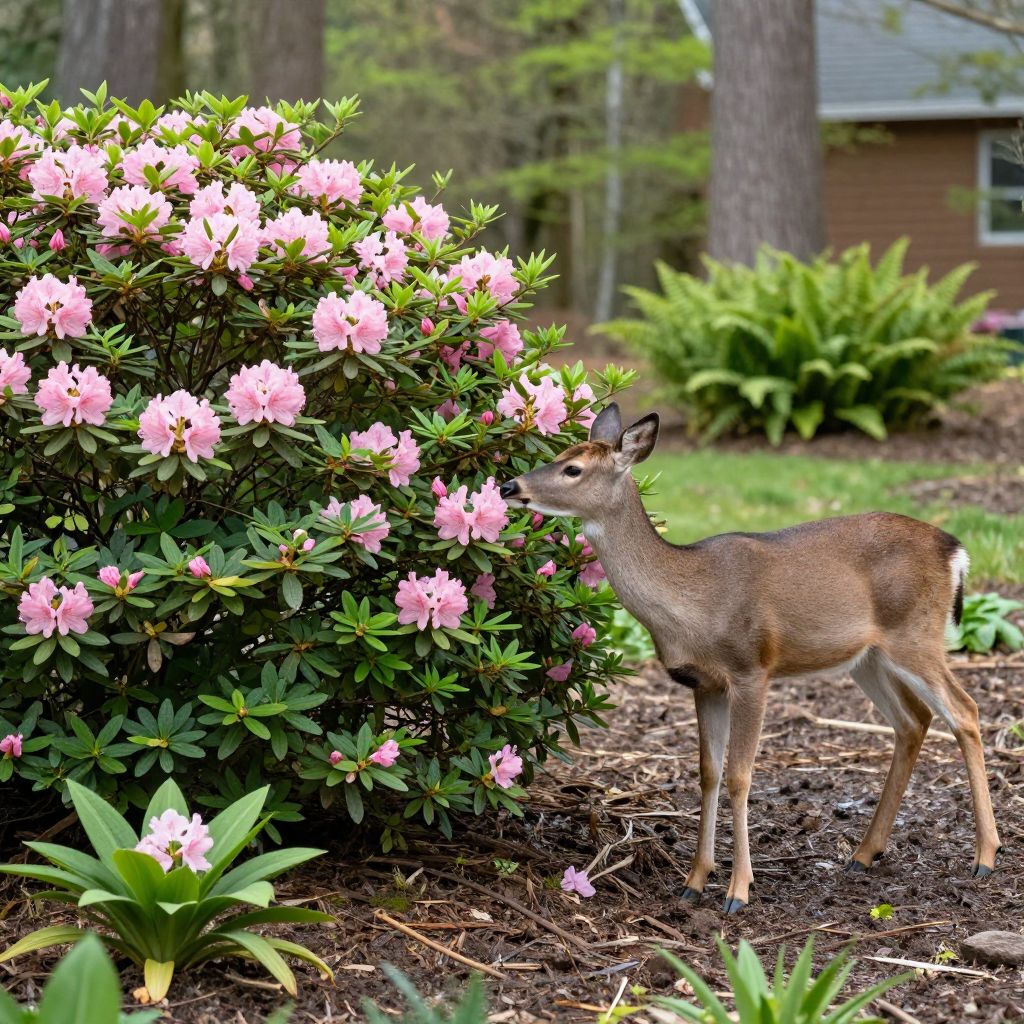
Are azaleas deer resistant? If deer visit your yard, this is one of the first questions to ask before you plant. Azaleas are beautiful shrubs, but they are not reliably deer resistant, especially when other food is scarce.
That doesn’t mean you can’t grow them. With the right site, good plant care, and a few deer-management tactics, azaleas can still thrive in a landscape where browsing pressure is moderate.
Are azaleas deer resistant?
Azaleas are generally considered deer tolerant at best, not deer proof. Deer may avoid them when plenty of other plants are available, but they will browse azaleas in hungry seasons, new plantings, or heavily deer-populated areas. If deer are common where you live, plan on protection rather than relying on plant resistance alone.
Why deer browse azaleas
Deer choose plants based on availability, season, and local pressure. Azaleas have tender growth, especially in spring, and new shoots can be appealing when deer are feeding heavily.
What makes azaleas vulnerable
- Soft new foliage is easier for deer to eat than older, tougher leaves.
- Low shrubs are within easy reach of browsing deer.
- Newly planted azaleas are often more attractive than established, woody shrubs.
- Winter and early spring can bring more browsing when other food is limited.
What may help discourage browsing
Some gardeners notice deer ignore azaleas more often when the shrubs are planted near strongly scented or less-palatable plants. That can help a little, but it is not dependable enough to call azaleas truly deer resistant.
How to grow azaleas successfully in deer country
If deer are part of your landscape, the best strategy is to grow azaleas well and protect them from damage. Healthy shrubs recover from light browsing better than stressed ones.
Choose the right site
Azaleas prefer bright shade or filtered sun, especially morning sun with afternoon protection in warmer climates. Too much hot sun can scorch leaves, while deep shade can reduce flowering.
They also need well-drained, acidic soil. Waterlogged roots lead to decline, and stressed plants are more likely to suffer from deer or pests.
Prepare the soil properly
Before planting, loosen the soil and work in organic matter if needed. Azaleas do best in soil that holds moisture but drains well. If your soil is heavy clay, consider planting in a raised bed or mound to improve drainage.
- Check drainage by digging a hole and filling it with water.
- If water lingers for hours, improve the site before planting.
- Use compost sparingly and mix it into the native soil rather than creating a rich pocket of amendment only.
Avoid planting azaleas too deep. The root flare should sit at or slightly above soil level to reduce rot and stress.
Water correctly after planting
New azaleas need consistent moisture while they establish, but they should never sit in soggy soil. Water deeply when the top layer of soil begins to dry, and adjust based on rainfall, temperature, and soil type.
A 2- to 3-inch layer of mulch helps conserve moisture and protect shallow roots. Keep mulch a few inches away from the stems so the base of the plant stays dry and airy.
Feed lightly, not heavily
Azaleas usually do best with modest feeding, if any, depending on soil fertility. Too much fertilizer can cause lush, soft growth that is even more tempting to deer and more prone to disease.
If your soil is poor, use a fertilizer made for acid-loving shrubs according to label directions and local conditions. A soil test is the best way to know whether feeding is needed at all.
Best deer-management strategies for azaleas
Because azaleas are not reliably deer resistant, protection matters most. The most effective approach is usually a combination of barriers, repellents, and smart placement.
1. Use physical barriers first
Fencing is the most dependable deer control method. Even a simple barrier can reduce browsing if it is tall enough and installed well.
- Tall fencing is the most effective option for larger plantings.
- Individual plant cages can protect young azaleas in small gardens.
- Temporary netting or wrap may help during the most vulnerable seasons.
For a single shrub, a cage or protective enclosure is often easier than repeated spraying.
2. Rotate deer repellents
Repellents can help, especially on young plants, but they work best when reapplied after rain and used before deer get used to the shrub. Always follow product labels and test on a small section first if the label recommends it.
Repellents are most useful when combined with fencing or when you’re protecting a few shrubs rather than an entire border.
3. Plant azaleas in less exposed spots
Deer are more likely to browse shrubs planted at the edge of woods, along deer trails, or in open, easy-to-access areas. If possible, place azaleas closer to the house, near patios, or within a mixed planting where deer feel less comfortable lingering.
4. Mix in less palatable plants nearby
While no plant is completely deer-proof, surrounding azaleas with shrubs or perennials that deer usually avoid can reduce browsing pressure. This works best as part of a broader plan, not as a stand-alone solution.
Signs deer are damaging your azaleas
It helps to know whether deer are the culprit before you start treating the problem. Deer browsing has a few common clues.
- Stems are clipped at an angle, often cleanly torn rather than neatly cut.
- Leaves and buds are stripped from the outer edge of the shrub.
- Damage is higher than a rabbit would usually reach.
- New growth disappears overnight or over a few nights.
If you see repeated damage, look for tracks, droppings, or bent stems that suggest deer are entering the area regularly.
How to help azaleas recover from browsing
Light browsing is often more of a setback than a death sentence. Healthy azaleas can bounce back if you reduce stress and avoid overcorrecting.
After browsing, do this first
- Remove only broken or badly damaged stems.
- Water deeply if the soil is dry.
- Refresh mulch if needed, but keep it away from the crown.
- Protect the plant before new growth appears.
Do not rush to prune heavily after deer damage. Azaleas set flower buds at different times depending on type, and excessive pruning can reduce blooms.
Watch for secondary stress
Browsed shrubs are more likely to struggle if they also face drought, poor drainage, or root competition from nearby trees. Keep the plant evenly moist and reduce competition where possible.
Pruning and maintenance tips for healthier azaleas
Good maintenance improves both appearance and resilience. A vigorous azalea is better able to recover from occasional browsing than a weak one.
Prune at the right time
In general, prune azaleas soon after flowering, before they begin forming next season’s flower buds. Light shaping is usually enough. Heavy pruning can reduce flowering and create lots of soft regrowth that deer may target.
Keep the root zone protected
Azaleas have shallow roots, so avoid digging deeply near the base. Use mulch to moderate soil temperature and moisture, and avoid piling soil or mulch against the stems.
Monitor for pests and disease
Stress from browsing can make azaleas more vulnerable to other problems, including leaf spots, root rot in wet soil, and occasional insect issues. Check leaves regularly for discoloration, dieback, or wilting.
If a shrub declines despite good care, inspect drainage first. Many azalea problems start below ground.
Should you plant azaleas if deer are a problem?
Yes, but only if you’re willing to protect them. In areas with moderate deer pressure, azaleas can still be a smart landscape choice when placed carefully and guarded during establishment. In high-pressure deer country, they may need ongoing protection to stay attractive.
If you want a low-maintenance planting with minimal deer damage, choose a mixed landscape plan instead of relying on any one shrub. The best results come from combining plant selection, site design, and physical protection.
Quick takeaways for gardeners
- Azaleas are not reliably deer resistant.
- Deer are most likely to browse tender new growth and young plants.
- Healthy azaleas need acidic, well-drained soil and consistent moisture.
- Fencing and cages work better than repellents alone.
- Planting location and regular monitoring make a big difference.
If you’re deciding whether to grow azaleas in a deer-prone yard, start by choosing the right site and planning protection before planting. For more help with shrub care and landscape planning, browse related gardening guides on azalea planting, pruning, and deer-proofing your borders.
Leave a Reply