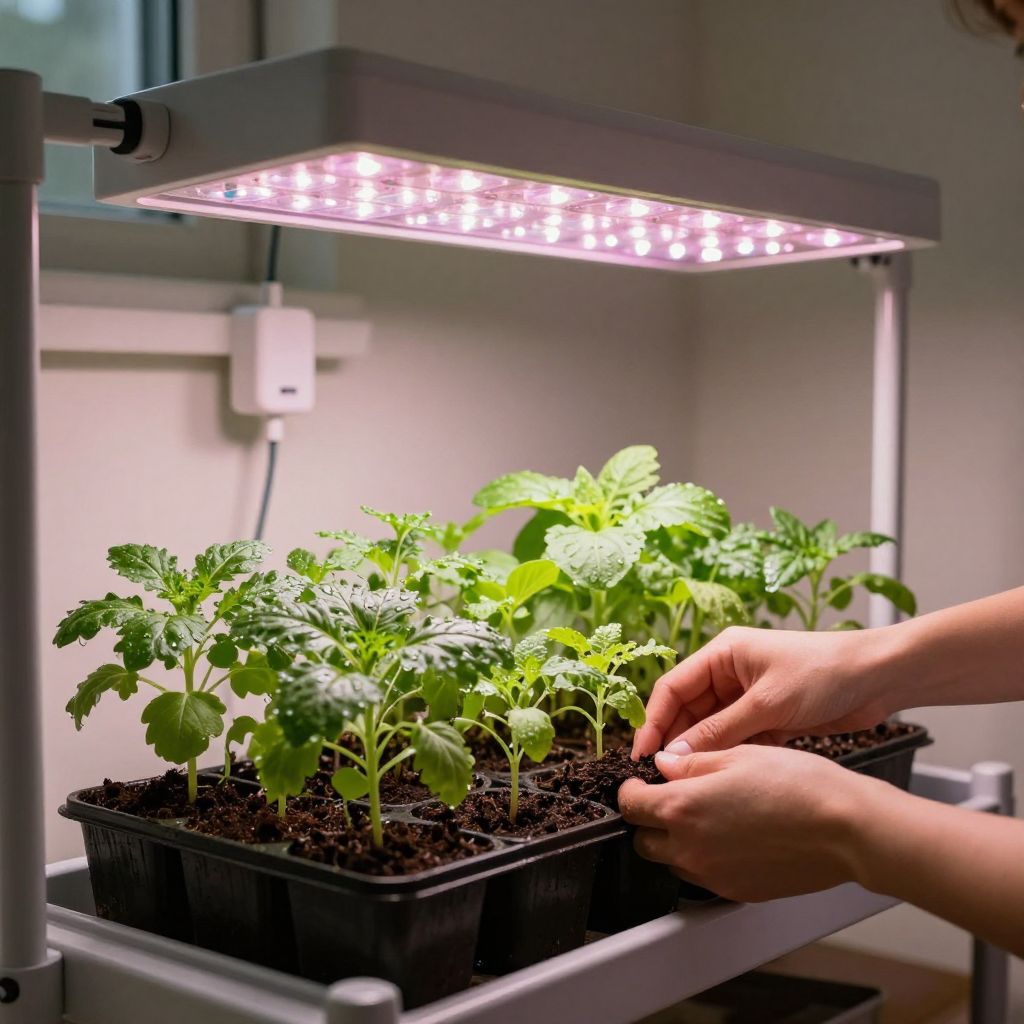
Are LED lights good for plants? Yes—if you choose the right type of light and use it correctly, LEDs can support healthy indoor growth, seedlings, herbs, foliage plants, and even flowering plants. They are efficient, run cooler than many older bulbs, and can be adjusted to suit different plant needs.
The key is not just “using LED lights,” but matching light intensity, duration, and distance to the plant. A weak bulb too far away will disappoint, while a strong grow light too close can stress leaves.
Are LED Lights Good for Plants?
Yes. LED grow lights can be excellent for plants because they provide usable light for photosynthesis, use less energy than many other indoor lighting options, and can be placed close to plants without producing as much heat. The best results come from choosing a true grow light and adjusting it to the plant’s needs.
How LED Lights Help Plants Grow
Plants use light to make energy through photosynthesis. Indoors, natural sunlight is often limited by season, window direction, weather, or room layout, so LED lights can fill the gap.
For indoor gardeners, LEDs are especially useful when you want to:
- Start seeds indoors
- Keep houseplants healthy through winter
- Grow herbs on a shelf or countertop
- Support flowering and fruiting plants indoors
- Supplement low-light windows
Important: not every LED bulb works well for plants. A decorative bulb may light a room, but it may not deliver enough intensity or the right spectrum for growth.
What Plants Need from Light
When gardeners talk about “good light,” they usually mean a mix of brightness, duration, and quality. Plants respond to:
- Intensity — how strong the light is
- Duration — how many hours the light stays on
- Distance — how close the light is to the plant canopy
- Spectrum — the wavelengths the light provides
Most plants do not need a perfect “sunlight replica,” but they do need enough usable light to stay compact, green, and actively growing.
Choosing the Right LED Light for Plants
If you want better results, look for a light marketed as a grow light rather than a standard household LED. A grow light is designed to provide stronger output and a more plant-friendly spectrum.
Good Options for Different Indoor Setups
- Seed starting trays: bright LED panels or bars placed close above seedlings
- Houseplants: full-spectrum LED bulbs or small fixtures near the plant
- Herbs and leafy greens: stronger grow lights with even coverage
- Flowering or fruiting plants: higher-output fixtures suited to light-hungry crops
For most home gardeners, full-spectrum LED grow lights are the easiest choice because they are versatile and comfortable to use indoors.
What to Look For on the Label
Labels can be confusing, but a few details help:
- Full-spectrum or “designed for plant growth”
- Coverage area or recommended hanging height
- Wattage and actual light output, if listed
- Dimmable settings or adjustable height, if available
If a product only says “LED” without any plant-growing details, it may be fine for a decorative houseplant nearby, but not ideal for seedlings or productive crops.
How to Use LED Lights Correctly
Even a good grow light can underperform if it is placed too far away or left on the wrong schedule. The goal is to mimic strong, steady daylight without overdoing it.
Step-by-Step Setup
- Place the light directly above the plants when possible.
- Adjust the height so the leaves receive strong light without heat stress.
- Run the light long enough to support the plant’s needs.
- Check plant response after a week or two and adjust as needed.
- Rotate pots if one side grows faster than the other.
Light Distance Matters
Distance depends on the fixture strength, but many home growers place LED grow lights somewhere around 6 to 24 inches above plants. Stronger fixtures are often hung farther away, while smaller bulbs or bars may need to be closer.
Watch the plant, not just the package. If leaves bleach, curl, or dry at the top, the light may be too intense or too close. If stems stretch toward the light, it is probably too weak or too far away.
How Long to Run LED Lights
Most indoor plants need a regular day-night cycle. Many growers use 12 to 16 hours of light for actively growing plants, but the right amount depends on the species and the strength of the fixture.
Do not leave lights on nonstop. Plants need darkness to rest and process growth signals, and constant light can stress them.
Which Plants Do Best Under LED Lights?
LED lights are especially helpful for plants that need more light than a dim room or winter window can provide.
Best Candidates
- Seedlings such as tomatoes, peppers, and annual flowers
- Herbs like basil, parsley, cilantro, and thyme
- Leafy greens such as lettuce and spinach
- Houseplants that prefer bright indirect light
- Compact flowering plants grown indoors
Low-light houseplants may survive in a room with little natural sun, but they still usually grow better with some supplemental LED light, especially in winter.
Plants That Need More Care
Sun-loving plants are more demanding indoors. Tomatoes, peppers, and many flowering crops need stronger light than a typical houseplant, so a small bulb in the corner is rarely enough.
If you are growing fruiting plants indoors, expect to provide stronger fixtures, careful watering, and good airflow to keep plants compact and healthy.
Common Mistakes When Using LED Lights
Many indoor plant problems blamed on “bad plants” are really light problems. A few simple adjustments can make a big difference.
1. Using a Regular Bulb Instead of a Grow Light
Standard LED bulbs can help a plant near a bright window, but they often do not provide enough intensity for real growth support. For seedlings and high-light plants, choose a fixture made for plants.
2. Hanging the Light Too Far Away
If the light is too distant, plants stretch, thin out, and lean. This is common with seedlings that become leggy and weak.
3. Leaving the Light Too Close
Too much intensity can cause pale patches, curled leaves, or dry leaf tips. This is more likely with powerful fixtures or when plants are moved too close too quickly.
4. Ignoring Watering Needs
Plants under LEDs often grow faster, which can mean they use water more quickly. But they still should not sit in soggy soil. Check moisture with your finger before watering.
5. Forgetting Airflow and Drainage
Bright indoor growing works best with a potting mix that drains well and a container with drainage holes. Stagnant, wet soil invites root problems, especially when growth is active under lights.
How to Tell If Your Plants Are Getting Enough Light
Plants usually show you when the lighting is right or wrong. Learn the signs so you can adjust early.
Signs of Too Little Light
- Long, stretched stems
- Small, pale leaves
- Slow growth
- Plant leaning toward the light
- Few flowers or poor color
Signs of Too Much Light
- Bleached or faded leaves
- Leaf edges drying or curling
- Scorched-looking patches near the top
- Wilting even when soil is moist
If you see a problem, move the light a little farther away, shorten the daily hours, or increase distance gradually over several days rather than making a sudden change.
Indoor Growing Tips for Better Results
LED lights work best as part of a complete indoor growing setup, not as a stand-alone fix. Good soil, drainage, and routine care still matter.
Use the Right Potting Mix
For containers, use a quality potting mix rather than garden soil. Potting mix stays lighter and drains better, which helps roots breathe under indoor conditions.
Keep Leaves Clean
Dust can reduce how much light reaches the leaf surface. Gently wipe large leaves with a soft damp cloth when needed.
Feed Lightly, Not Excessively
Plants growing under LEDs may need regular feeding, but overfertilizing can cause salt buildup and weak growth. Follow the needs of the specific plant and reduce feeding if growth is slow or leaves show stress.
Watch for Pests
Indoor plants under lights can still get aphids, spider mites, fungus gnats, or whiteflies. Inspect leaves, stems, and soil regularly, especially on new plants brought indoors.
Do LED Lights Replace Sunlight?
Sometimes, but not always. A strong LED grow light can replace sunlight for many indoor gardening tasks, especially in enclosed spaces or during dark seasons. For larger, sun-loving plants, natural light plus supplemental LEDs is often the best combination.
Near a bright window, LEDs can extend the day and help plants grow more evenly. In a basement, spare room, or winter setup, they may be the main source of light.
Seasonal Considerations
Light needs change with the season, even for indoor plants. In winter, days are shorter and sunlight is weaker, so LEDs can make a big difference. In spring and summer, you may need less supplemental light if your plants are near bright windows.
If you move plants outdoors for the warm season, acclimate them gradually. A plant grown under indoor LEDs can sunburn quickly if it is suddenly placed in direct outdoor sun.
Final Takeaway
Are LED lights good for plants? Absolutely—when you match the fixture to the plant and use it correctly. Choose a true grow light when needed, keep it at the right distance, and adjust watering, drainage, and light hours to fit your plant’s growth.
If you want to keep learning about indoor plant lighting, you may also find these guides helpful: do plants need UV light and do plants need darkness.