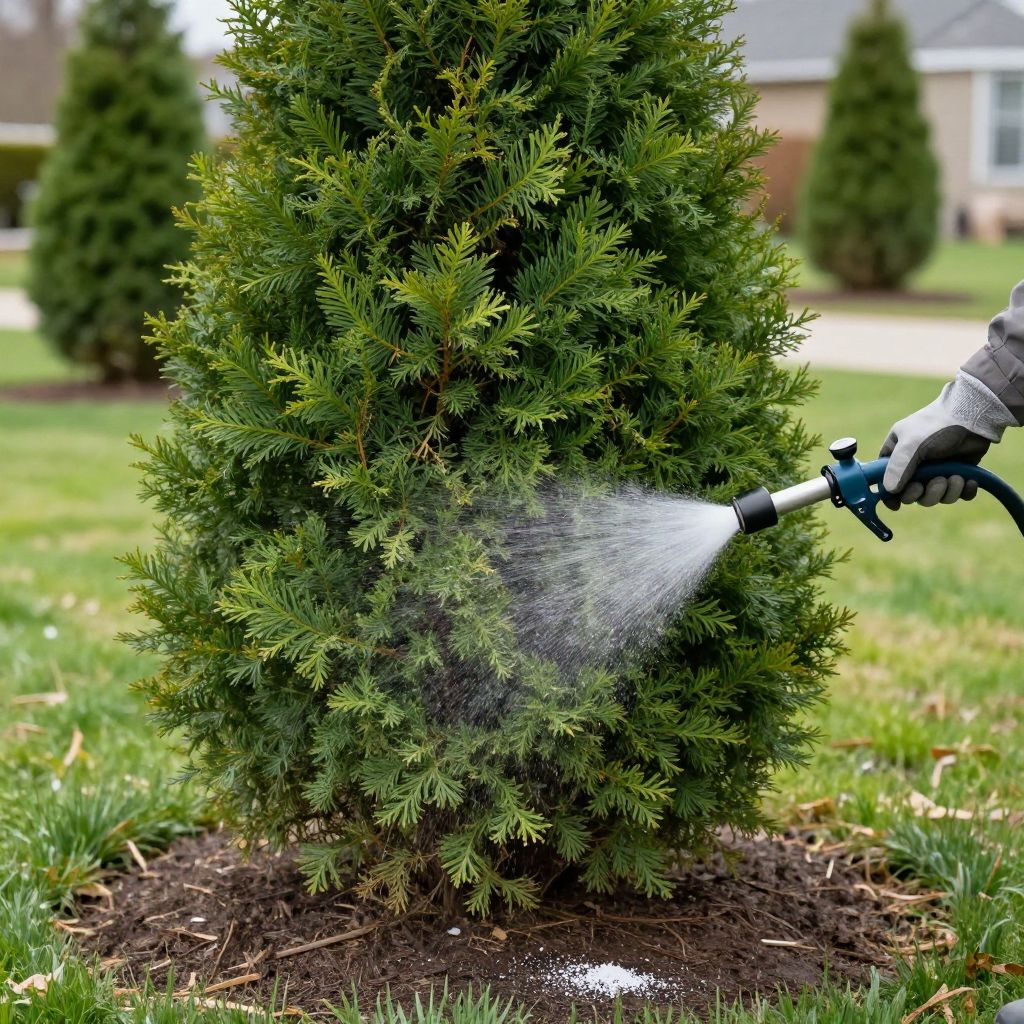
When should you fertilize arborvitae? The short answer is: usually in early spring, just as new growth is starting, and only again if the plant clearly needs it. Most established arborvitae do best with light feeding, not heavy fertilizing, because too much nitrogen can cause weak growth, browning, or winter damage.
The right timing depends on your climate, soil, plant age, and whether the shrub is newly planted or established. A healthy arborvitae often needs little more than good soil, steady moisture, and mulch, but poor growth or pale foliage can mean it’s time to feed carefully.
When to fertilize arborvitae?
The best time to fertilize arborvitae is usually early spring, before or as new growth begins. You can also fertilize a lightly stressed plant in late spring or early summer if soil is poor, but avoid feeding in late summer or fall because tender growth may not harden before winter.
Why timing matters for arborvitae
Arborvitae, including common landscape types like Thuja, grow best when fertilized at the right point in the season. Feeding at the wrong time can push soft growth that is more likely to scorch, dry out, or suffer winter injury.
These evergreens are often used for hedges, screens, and foundation plantings, so their appearance matters year-round. A well-timed, modest feeding supports steady growth without forcing the plant to grow faster than its roots can support.
Best seasonal window
- Early spring: Best overall time for most gardens.
- Late spring to early summer: Acceptable if the plant is showing mild nutrient stress and you missed spring.
- Late summer and fall: Usually avoid fertilizing, especially in colder climates.
- Winter: Do not fertilize dormant plants.
How to tell if your arborvitae actually needs fertilizer
Not every arborvitae needs regular feeding. In many landscapes, an established plant in decent soil can go years without fertilizer and still look good.
Consider fertilizing only if you notice slow growth, pale foliage, sparse tips, or a plant that seems stuck after the first year in the ground. Even then, check watering, drainage, and root competition first, because those issues often look like a nutrient problem.
Signs feeding may help
- Needles or sprays look lighter green than normal.
- New growth is short and weak compared with previous years.
- The plant is growing in thin, sandy, or disturbed soil.
- Nearby trees or shrubs may be competing for nutrients and water.
- A newly planted arborvitae has settled in but is not growing well after the first season.
Signs fertilizer is not the fix
- Brown inner foliage only: older interior needles naturally shed.
- Outer tips are brown after drought, salt exposure, or winter wind.
- Branches are yellowing from poor drainage or root rot.
- The plant is wilting because the soil is too dry or too wet.
How to fertilize arborvitae safely
If you decide to feed, use a balanced, slow-release fertilizer or a product made for evergreens, and apply it according to the label. The goal is to support gradual growth, not to force a flush of soft foliage.
- Water the soil first if it is dry.
- Apply fertilizer around the root zone, not against the trunk.
- Spread it evenly beneath the branch spread, where feeder roots are active.
- Rake lightly into the top layer of soil if the label allows.
- Water again after applying, unless the product directions say otherwise.
Never pile fertilizer at the base of the trunk. That can burn roots and damage bark. A wide, even application is much safer and more effective.
Organic and soil-building options
Many gardeners prefer to improve arborvitae growth with compost and mulch rather than frequent fertilizer. A thin layer of compost worked into the topsoil, plus 2 to 3 inches of mulch, can improve moisture retention and soil structure over time.
Mulch should stay a few inches away from the trunk. A mulch volcano traps moisture against the bark and can lead to rot or pest problems.
What about newly planted arborvitae?
Newly planted arborvitae need special handling. In the first season, their roots are focused on establishment, so heavy fertilizing is usually unnecessary and can even slow recovery if the plant is stressed.
If the soil was prepared well at planting time, wait until the following spring before feeding. If the plant is struggling, first make sure it is getting consistent moisture and is not planted too deeply.
First-year care priorities
- Keep the root ball evenly moist, not soggy.
- Mulch to reduce heat and moisture stress.
- Protect from strong wind and reflected heat if needed.
- Delay strong fertilizer until roots begin to establish.
Soil, sunlight, and drainage: the basics that affect fertilizing
Arborvitae grow best in well-drained soil with consistent moisture and full sun to part shade, depending on the variety and your climate. Poor site conditions often cause more trouble than a lack of fertilizer.
If the soil stays wet, roots may struggle to absorb nutrients. If the site is too dry or too exposed, the plant may brown at the tips even when fertilizer is present.
Before you fertilize, check these conditions
- Drainage: Water should not stand around the roots after rain.
- Moisture: Soil should be evenly moist, especially during establishment.
- Sunlight: Too much shade can reduce density and vigor.
- Soil pH and fertility: A soil test is the best guide if growth is poor.
Common fertilizing mistakes to avoid
Arborvitae are easy to overdo. More fertilizer does not mean better color or faster growth, and excess feeding often creates the very problems gardeners are trying to fix.
- Fertilizing too late in the season: This can encourage tender growth before frost.
- Using too much nitrogen: Fast, weak growth is more prone to stress.
- Feeding drought-stressed plants: Dry roots can be damaged more easily by fertilizer salts.
- Ignoring drainage problems: Nutrients won’t help if roots are suffocating.
- Applying fertilizer right at the trunk: This can burn bark and roots.
How often should you fertilize arborvitae?
For many home landscapes, once a year is enough, and some established plants may not need yearly feeding at all. If the shrub is healthy, well-mulched, and growing in decent soil, skip fertilizer and focus on watering during dry spells.
If growth is weak year after year, a soil test can help you decide whether the issue is low fertility, compacted soil, or another problem. That is a better approach than guessing and applying fertilizer repeatedly.
Pruning, pests, and stress after feeding
Fertilizer will not fix pruning mistakes, insect damage, or disease. If your arborvitae looks thin or browned, inspect it before you feed.
Some common issues include spider mites, bagworms, deer browsing, winter burn, and root stress from poor drainage. Light pruning can shape the plant, but avoid cutting back into old bare wood, because arborvitae often do not regrow well from it.
What to watch for after fertilizing
- New growth should look steady, not overly soft or floppy.
- Needles should remain firm and evenly colored.
- Brown tips after feeding may signal drought, salt, or overfertilizing.
- Rapid, weak growth may mean the fertilizer was too strong or applied too late.
Quick seasonal guide for homeowners
- Spring: Best time to fertilize if needed.
- Early summer: Last practical window in many climates.
- Late summer: Usually stop feeding and let growth harden off.
- Fall and winter: Do not fertilize.
Conclusion
If you’re wondering when to fertilize arborvitae, aim for early spring and keep the feeding light. Check soil moisture, drainage, and overall plant health first, then fertilize only if the shrub truly needs it. A healthy arborvitae usually responds better to good site care than to heavy feeding.
For more seasonal feeding guidance on other shrubs, you may also find these helpful: when to fertilize hydrangeas and when to fertilize azaleas.