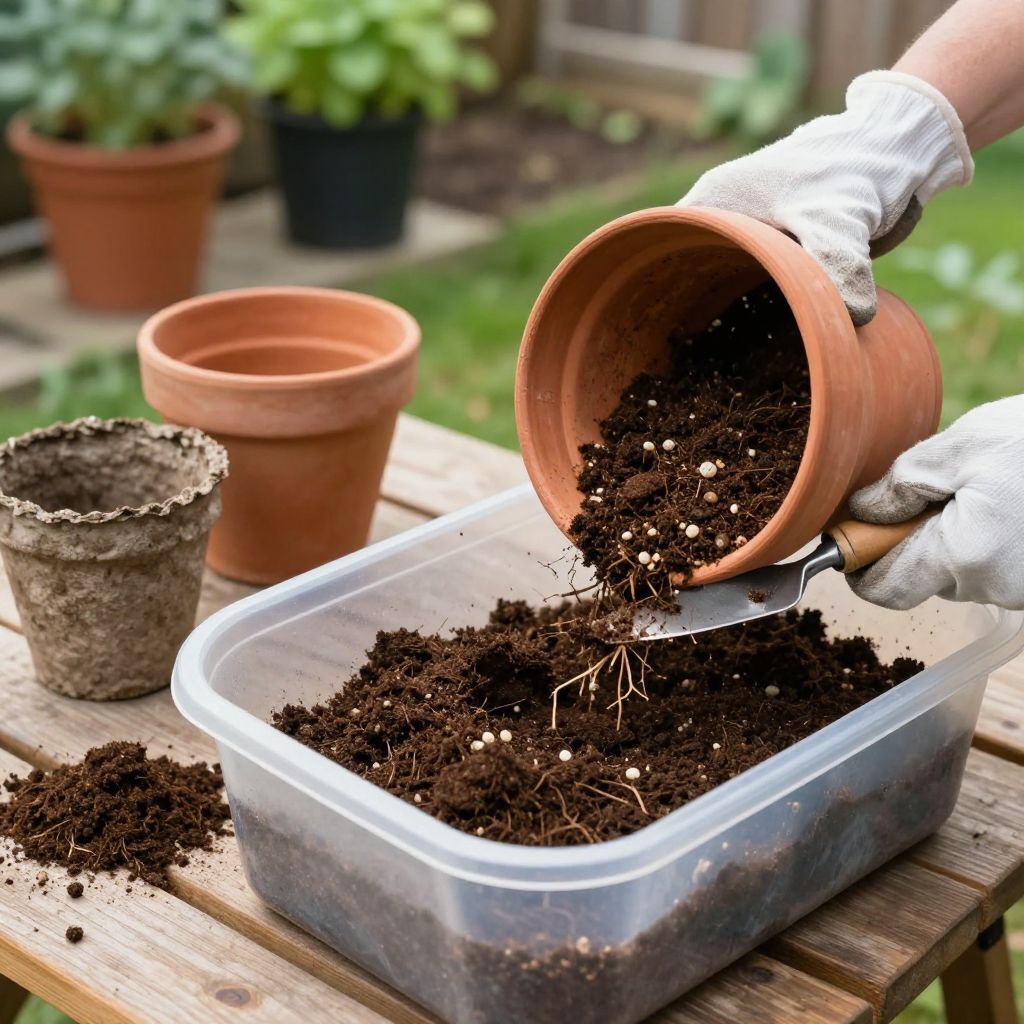
What should you do with old potting soil? The short answer is that you can often reuse it, but only after checking its structure, drainage, and pest history. Old mix that still looks loose and healthy can be refreshed for containers, while tired, compacted, or diseased soil is better repurposed away from sensitive plants.
The right choice depends on what grew in the pot, how long the soil was used, and whether it smells sour, drains poorly, or contains pests. With a few simple checks, you can save money, reduce waste, and give your plants a better growing medium.
What to do with old potting soil?
Use old potting soil again if it is still airy and free of disease, but refresh it first with compost, new potting mix, or other organic matter. If it is compacted, salty, moldy, or came from a sick plant, reuse it only for non-sensitive jobs like filling landscape holes, mulching, or improving garden beds after proper treatment.
How to tell whether old potting soil is still usable
Before you reuse anything, inspect the soil closely. Good potting mix should still feel crumbly, drain well, and smell earthy rather than sour or swampy.
Signs the soil can be reused
- It is loose and light, not hard-packed.
- Water soaks in instead of running straight off the top.
- You do not see fungus gnats, root pests, or obvious disease symptoms.
- The soil still has some texture from peat, coco coir, bark, perlite, or compost.
Signs it should not go back into a pot for a sensitive plant
- It smells rotten, sour, or anaerobic.
- It is full of white crust from fertilizer salts.
- It is heavily compacted and stays soggy after watering.
- The previous plant had root rot, damping-off, severe mildew, or a known soil-borne disease.
- You see insect larvae, mites, or lots of weed seeds.
If a plant died from disease, do not reuse that potting soil for the same plant family or for seedlings. It is safer to repurpose it elsewhere or discard it.
How to refresh old potting soil for reuse
Old mix usually needs more than a quick stir. Over time, organic particles break down, drainage decreases, and nutrients are depleted. Refreshing the soil restores structure and makes it more reliable for container gardening.
- Remove roots and debris. Pick out old roots, stems, stones, and any dead plant material.
- Break up clumps. Crumble compacted soil by hand or with a small trowel.
- Blend in fresh material. Mix in new potting mix, compost, or a similar soilless amendment to restore air space and nutrients.
- Check drainage ingredients. Add perlite, pumice, or coarse bark if the mix feels too dense.
- Moisten lightly before planting. The soil should be evenly damp, not wet and sticky.
Good refresh ratios
There is no single perfect formula, but a practical approach is to replace about one-third to one-half of the old mix with fresh potting soil or composted material. Use the higher end for tired soil and the lower end if the old mix still looks healthy.
For seedlings and young transplants, lean toward a fresher, finer mix. For established container plants, you can often reuse more of the old soil if drainage remains good.
When to sterilize or discard old potting soil
Some gardeners heat-treat old soil to reduce pests and disease, but this is not always necessary or ideal. Sterilizing can help in limited cases, yet it also kills beneficial organisms and does not fix poor texture.
When heat treatment may help
- The soil was used for healthy plants but may contain insect eggs, fungus gnat larvae, or weed seeds.
- You plan to use it for non-delicate plants rather than seed-starting.
When to avoid reusing it entirely
- The previous plant had a serious soil-borne disease.
- The mix is contaminated with persistent pests.
- The soil is so broken down that it holds too much water and compacts quickly.
For most home gardeners, the simplest and safest option is to repurpose questionable soil in the landscape rather than risk it in containers for prized plants.
Best ways to repurpose old potting soil
If the mix is no longer ideal for pots, it can still be useful. The key is to match it with a job that does not require perfect drainage or sterile conditions.
1. Top off garden beds
Old potting soil can be spread in thin layers over vegetable beds, perennial borders, or shrub beds and then mixed into the top few inches of native soil. This works best when the old mix is reasonably clean and not disease-related.
2. Fill low spots in the landscape
Use it to fill shallow depressions in beds, under shrubs, or in other non-crop areas. Avoid piling it too deeply around trunks or crowns, which can trap moisture.
3. Improve compost piles
Small amounts of old potting soil can be added to compost as a mineral-rich filler. It is especially useful if the mix contains some bark or organic matter. Do not overload the pile with soil, since too much can reduce airflow.
4. Use it as a base layer in large containers
In very large pots, old soil can go in the lower portion if it is clean and reasonably loose. Top with fresh potting mix where roots will grow. This is best for ornamental plantings, not for seed trays or moisture-sensitive crops.
5. Spread it thinly as mulch under established plants
A light layer can help cover bare soil around established shrubs or perennials. Keep it away from stems and crowns, and do not use a thick blanket that seals the surface.
What not to do with old potting soil
Some mistakes can create more problems than they solve. A little caution goes a long way here.
- Do not reuse compacted soil as-is. It will usually drain poorly and suffocate roots.
- Do not use diseased soil for seedlings. Young plants are especially vulnerable.
- Do not assume fertilizer residue means the soil is rich. Salt buildup can actually harm roots.
- Do not mix old soil straight into seed-starting trays. Seedlings need a finer, cleaner medium.
- Do not keep reusing the same mix indefinitely. Potting soil eventually breaks down and loses structure.
How to improve drainage and fertility in reused potting soil
Old potting soil often needs both structure and nutrition. The right amendments depend on what the mix is missing.
If the soil is too dense
- Add perlite or pumice to increase air space.
- Blend in fresh potting mix to restore texture.
- Break up any wet clumps before planting.
If the soil is tired but still loose
- Mix in finished compost for a nutrient boost.
- Add a balanced slow-release fertilizer only if your plant needs it and the product label fits the crop.
- Use fresh mix on top for containers that will hold hungry annuals or vegetables.
If the soil is salty
Salt buildup often shows up as a white crust on the surface or pot rim. In that case, flush the soil thoroughly only if drainage is good, or replace most of the mix if the buildup is severe. Sensitive plants may struggle even after flushing.
Special tips for indoor plants and houseplant pots
Indoor containers need especially reliable drainage because they dry more slowly and are harder to monitor. Old potting soil used for houseplants should be inspected more carefully than soil destined for outdoor beds.
For houseplants
- Use only soil that is free of gnats, mold, and root rot.
- Refresh with a chunky, airy mix if the plant dislikes wet feet, such as many succulents and cacti.
- Repot if roots have filled the container or the soil collapses after watering.
For indoor seed starting
Seedlings do best in a fine, clean, lightweight medium. Reused potting soil is usually not the best choice unless it has been refreshed and screened carefully. Even then, a fresh seed-starting mix is often the safer option for germination.
How long can potting soil last?
Potting soil does not last forever. Each watering and each growing season gradually breaks down the particles that keep the mix open and airy. The more often a pot is watered and fertilized, the faster the mix declines.
As a rule, soil that has been used for one season may still be reusable after refreshing. Soil that has been used for several seasons, especially in small containers, often needs a larger overhaul or a new batch.
Simple checklist before you reuse old potting soil
- Look for pests, mold, and disease symptoms.
- Smell the soil for sourness or rot.
- Check whether water drains well.
- Remove roots and debris.
- Refresh with new mix, compost, or drainage material.
- Use the best soil for the most sensitive plants.
Conclusion: make old potting soil work for you
Old potting soil is often still useful, but only after you judge its condition honestly. Clean, loose mix can be refreshed and reused; tired or diseased soil is better repurposed in the garden or discarded. Start by sorting your old pots today, and save the best material for plants that need reliable drainage and healthy roots.
If you want to keep learning, you may also find it helpful to read about whether potting soil goes bad and using garden soil in pots.