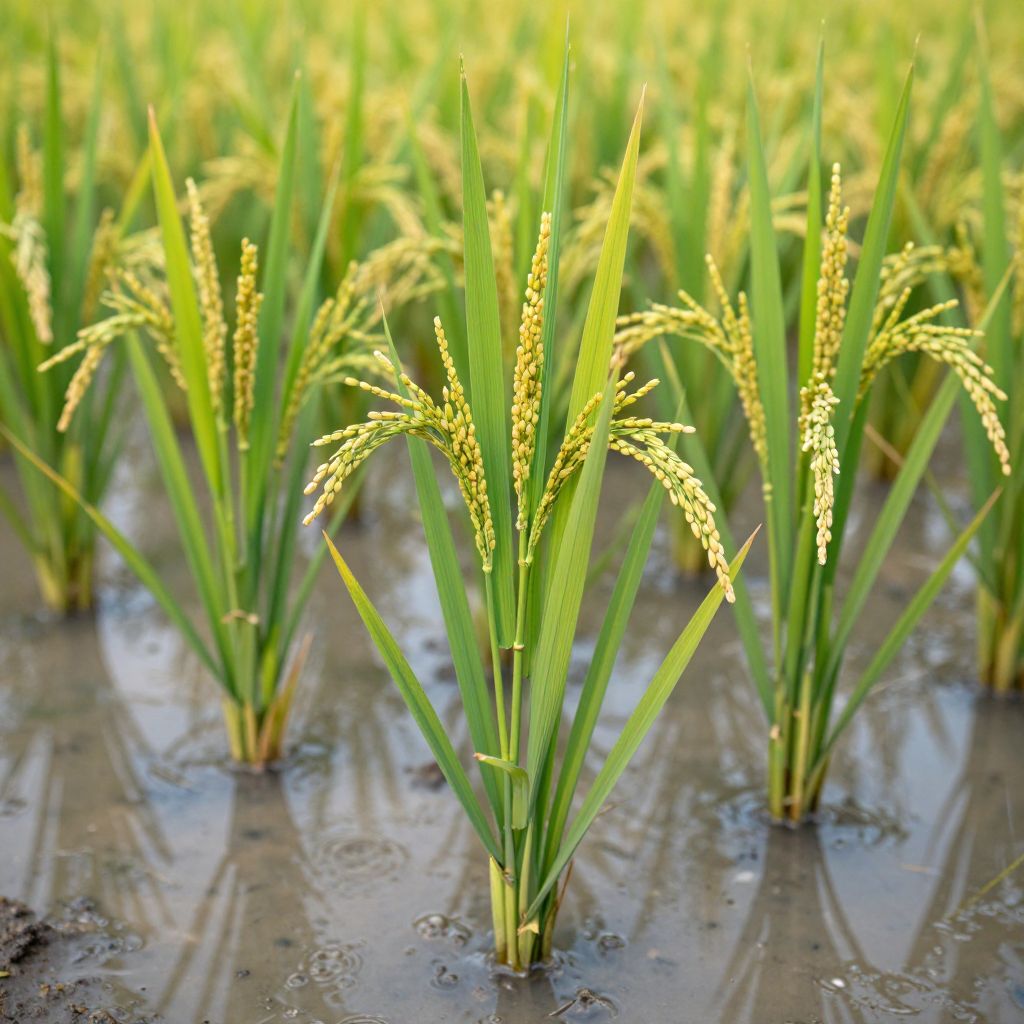
Wondering what does a rice plant look like in the garden or in a paddy? Rice is a grass, so it looks less like a leafy vegetable and more like a tall, narrow-bladed clump with upright stems, a fibrous root system, and a seed head that forms at the top when it matures.
If you are trying to identify rice, grow it at home, or compare it with similar grasses, the details matter. The plant changes a lot from seedling to harvest, so learning its growth stages will help you recognize it and care for it properly.
What does a rice plant look like?
A rice plant (Oryza sativa) is a tufted grass with slender, flat leaves, jointed stems, and a top-heavy seed head called a panicle. Young plants look like fine grass seedlings, while mature plants usually reach 2 to 5 feet tall, depending on variety and growing conditions.
How to identify rice at different growth stages
Rice is easiest to identify by its grass-like form, narrow leaves, and later by its flowering head. The plant changes quickly as it grows, so compare more than one feature before deciding it is rice.
Seedling stage
- Leaves are narrow, smooth, and blade-like.
- Seedlings usually emerge as a single green shoot before producing more leaves.
- The plant looks similar to other young grasses at this stage.
Vegetative stage
- Several upright stems begin forming from the base.
- Leaves grow longer and arch slightly outward.
- The plant forms a dense clump rather than a broad bush.
Flowering and grain stage
- A branching seed head, or panicle, emerges from the top.
- Small flowers appear first, then grains develop along the branches.
- As the grain fills, the panicle often bends slightly under its weight.
Key features to look for
When you ask what does a rice plant look like, these are the most useful identification clues: a grass family habit, narrow leaves, jointed stems, and a grain-bearing head that rises above the foliage. The plant is usually bright green in active growth and may turn yellow-gold as it matures.
Leaves
Rice leaves are long, flat, and narrow, often with a pointed tip. They grow alternately along the stem and may feel slightly rough along the edges.
Stems
The stems are upright and segmented, like other grasses. They can be hollow or partly filled, and the plant often grows in clumps from the base.
Roots
Rice has a fibrous root system rather than a deep taproot. In wet conditions, the roots spread through the soil or shallow water and help anchor the plant firmly.
Seed head
The seed head is the easiest mature feature to spot. It is branched, airy, and carries many small grains that later become rice seeds after drying and processing.
What rice needs to grow well
Rice grows best in warm conditions, full sun, and consistently moist soil. In home gardens, it can be grown in containers, raised beds, or wet plots if you can keep the root zone evenly moist without letting it dry out completely.
- Sunlight: Full sun is best for strong growth and grain development.
- Water: Rice prefers steady moisture and can tolerate waterlogged conditions better than many garden plants.
- Soil: A fertile, silty, or clay-loam soil works well if it holds moisture.
- Temperature: Rice is a warm-season crop and grows poorly in cool weather.
Soil and drainage
Unlike many garden crops, rice does not want fast-draining soil that dries out quickly. A soil that holds moisture is useful, but it should still be workable and rich in organic matter.
If you are growing rice in a container, choose a wide pot and use heavy garden soil or a moisture-retentive mix rather than a light potting mix alone. In outdoor beds, compost improves fertility and helps the soil hold water more evenly.
How to grow rice at home
Home gardeners can grow rice from seed if the climate is warm enough and the growing space can stay moist. It is not a difficult plant to identify once growing, but it does need more water management than many vegetables.
- Start with viable seed. Use seed intended for planting rather than polished grocery rice, which may not sprout well.
- Prepare a sunny site. Choose a place that gets full sun for most of the day.
- Use fertile, moisture-holding soil. Mix in compost to improve structure and nutrition.
- Keep the soil consistently wet. Rice seedlings should not dry out.
- Thin or space seedlings. Give each plant room to develop a clump and form a seed head.
Container growing tips
Containers can work well if you can monitor moisture closely. Use a pot at least 12 inches wide for a small planting, and keep the soil damp to wet, depending on your growing method and climate.
Set the container where it receives strong sunlight and stays warm. In hot weather, check moisture daily because pots dry faster than garden beds.
Common mistakes when identifying rice
Rice is often confused with other grasses, especially in early growth. Looking only at the leaves can lead to mistakes, so wait for more growth if you are unsure.
- Confusing it with lawn grass: Rice usually grows taller and forms a more upright clump.
- Expecting broad leaves: Rice leaves are narrow, not broad like many garden vegetables.
- Ignoring the seed head: The mature panicle is one of the clearest identifying features.
- Letting it dry out: Rice can suffer quickly if the root zone dries during active growth.
Pests and diseases to watch for
Rice can face the same kinds of problems that affect other grasses and wet-loving crops. Good spacing, clean growing conditions, and steady moisture help reduce stress and disease pressure.
Common issues
- Fungal leaf spots: Brown or dark lesions may appear on leaves in humid conditions.
- Stem weakness: Plants grown too densely may flop or lodge, especially with wind or heavy grain heads.
- Insect feeding: Grass-feeding insects may chew leaves or damage developing heads.
Practical prevention
- Give plants enough space for air movement.
- Avoid overcrowding in containers or beds.
- Remove heavily damaged plants or leaves if disease spreads.
- Keep the growing area clean of weeds that can harbor pests.
When and how to harvest rice
Rice is ready to harvest when the grains have filled and the seed heads begin to turn golden or straw-colored. The timing depends on variety and weather, so watch the plant rather than relying only on the calendar.
Cut the stems when most of the panicles have matured but before the grain shatters. After cutting, dry the stalks in a warm, airy place before threshing the grains free.
Signs rice is nearing harvest
- The panicles turn from green to yellow-gold.
- Grains feel firmer and less milky.
- Lower leaves may begin to yellow naturally.
Rice in the landscape
Rice is usually grown as a food crop, but its upright, fine-textured foliage can also be visually interesting in a water garden or experimental edible landscape. It adds a soft, grassy look and a distinctive seed head later in the season.
Because it needs warmth and moisture, it is best suited to gardeners who can support those conditions naturally or with careful watering. In cooler or drier climates, it is more practical as a seasonal trial crop than a permanent landscape plant.
Quick identification checklist
If you are still asking what does a rice plant look like, use this short checklist in the garden:
- Grass-like plant with narrow leaves
- Upright, clumping growth habit
- Jointed stems and fibrous roots
- Branched seed head at maturity
- Best growth in warm, sunny, moist conditions
Conclusion
Rice is a tall, narrow-leaved grass that becomes easy to recognize once it forms its branched seed head. If you want to identify it confidently, watch the plant through several stages and compare its growth habit, leaves, stems, and grain head.
For more practical gardening help, you may also want to read about how to grow grains at home and container vegetable gardening basics.