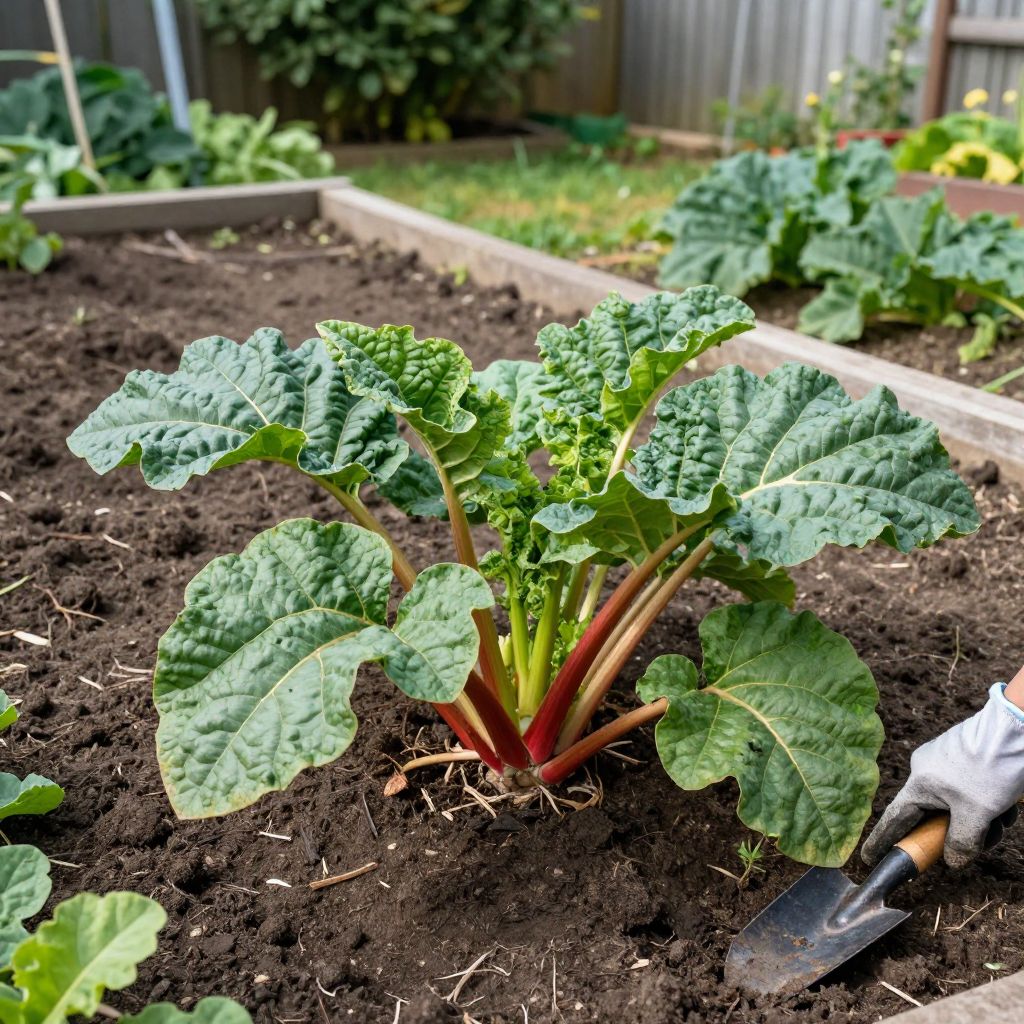
Where should you plant rhubarb so it settles in well and keeps producing for years? The best spot is usually a sunny, open site with rich, moisture-retentive soil that drains well and stays fairly cool at the roots. Rhubarb is a long-lived perennial, so choosing the right location matters more than almost anything else.
Get the placement right at the start, and you’ll make maintenance much easier. A poor site can lead to weak stalks, crown rot, or a plant that struggles through hot summers and dry spells.
Where to plant rhubarb?
Plant rhubarb in a sunny to lightly shaded spot with fertile, well-drained soil that holds moisture without becoming waterlogged. Choose a permanent location away from competing roots, strong winds, and places that bake dry in summer. Rhubarb grows best when it has room to spread and consistent access to water and organic matter.
Best site conditions for rhubarb
Sunlight
Rhubarb performs best in full sun, which usually means at least 6 hours of direct light a day. In hotter climates, a little afternoon shade can help prevent stress and bitterness in the stalks.
If your garden is cool and cloudy, give rhubarb the sunniest position you have. In very warm regions, morning sun with light afternoon shade is often ideal.
Soil
Rhubarb likes deep, fertile soil with plenty of organic matter. A loam or sandy loam is ideal, but heavier soil can work if you improve drainage and texture with compost.
Avoid thin, dry, or compacted soil. Rhubarb develops a large crown and strong root system, and it needs room to anchor itself and feed well over many seasons.
Drainage
Good drainage is essential. Rhubarb dislikes sitting in cold, wet soil, especially in winter, because the crown can rot.
If your soil stays soggy after rain, plant on a raised bed or a gently mounded row. Even a slight elevation can make a big difference in wet gardens.
Moisture
Although rhubarb needs drainage, it also needs steady moisture during active growth. The best site is one that stays evenly damp, not bone dry.
Mulch helps a lot here. A layer of compost, leaf mold, or well-rotted manure can reduce evaporation and keep the root zone cooler.
How much space does rhubarb need?
Give each plant plenty of room. A mature rhubarb crown can spread widely, so spacing matters for airflow, access, and long-term growth.
- Allow about 3 to 4 feet between plants.
- Leave enough space to walk around the crown for harvesting and weeding.
- Keep it away from shrubs, trees, and vigorous perennials that compete for water and nutrients.
Rhubarb is best treated as a permanent crop. Once established, it can stay in place for many years, so avoid tucking it into a temporary or crowded corner.
Where not to plant rhubarb
Shady spots
Deep shade leads to weak growth and thin stalks. Rhubarb may survive, but it usually won’t perform well enough to justify the space.
Wet hollows
Low spots that collect water are risky. Cold, saturated soil can damage the crown and encourage rot.
Dry, root-filled areas
Planting near large trees or thirsty shrubs is a common mistake. Their roots will compete aggressively, and rhubarb may become stunted or difficult to keep watered.
Exposed, windy sites
Strong wind can dry the soil quickly and stress the leaves. If your garden is open and breezy, choose a slightly sheltered spot or use a windbreak that doesn’t cast too much shade.
Preparing the planting area
Before planting, improve the soil so the crown can establish quickly and stay productive.
- Clear weeds thoroughly, especially perennial weeds with deep roots.
- Dig in plenty of compost or well-rotted manure.
- Break up compacted soil to a good depth so roots can spread.
- If drainage is poor, build a raised bed or mound the planting area.
- Rake the surface level, then water the area lightly before planting.
Do not add fresh manure directly against the crown. Use well-rotted material and mix it into the surrounding soil instead.
Should rhubarb be planted in sun or shade?
For most gardens, sun is best. Rhubarb grown in full sun usually produces stronger growth and thicker stalks. In hot climates, however, a little shade in the afternoon can reduce stress and help the plant keep going through summer.
If you are choosing between two sites, pick the one with more morning sun and better soil drainage. That combination is often more important than perfect afternoon exposure.
Can you grow rhubarb in containers?
Yes, but only if the container is large enough and kept well watered. Rhubarb is not the easiest container crop because it has a big crown and likes steady moisture.
- Use a very large pot or half-barrel with drainage holes.
- Choose a rich, peat-free potting mix blended with compost.
- Place the container in full sun or light afternoon shade.
- Watch moisture closely, because pots dry out faster than garden soil.
Container-grown rhubarb may need more frequent feeding and watering than plants in the ground, but the same basic rule applies: give it space, light, and consistent moisture.
How to plant rhubarb in the right place
Once you’ve chosen the site, planting is straightforward.
- Dig a hole wide enough to spread the roots comfortably.
- Set the crown so the growing buds sit just at or slightly above soil level.
- Backfill with improved soil and firm gently.
- Water thoroughly to settle the soil around the roots.
- Mulch around the plant, keeping mulch a little away from the crown itself.
If you are planting divisions, make sure each piece has at least one healthy bud and a substantial section of root. A weak or damaged division will struggle even in a good location.
Seasonal considerations when choosing a site
Cool climates
In cooler regions, rhubarb can take full sun without much trouble. A warm, open position helps it start strongly in spring.
Warm climates
In hotter areas, choose a site that gets morning sun and some afternoon protection. Mulch is especially helpful to keep the root zone cooler and reduce moisture loss.
Winter wet conditions
If your area gets heavy winter rain, drainage becomes the top priority. Raised beds, slopes, or improved soil structure can help prevent crown problems.
Common mistakes to avoid
- Planting in shade and expecting large, strong stalks.
- Putting rhubarb in poorly drained soil, where crowns may rot.
- Overcrowding it among shrubs or vegetables that compete for space.
- Letting it dry out during establishment and hot weather.
- Planting too deeply, which can slow growth and increase rot risk.
Rhubarb is forgiving once established, but it is much less forgiving of a bad site than many annual vegetables. Fixing the location later is harder than getting it right now.
Signs you chose the right spot
A well-sited rhubarb plant usually shows steady, healthy growth in spring and early summer. The leaves look large and vigorous, the stalks are reasonably thick, and the crown stays firm rather than soft or waterlogged.
If growth is weak, check the basics first: light, drainage, soil fertility, and competition from nearby plants. Those are the most common reasons rhubarb underperforms.
Long-term care after planting
Once rhubarb is in the right place, keep the area weed-free, top up mulch each year, and water during dry spells. A spring dressing of compost around the plant can help maintain fertility without overfeeding.
As the plant matures, avoid harvesting too heavily in its first year or two. Let it build strength so it can keep producing well for the long term.
Conclusion
The best answer to where to plant rhubarb is simple: choose a sunny, spacious, fertile spot with excellent drainage and steady moisture. If your garden is hot, give it a little afternoon shade; if your soil is wet, raise the planting area. Pick the site carefully now, and your rhubarb will be much easier to grow for years to come.
For more practical growing advice, you may also want to read about how to improve garden soil with compost and raised bed gardening for wetter sites.
Leave a Reply