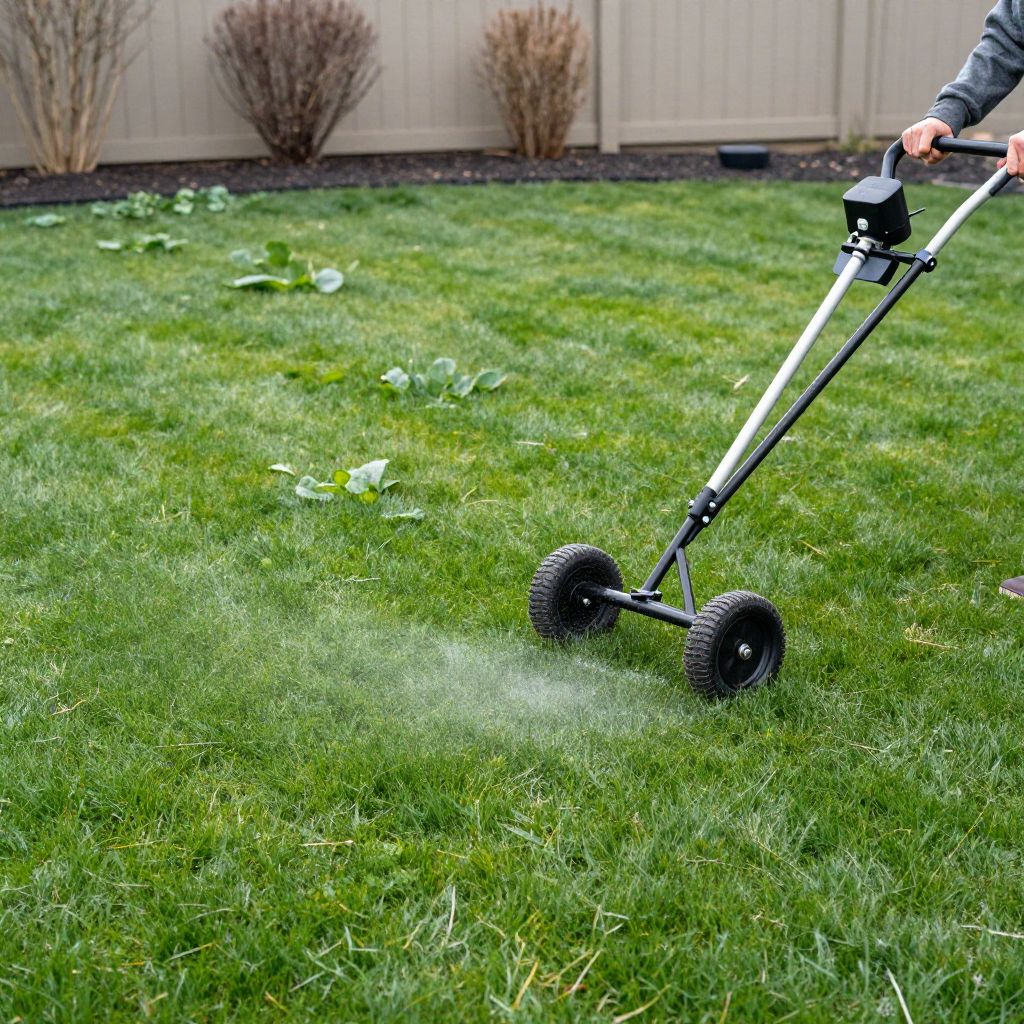
Wondering when to put down weed and feed so it actually works? Timing matters more than most gardeners realize, because the weed killer and fertilizer need the right weather, the right weeds, and the right lawn conditions to do their jobs well.
Used at the wrong time, weed and feed can miss weeds, stress turf, or wash away before it helps. Used at the right time, it can support a healthier lawn while tackling common broadleaf weeds. The key is matching the product to your grass type, season, and local climate.
When To Put Down Weed And Feed?
The best time to put down weed and feed is during active lawn growth, when weeds are young and temperatures are mild. For many lawns, that means spring or early fall, but the exact timing depends on your grass type, your region, and whether you are using a pre-emergent or post-emergent product.
How Weed And Feed Works
Weed and feed products combine fertilizer with a herbicide meant for broadleaf weeds such as dandelion, clover, and plantain. The fertilizer feeds the grass, while the herbicide is absorbed by actively growing weeds.
Because the product has two jobs, timing is a compromise. You want the lawn to be growing enough to use the fertilizer, but you also want weeds to be vulnerable and weather conditions to be favorable for herbicide uptake.
Know which type you have
- Post-emergent weed and feed targets weeds already growing above the soil.
- Pre-emergent weed and feed helps prevent certain weed seeds from germinating.
Always read the label first. Not every product works on every weed, and some are not safe for newly seeded lawns or certain turf species.
Best Seasonal Timing By Lawn Type
Cool-season grasses
Cool-season grasses such as Kentucky bluegrass, perennial ryegrass, tall fescue, and fine fescues usually respond best in early spring and early fall. Early spring applications can help with active growth and some weed control, while fall is often the better time for feeding the lawn without pushing excessive top growth in heat.
If your lawn is thin after summer stress, early fall is often the safest and most effective time to fertilize and address weeds. The grass is recovering, temperatures are cooler, and many broadleaf weeds are still actively growing.
Warm-season grasses
Warm-season grasses such as bermudagrass, zoysiagrass, centipedegrass, and St. Augustinegrass are usually best treated in late spring to early summer, after the lawn has fully greened up and is growing strongly. Applying too early, before the turf is actively growing, can reduce the benefit and stress the lawn.
In hot climates, avoid applying weed and feed during extreme heat or drought. Herbicides can be harder on turf when grass is already under stress.
Transition zone and mixed climates
If you live in a transition zone where both cool-season and warm-season grasses are common, timing can be tricky. Focus on your specific grass type rather than the calendar alone. Local extension guidance is especially helpful in these regions.
Weather Conditions Matter As Much As The Calendar
Even if the season is right, the weather has to cooperate. Weed and feed works best when the lawn is dry enough for even application, weeds are actively growing, and rain is not immediate.
- Apply when temperatures are moderate, not during heat waves.
- Do not apply to drought-stressed turf.
- Avoid windy days that can scatter granules unevenly.
- Check the label for rainfast timing before watering or expecting rainfall.
Many granular products need to stay on the leaf surface briefly before watering in. Too much rain too soon can wash product away, while no moisture at all may reduce herbicide and fertilizer performance.
Before You Apply Weed And Feed
Mow at the right time
Mow your lawn a day or two before applying if needed, but avoid scalping. A slightly taller lawn helps the grass stay healthy and reduces stress.
Check for newly seeded areas
Do not use most weed and feed products on newly seeded lawns unless the label specifically says it is safe. Seedlings are tender, and many herbicides can damage or stunt new grass.
Identify the weeds
Weed and feed is mainly for broadleaf weeds. It will not control grassy weeds like crabgrass in most cases, and it will not fix lawn problems caused by compaction, poor drainage, or shade.
If the weed problem is severe, you may need a separate weed-control strategy rather than relying on a single combined product.
How To Apply Weed And Feed Correctly
- Read the product label carefully and confirm it is safe for your grass type.
- Apply only when the lawn is dry unless the label says otherwise.
- Use a spreader for even coverage on granular products.
- Walk at a steady pace to avoid overlaps and skips.
- Keep the product off sidewalks, driveways, and flower beds.
- Water in only if the label instructs you to do so.
Even application matters. Overlapping passes can burn turf or overfeed strips of lawn, while missed strips leave weeds untreated and the lawn unevenly fertilized.
Common Mistakes To Avoid
- Applying too early in the season before grass and weeds are actively growing.
- Using it during drought or heat stress, which can injure turf.
- Applying before or after seeding without checking label restrictions.
- Expecting it to solve every weed problem, including grassy weeds or moss.
- Using the wrong product for the grass type, especially on sensitive lawns.
If you are unsure, test a small area first only if the label allows it, or choose a product labeled for your specific turf species.
What To Expect After Application
Fertilizer effects may show within days to a couple of weeks, depending on weather and soil conditions. Weed control usually takes longer, and some weeds may need a second treatment later in the season if the label allows it.
Do not mow immediately after applying unless the label says you can. Give the herbicide time to move into the weed tissue. Also avoid watering heavily right away unless the product instructions call for it.
If weeds do not die back
Possible reasons include immature weeds, poor coverage, the wrong product, or weather that was too cool, hot, or dry. Some weeds are simply less responsive and may need spot treatment with a different herbicide or hand removal.
When Not To Use Weed And Feed
There are times when weed and feed is not the best choice at all. Skip it if your lawn is newly seeded, severely drought-stressed, or already struggling with disease, compaction, or poor drainage.
It is also a poor fit if you are trying to build soil health with compost or organic matter. In that case, a separate feeding plan and a targeted weed-control approach usually work better.
- New lawns: wait until the turf is established and the label allows treatment.
- Heat waves: postpone until temperatures are safer for grass.
- Wet, soggy soil: avoid compaction and uneven application.
- Flower beds and vegetable gardens: keep weed and feed out of these areas.
Better Lawn Care Habits That Support Weed Control
Healthy turf naturally crowds out weeds, so weed and feed should be part of a larger lawn-care plan rather than the only tool you use.
- Mow at the recommended height for your grass type.
- Water deeply but not constantly, if your climate and soil require irrigation.
- Aerate compacted soil when appropriate for your lawn.
- Topdress with compost only where suitable for your turf and soil conditions.
- Overseed thin areas at the right time of year for your grass.
Thicker turf, better drainage, and proper mowing often reduce weed pressure more effectively over time than repeated chemical treatments alone.
Quick Timing Guide
- Cool-season lawns: early spring or early fall, when grass is actively growing.
- Warm-season lawns: late spring to early summer, after full green-up.
- Newly seeded lawns: usually wait until established and label-safe.
- Hot, dry, or drought-stressed lawns: delay application.
Final Takeaway
If you are asking when to put down weed and feed, aim for active lawn growth, mild weather, and young broadleaf weeds. Match the timing to your grass type, follow the label closely, and avoid applying during stress or on newly seeded turf.
If you want to improve results further, read more about lawn care basics and how to overseed a lawn so you can combine weed control with stronger, denser turf.