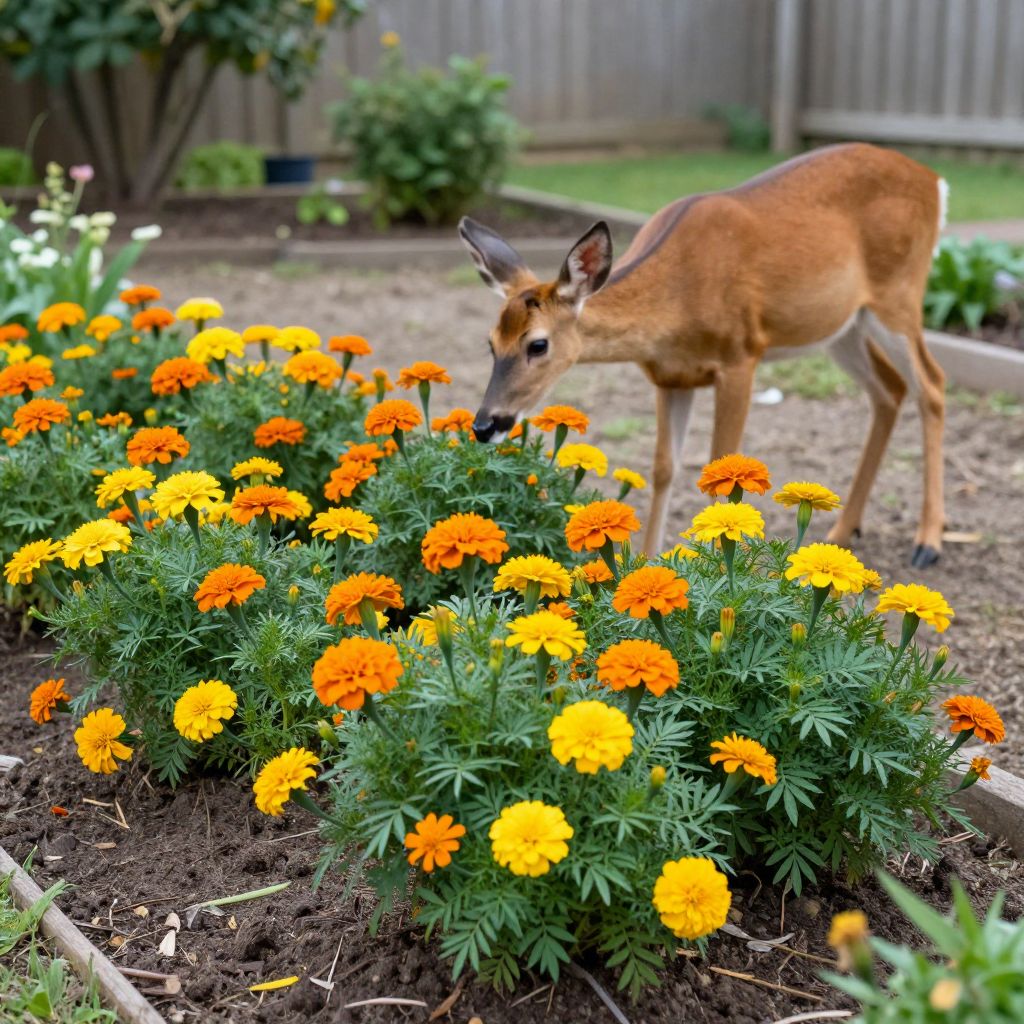
Are marigolds deer resistant? Many gardeners hope so, especially when deer keep browsing tender flowers and seedlings. Marigolds are often treated as a deer-resistant annual, but that does not mean they are deer-proof.
In most gardens, deer usually avoid marigolds because of their strong scent and slightly bitter foliage. Still, hungry deer, young plants, or gardens with heavy deer pressure can lead to nibbling, so it helps to know what to expect and how to protect your plants.
Are marigolds deer resistant?
Yes, marigolds are generally considered deer resistant, not deer proof. Their pungent foliage and flowers tend to make them less appealing than many bedding plants, so deer often pass them by. However, when food is scarce or deer are very accustomed to garden plants, they may still browse marigolds, especially young, tender growth.
Why deer usually leave marigolds alone
Deer choose plants based on taste, texture, scent, and availability. Marigolds, especially Tagetes species, have a strong aroma that many gardeners find useful as a deterrent.
What makes marigolds less appealing
- Strong scent: The foliage has a noticeable smell that many deer dislike.
- Rougher texture: The leaves are less tender than many deer favorites.
- Common garden abundance: Deer often prefer tastier options if they are nearby.
That said, deer behavior is local. In one yard, marigolds may be ignored all season; in another, they may be clipped during a food shortage or after deer become comfortable feeding near homes.
How reliable is marigold deer resistance?
Think of marigolds as a low-risk choice for deer-prone gardens, especially compared with highly palatable plants like hostas, tulips, and daylilies. They can reduce browsing pressure, but they should not be your only defense if deer are a serious problem.
Factors that affect deer browsing
- Deer density: More deer means more pressure on all plants.
- Season: Late winter, drought, and early spring can increase browsing.
- Plant age: Young transplants are more vulnerable than established plants.
- Garden setting: Edges near woods, fields, or deer paths are at greater risk.
- Food availability: When natural forage is scarce, deer become less selective.
Best marigolds to grow in deer-prone gardens
Most common garden marigolds offer similar deer resistance, but the main difference is how well they fit your site and climate. Choose healthy, vigorous plants so they establish quickly and can recover if lightly nibbled.
Types you may see
- Tagetes erecta — African marigold; tall, bold blooms for beds and borders.
- Tagetes patula — French marigold; compact and useful for edging and containers.
- Tagetes tenuifolia — Signet marigold; finer foliage and smaller flowers.
All three are commonly regarded as deer resistant, but your local deer population may respond differently. If you are planting near heavy deer traffic, use marigolds as part of a broader planting plan rather than relying on them alone.
How to plant marigolds so deer damage is less likely
Healthy, fast-growing marigolds are less likely to be severely damaged. Give them the right site and they will establish quickly, flower well, and recover better from occasional browsing.
Site and soil
- Sunlight: Full sun is best for strong flowering and compact growth.
- Soil: Average, well-drained soil is usually enough.
- Drainage: Avoid soggy spots, which can weaken roots and invite disease.
- Organic matter: A little compost can improve poor soil, but avoid overly rich soil that encourages lush, floppy growth.
Marigolds do not need heavy feeding. Too much nitrogen can create soft foliage that may be more attractive to deer and can reduce flowering.
Spacing and placement tips
- Plant marigolds in clusters rather than single scattered plants.
- Place them near more vulnerable plants as a visual and scent barrier.
- Use them along borders, paths, and beds where deer first enter the garden.
- Keep the area weed-free so young marigolds are not hidden from view during browsing.
Clumping marigolds can help create a stronger scent presence, but they work best when paired with fencing, netting, or other deterrents if deer are persistent.
Watering and care for strong, resilient marigolds
Proper care helps marigolds stay vigorous enough to tolerate light grazing or minor damage. Water deeply after planting, then adjust based on weather and soil type.
Watering basics
- Water newly planted marigolds regularly until roots establish.
- Once established, water when the top inch or two of soil feels dry.
- Water at the base of the plant to keep foliage dry and reduce disease risk.
- Avoid frequent shallow watering, which encourages weak roots.
If deer are browsing, do not overcompensate with heavy fertilizer or extra watering. The goal is steady, healthy growth, not soft, overly lush plants that are more prone to problems.
Deadheading and pruning
Remove faded flowers regularly to keep marigolds blooming. Pinch or trim leggy growth to encourage branching and a fuller plant.
- Deadhead spent flowers to prolong bloom.
- Trim back lanky stems by a few inches if plants become stretched.
- Remove damaged tips after browsing so the plant can regrow cleanly.
How to protect marigolds from deer
If deer are active in your area, combine marigolds with practical protection methods. No single method is perfect, but a layered approach often works well.
Effective deer protection strategies
- Physical barriers: Fencing is the most reliable option for serious deer pressure.
- Row covers or netting: Useful for young transplants or small beds.
- Repellent sprays: Can help, especially when reapplied after rain or new growth.
- Mixed plantings: Combine marigolds with other less-preferred plants.
- Garden cleanup: Remove fallen fruit and other attractants that draw deer in.
Repellents work best before deer start feeding heavily. If deer have already discovered your marigolds, start protection early and reapply as needed according to the product label.
Common mistakes to avoid
- Assuming marigolds will stop deer from entering the garden.
- Planting only one deer-resistant species and expecting complete protection.
- Using too much fertilizer, which can create soft growth.
- Letting young plants dry out, then overwatering them.
- Ignoring deer damage until the plants are already stressed.
Other pests and problems that can affect marigolds
Deer are only one part of marigold care. If leaves are being damaged, make sure the culprit is actually deer and not another pest or disease.
Signs it may not be deer
- Insects: Chewed holes, stippling, or distorted new growth may point to insect pests.
- Slugs or snails: Often leave ragged holes and slime trails, especially in damp weather.
- Fungal issues: Spots, mildew, or stem rot can weaken plants and make them look browsed.
- Rabbit damage: Rabbits usually leave cleaner cuts closer to the ground than deer do.
Marigolds are generally easy to grow, but overcrowding, poor drainage, and overhead watering can invite disease. Give plants space and air circulation so they stay healthier through the season.
Using marigolds in deer-resistant landscaping
Marigolds work well as part of a deer-resistant planting plan because they are colorful, easy to replace, and adaptable to beds, borders, and containers. They are especially useful around vegetable gardens, patios, and entry paths where you want bright color without relying on highly palatable flowers.
Good companion uses
- Bordering vegetable beds to add color and help mask more vulnerable crops.
- Filling gaps in mixed annual beds where deer pressure is moderate.
- Planting in containers near doors, decks, or walkways.
- Using as a seasonal filler while slower-growing perennials establish.
For the best results, combine marigolds with other deer-resistant plants and a protection strategy suited to your garden. A diverse planting is harder for deer to strip clean than a bed full of one favorite plant.
Bottom line: should you plant marigolds if deer visit your garden?
Yes. If you want a colorful annual with a good chance of being left alone, marigolds are a smart choice. They are one of the better options for deer-prone gardens, but they work best when you treat them as resistant, not invincible.
If deer are active where you live, plant marigolds in sunny, well-drained soil, keep them healthy, and add fencing, netting, or repellents if needed. For more garden planning ideas, look for other deer-resistant annuals and practical tips on protecting young plants through the season.