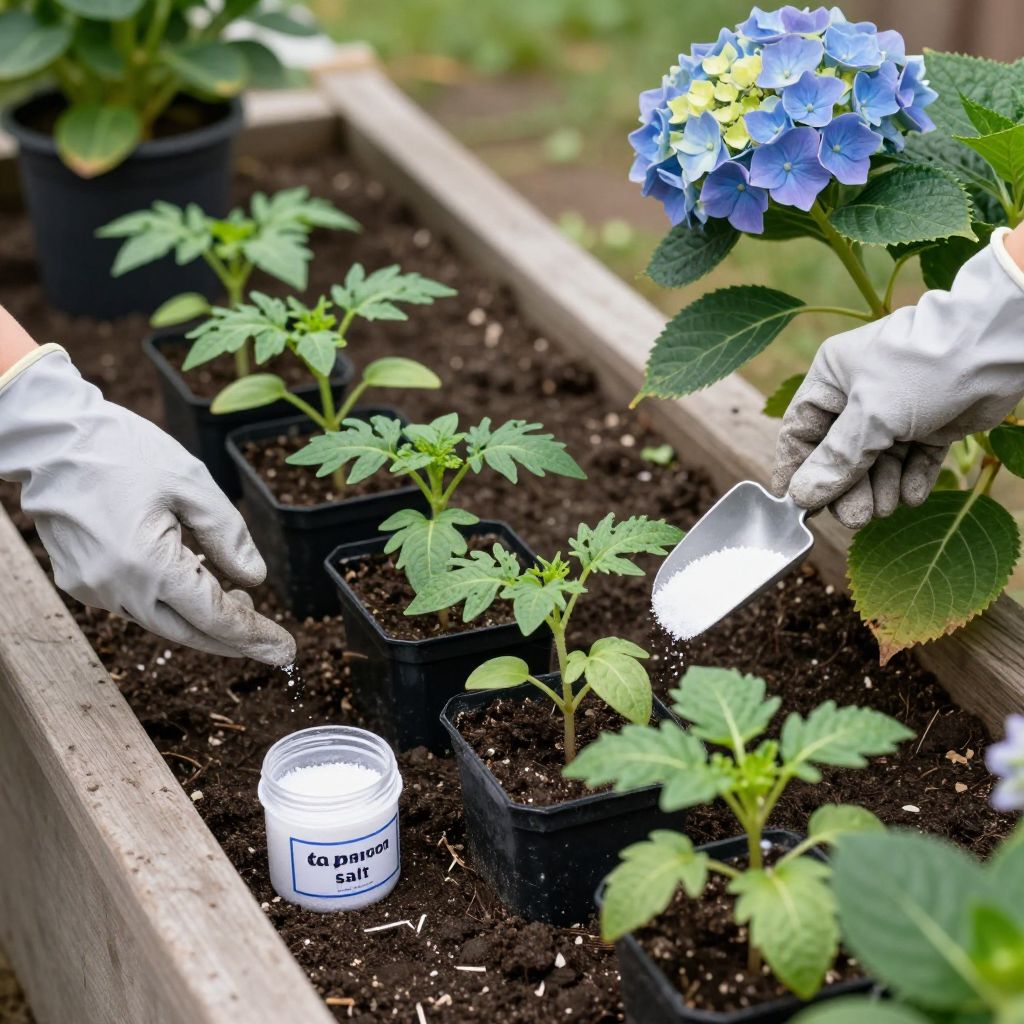
What plants don’t like Epsom salt? If you’ve heard that magnesium sulfate “helps everything,” it’s worth slowing down before you sprinkle it around the garden. Some plants don’t need extra magnesium at all, and in the wrong soil, Epsom salt can make nutrient imbalances or salt stress worse.
The safest approach is to use Epsom salt only when a soil test or clear deficiency symptoms point to a magnesium or sulfur need. For many garden plants, plain compost, balanced feeding, and good watering do more good than routine Epsom salt applications.
What plants don’t like Epsom salt?
Plants that already have enough magnesium, or that prefer lean, acidic, or salt-sensitive conditions, usually don’t benefit from Epsom salt. That includes many vegetables, herbs, acid-loving shrubs, seedlings, and container plants. In these cases, extra magnesium can interfere with calcium and potassium uptake or build up in pots and dry soils.
Why Epsom salt can be a problem
Epsom salt is magnesium sulfate. It is not a complete fertilizer, and it does not improve every plant or every soil.
It can be unhelpful when your soil already contains adequate magnesium, because adding more may upset the balance of nutrients plants need to grow well. In containers, repeated use can also contribute to salt buildup if drainage is poor or watering is inconsistent.
Common issues caused by overuse
- Nutrient imbalance — too much magnesium can reduce calcium or potassium uptake.
- Salt stress — roots may struggle in pots or dry beds where salts accumulate.
- Misdiagnosis — yellowing leaves are often caused by watering, pH, or nitrogen issues, not a magnesium shortage.
- Wasted effort — many healthy plants simply do not need it.
Plants that usually do not like Epsom salt
These plants are not “allergic” to Epsom salt, but they are commonly harmed by unnecessary use or gain little from it. If you are unsure, skip it unless a soil test shows a need.
1. Acid-loving plants
- Blueberries (Vaccinium spp.)
- Azaleas and rhododendrons (Rhododendron spp.)
- Camellias (Camellia spp.)
- Gardenias (Gardenia jasminoides)
- Heathers and heaths (Calluna, Erica)
These plants prefer acidic soil and careful feeding. Epsom salt does not correct high pH, and it can distract from the real problem if leaves turn yellow because the soil is too alkaline or roots are stressed.
2. Seedlings and young transplants
- Tomato seedlings
- Pepper seedlings
- Cucumber seedlings
- Flower starts in trays
Young plants are easy to overfeed. Their roots are small, and any extra salt can dry them out or slow establishment. For seedlings, gentle watering and a light, balanced fertilizer are usually better than Epsom salt.
3. Salt-sensitive container plants
- Many annual flowers in pots
- Houseplants in containers
- Herbs grown in small pots
- Plants in self-watering containers with limited leaching
Container soil has less buffering capacity than garden soil. If you use Epsom salt repeatedly, salts can accumulate more quickly, especially when drainage is weak or you fertilize often.
4. Plants growing in fertile soil
- Well-amended vegetable beds
- Lawns with regular feeding
- Perennials in compost-rich soil
- Landscapes where soil tests show adequate magnesium
If your soil is already fertile, Epsom salt usually adds nothing useful. In fact, it can create a false sense that you are feeding the plant when the real need may be pruning, watering, or pest control.
When Epsom salt is more likely to help
Epsom salt is most useful when a soil test suggests low magnesium, or when a plant shows symptoms that fit a magnesium deficiency and other causes have been ruled out. Magnesium deficiency often shows as yellowing between leaf veins on older leaves first.
Even then, it is best used as a targeted fix, not a routine treatment for every plant in the garden.
Signs that point to a possible magnesium deficiency
- Older leaves yellow between the veins while veins stay greener
- Leaf edges may curl or develop reddish tones in some plants
- Symptoms begin on lower leaves first
- Soil test shows low magnesium or very low fertility
These symptoms can also come from nitrogen deficiency, root problems, poor drainage, cold soil, or pH issues. A soil test is the most reliable way to know whether Epsom salt is appropriate.
How to use Epsom salt safely, if you truly need it
If you decide to use Epsom salt, apply it sparingly and only to the plants or beds that need it. The goal is to correct a deficiency, not to make every plant grow faster.
- Test the soil first if possible, especially in vegetable beds and established landscapes.
- Check drainage and watering habits. Poor drainage can mimic nutrient problems.
- Apply only to the affected area, not the entire garden.
- Water thoroughly after application so salts move into the root zone.
- Watch for improvement over the next couple of weeks rather than repeating quickly.
Best practices for outdoor beds
- Work on moist soil, not dry, dusty ground.
- Use compost first if your soil is generally weak or compacted.
- Do not apply Epsom salt before heavy rain, which can wash it away.
- Avoid using it on beds that already receive lots of manure or fertilizer.
Best practices for containers
- Use a potting mix with good drainage holes.
- Flush pots occasionally with plain water to reduce salt buildup.
- Do not mix Epsom salt into every watering unless a deficiency is confirmed.
- For houseplants, focus first on light, watering, and repotting if roots are crowded.
What to do instead of using Epsom salt
Most plant problems that get blamed on magnesium are really caused by something else. Before reaching for Epsom salt, check the basics.
1. Improve soil structure
Healthy soil with good organic matter supports stronger roots and steadier nutrient uptake. Add compost, leaf mold, or well-rotted organic matter where appropriate for your plant type.
2. Correct watering problems
Overwatering and underwatering both interfere with nutrient uptake. If leaves are yellowing, check whether the soil is staying soggy, drying out too fast, or alternating between the two.
3. Match fertilizer to the plant
A balanced fertilizer is usually more useful than Epsom salt alone. For flowering and fruiting plants, choose a product suited to the crop and follow the label carefully.
4. Check soil pH
Acid-loving plants often fail because the soil is too alkaline, not because they need magnesium. If pH is off, correct that first with the right amendment for your plant and soil type.
Common mistakes gardeners make with Epsom salt
- Using it as a cure-all for yellow leaves, poor flowering, or slow growth.
- Applying it to every plant on a schedule without testing.
- Adding it to containers repeatedly and forgetting about salt buildup.
- Ignoring drainage, sunlight, or root health.
- Using it on acid-loving plants when the real issue is pH.
How to troubleshoot yellow leaves without guessing
Yellow leaves are common, but they do not automatically mean a magnesium shortage. Look at the whole plant and growing situation before treating.
- Check whether the newest leaves or the oldest leaves are yellowing first.
- Inspect soil moisture and drainage.
- Look for pests such as aphids, spider mites, or whiteflies.
- Consider whether the plant has been overfertilized or underfed.
- Use a soil test if the problem keeps returning.
If lower leaves are yellowing on a tomato, pepper, or rose, it may be nutrient-related. If the whole plant looks pale, the issue may be nitrogen, root stress, or insufficient light rather than magnesium alone.
Seasonal considerations
Plants use nutrients differently through the year. In cool spring soil, roots may absorb nutrients slowly. In hot weather, drought stress can make nutrient problems look worse. In fall, many plants naturally slow down and need less feeding.
That is why Epsom salt should never be used as a blanket seasonal treatment. Adjust your care to your local climate, rainfall, soil type, and the plant’s growth stage.
Bottom line for gardeners
What plants don’t like Epsom salt? Mostly the ones that already have enough magnesium, the ones that prefer acidic or low-salt conditions, and the ones growing in containers or young root systems where salts can build up. If you are unsure, skip it and focus on soil health, watering, and balanced nutrition.
Before adding anything else to your beds or pots, do a quick soil check and compare the plant’s symptoms with its growing conditions. For more practical plant-care guidance, read about soil pH and plant growth and container gardening basics.