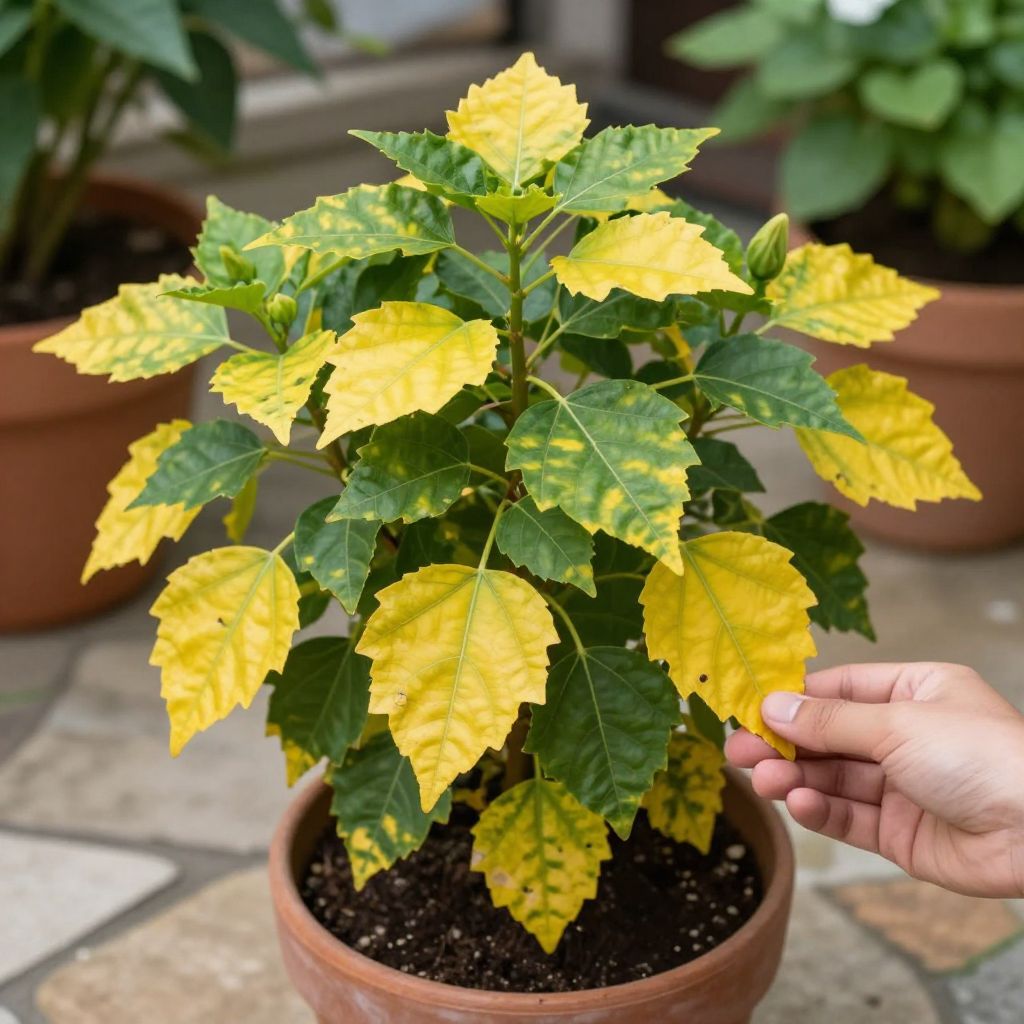
Why are my hibiscus leaves turning yellow? In most cases, yellowing leaves are a stress signal, not a death sentence. Hibiscus can react to watering mistakes, poor drainage, low light, cold snaps, nutrient shortages, pests, or natural leaf aging, and the right fix depends on which leaves are yellowing and how fast it’s happening.
The good news is that hibiscus usually recovers well once the underlying problem is corrected. If you check the plant systematically, you can often stop the yellowing, protect new growth, and get the plant blooming again.
Why are my hibiscus leaves turning yellow?
Hibiscus leaves turn yellow when the plant is under stress from water problems, poor drainage, insufficient light, nutrient imbalance, temperature swings, pests, or root issues. Start by checking whether the yellowing is on old leaves or new growth, then inspect soil moisture, light exposure, and leaf undersides to narrow down the cause.
Common causes of yellow hibiscus leaves
1. Overwatering and poor drainage
Too much water is one of the most common reasons hibiscus leaves turn yellow. When roots sit in soggy soil, they cannot take up oxygen properly, and the plant begins to decline.
Signs of overwatering include:
- Yellow leaves that feel soft or limp
- Leaves dropping while the soil stays wet
- Musty-smelling soil
- Slow growth despite regular watering
Fix: Let the top inch or two of soil dry before watering again, and make sure the container or planting area drains freely. If the plant is in a pot, empty saucers after watering and confirm there are drainage holes.
2. Underwatering or irregular watering
Hibiscus also yellows when it dries out too much, especially in hot weather or windy locations. The plant may shed older leaves first to conserve moisture.
Signs of underwatering include:
- Dry, crispy leaf edges
- Wilting that improves after watering
- Yellowing followed by leaf drop
- Dry, pulling-away soil in pots
Fix: Water deeply so moisture reaches the root zone, then allow the soil surface to begin drying before watering again. In containers, water until excess runs from the bottom. In the ground, water slowly and less often so roots grow deeper.
3. Not enough sunlight
Hibiscus needs strong light to stay healthy and bloom well. In too much shade, leaves may pale, yellow, and drop, and flowering often becomes sparse.
Outdoor hibiscus usually performs best in full sun to bright light with some afternoon protection in very hot climates. Indoor hibiscus needs the brightest window you can provide, ideally with several hours of direct sun or very strong light.
Fix: Move the plant gradually to a brighter location so it does not scorch suddenly. If it is indoors, rotate the pot every week or two for even growth.
4. Nutrient deficiencies
Yellow leaves can point to a lack of nutrients, especially nitrogen, iron, or magnesium. The pattern of yellowing often gives clues.
- Nitrogen deficiency: older leaves yellow first, often evenly
- Iron deficiency: young leaves yellow while veins stay greener
- Magnesium deficiency: older leaves may yellow between veins
Hibiscus growing in containers is more likely to need regular feeding because nutrients wash out faster. Soil pH can also affect how well the plant absorbs iron and other minerals.
Fix: Use a balanced fertilizer suited to flowering plants, but avoid overfeeding. If new leaves are yellow with green veins, check whether the potting mix is too alkaline or whether roots are staying too wet, both of which can limit nutrient uptake.
5. Cold stress or temperature swings
Hibiscus dislikes cold drafts and sudden temperature changes. Yellow leaves may appear after a chilly night, a cold window, or moving the plant outdoors too early in spring.
Signs of cold stress include:
- Yellowing after a temperature drop
- Leaf drop following exposure to cold wind or drafts
- Blackened or damaged leaf tissue in severe cases
Fix: Keep tropical hibiscus in a warm, sheltered spot. If you move it outdoors for summer, harden it off gradually. Bring it inside before nights become cool in autumn, especially if temperatures are dropping below what the plant prefers.
6. Pests such as spider mites, aphids, and whiteflies
Small sap-sucking pests can cause yellow stippling, curling, and leaf drop. They often hide on the undersides of leaves or in tender new growth.
Look for:
- Tiny insects or clusters on stems and leaf undersides
- Sticky residue on leaves or nearby surfaces
- Fine webbing, especially from spider mites
- Distorted new leaves
Fix: Rinse the plant thoroughly with water, especially the undersides of leaves. If needed, use insecticidal soap or horticultural oil according to the label directions. Repeat as directed, because pests often hatch in cycles.
7. Root-bound plants or compacted soil
If a hibiscus has outgrown its pot, roots can circle tightly and struggle to absorb water and nutrients. In the landscape, compacted soil can create a similar problem by limiting root growth and drainage.
Signs include:
- Water running straight through a pot without soaking in
- Roots visible at drainage holes or on the soil surface
- Frequent wilting even after watering
- Yellowing with stunted growth
Fix: Repot into a container one size larger with fresh, well-draining mix, or gently loosen compacted soil in the garden and improve it with organic matter if appropriate for your site. Avoid burying the stem deeper than it was growing before.
8. Natural aging and seasonal leaf drop
Not every yellow leaf indicates a problem. Hibiscus naturally sheds older leaves, especially during seasonal changes, after flowering flushes, or when the plant adjusts to a new environment.
If only a few older leaves are yellowing while the rest of the plant looks healthy and new growth is normal, the issue may be minor. Remove yellow leaves if you want a tidier look, but do not overreact.
How to diagnose the problem step by step
- Check which leaves are yellow. Old leaves, new leaves, or the whole plant each suggest different causes.
- Feel the soil. Wet, dry, or compacted soil gives important clues.
- Inspect light conditions. Note whether the plant gets enough direct or bright light.
- Look for pests. Check leaf undersides, stems, and new growth closely.
- Review recent changes. New pot, fertilizer, weather shift, or relocation can trigger yellowing.
- Correct one issue at a time. This makes it easier to see what helped.
What to do right now
If your hibiscus is already yellowing, start with the basics before adding fertilizer or making big changes.
- Stop watering on a fixed schedule and check soil moisture first.
- Make sure the pot drains freely or the planting site does not stay soggy.
- Move the plant to brighter light if it is shaded.
- Inspect for pests and wash them off if present.
- Remove badly yellowed leaves so the plant can focus on healthier growth.
If the plant looks pale overall and has not been fed in a while, a light feeding may help once watering and drainage are corrected. Do not fertilize a plant with stressed roots in very dry or waterlogged soil.
Indoor hibiscus vs. outdoor hibiscus
Indoor plants
Indoor hibiscus often turns yellow because of low light, dry air, inconsistent watering, or pests brought in from other houseplants. A bright window, stable temperatures, and careful watering usually make the biggest difference.
Keep it away from heating vents, cold glass, and drafts. Indoor air can also encourage spider mites, so regular leaf checks matter.
Outdoor plants
Outdoor hibiscus is more likely to yellow from weather extremes, poor drainage, or nutrient loss from rain and irrigation. In hot climates, afternoon shade can reduce stress, while in cooler areas, protecting the plant from cold nights can prevent sudden yellowing.
Garden soil should be loose enough to drain well but still hold some moisture. If the site stays wet after rain, consider raised beds, mounding, or relocating the plant.
Practical mistakes to avoid
- Watering more because the leaves are yellow, without checking the soil first
- Using a pot without drainage holes
- Moving the plant from shade to intense sun too quickly
- Applying strong fertilizer to a stressed plant
- Ignoring pests on the undersides of leaves
- Assuming all yellow leaves mean the same problem
When yellow leaves are a warning sign of a bigger issue
If yellowing is rapid, widespread, or paired with wilting, blackened stems, severe leaf drop, or a foul smell from the soil, the problem may be advanced root stress or disease. In that case, check roots, drainage, and growing conditions immediately.
If the plant continues declining after you correct watering, light, and pest issues, repotting or a closer look at the root system may be necessary. Healthy roots should be firm, not mushy or dark and collapsing.
Conclusion
When you ask, “Why are my hibiscus leaves turning yellow?” the answer usually comes down to watering, drainage, light, temperature, nutrients, or pests. Start with the soil, inspect the leaves closely, and make one correction at a time. For more plant-care troubleshooting, keep reading related hibiscus and container gardening guidance so you can catch problems early and keep your plant growing strongly.