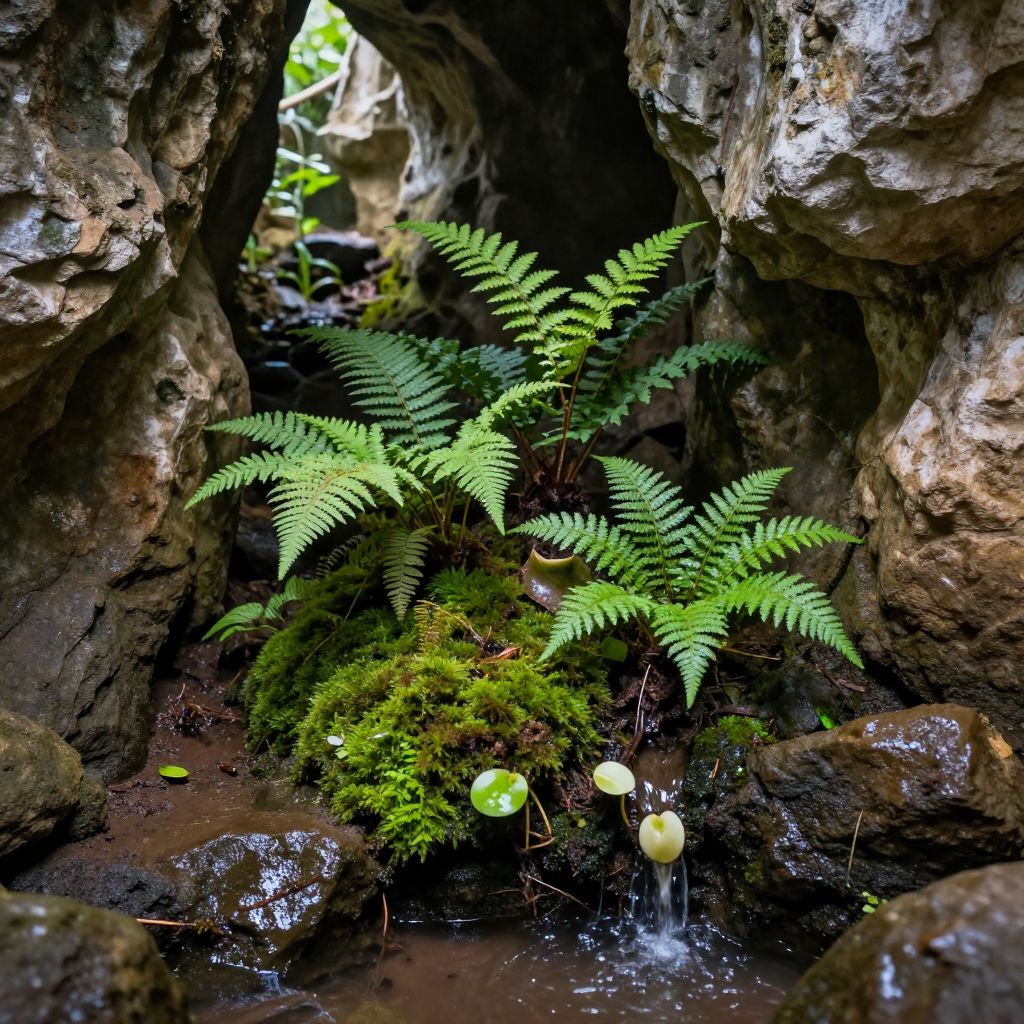
Wondering what plants can grow in Eyegoyi caves? The answer depends on what you mean by “caves”: if you’re gardening in a shaded, cool, rocky cave-like space, choose plants that tolerate low light, high humidity, and excellent drainage. If the cave is truly dark, only a few very low-light plants will survive, and most will need supplemental light.
The best choices are usually shade-loving ferns, mosses, some begonias, small woodland perennials, and a few tropical foliage plants if temperatures stay mild. Success comes from matching the plant to the cave’s moisture, airflow, and light levels rather than forcing sun-loving plants into a dim space.
What plants can grow in Eyegoyi caves?
Plants that can grow in Eyegoyi caves are usually shade-tolerant species adapted to low light, steady moisture, and sheltered conditions. Good options include ferns, mosses, selaginella, certain begonias, peace lilies in brighter cave mouths, and small shade-loving groundcovers. In very dark caves, use artificial light or stick to mosses and hardy ferns near the entrance.
How to judge whether a cave-like space can support plants
Before planting, assess the site as if you were choosing a houseplant spot and a rock garden at the same time. The key factors are light, humidity, temperature, airflow, and drainage.
Check these conditions first
- Light: Can you read comfortably without a flashlight? If not, most plants will struggle.
- Humidity: Many cave plants prefer moist air, but constant dripping can rot roots.
- Temperature: Stable temperatures are better than hot daytime swings or cold night drops.
- Airflow: Stale air encourages mildew, algae, and fungal disease.
- Drainage: Water must move away from roots; standing water is a common failure point.
If the cave is open at one end or has a bright entrance, you can grow a wider range of plants there. If it is deep and dim, think in terms of low-light, moisture-loving plants rather than flowering garden plants.
Best plants for cave-like growing conditions
1. Ferns
Ferns are often the most reliable choice for shaded, humid spaces. Many species naturally grow in woodland understories, rock crevices, and moist sheltered sites.
- Maidenhair fern (Adiantum spp.) for humid, bright shade
- Bird’s nest fern (Asplenium nidus) for warm, sheltered spaces
- Boston fern (Nephrolepis exaltata) for bright shade and consistent moisture
- Hart’s tongue fern (Asplenium scolopendrium) for cooler, shaded locations
Ferns prefer evenly moist soil, not soggy soil. They also benefit from protection from direct sun and drying winds.
2. Mosses
Mosses can be excellent for very damp, low-light cave edges, stone surfaces, and shaded rock pockets. They do not need deep soil, but they do need moisture and clean surfaces to establish.
Moss is best used as a living ground layer or accent, not as a substitute for all vegetation. Keep it lightly moist and avoid foot traffic.
3. Selaginella and clubmoss relatives
Selaginella, often called spikemoss, likes humidity and shade and can handle the kind of filtered light found near cave entrances or sheltered grottoes. It works well in containers or planted pockets with fine, moisture-retentive soil.
4. Begonias
Some begonias do well in bright shade and humid conditions. They add color and texture where light is stronger near the cave opening.
Choose begonias carefully, because many dislike cold, wet roots. They need airy soil and protection from harsh direct sun or prolonged saturation.
5. Peace lily and similar houseplants for sheltered cave mouths
Peace lily (Spathiphyllum) can work in very bright cave mouths or covered outdoor spaces with indirect light. It is more of a container plant than a true cave plant, but it can be useful where conditions are mild and stable.
Other houseplants may also work if the cave area is protected and bright enough, but they usually need more light than true shade plants.
6. Small woodland groundcovers
In larger, temperate cave-like gardens, some woodland groundcovers can work near the entrance or in filtered shade. Look for plants that naturally grow under trees and in humus-rich soil.
Choose carefully and avoid aggressive spreaders unless you want them to colonize the area.
Plants to avoid in deep shade or caves
Many popular garden plants fail in cave conditions because they need more light, drier air, or warmer roots. Avoid plants that depend on strong sun for flowering or fruiting.
- Tomatoes, peppers, cucumbers, and most vegetables
- Roses and many flowering shrubs
- Lavender, rosemary, and other sun-loving herbs
- Succulents and cacti unless the cave entrance is very bright and dry
- Most lawn grasses
If you try these anyway, they usually become weak, stretched, or prone to rot and disease.
Soil, compost, and drainage for cave planting
Cave planting succeeds when roots get moisture without sitting in water. Most cave-friendly plants prefer a loose, organic mix that holds some moisture but drains well.
Good soil structure
- Use a light, humus-rich mix for ferns and woodland plants.
- Blend in leaf mold, fine bark, or composted organic matter where appropriate.
- Add grit, perlite, or coarse sand if the site stays too wet.
- Avoid heavy clay unless you can improve drainage significantly.
If you are planting directly into a rocky cave floor, create planting pockets rather than filling the whole area with rich soil. This helps prevent waterlogging and keeps the site looking natural.
Drainage tips
- Check where water collects after rain or irrigation.
- Raise planting pockets slightly if the area stays wet.
- Use gravel beneath containers if the cave is a sheltered display space.
- Keep the crown of the plant above the wettest soil line.
Never plant into a permanently soggy hollow. Even moisture-loving plants need oxygen around their roots.
How to plant in an Eyegoyi cave or cave-like space
Planting in a cave is often more about placement than force. Put the right plant in the right microclimate and it will settle much faster.
Step-by-step planting guide
- Clear away loose debris, rotting leaves, and algae from the planting spot.
- Test the drainage by watering lightly and watching how long moisture remains.
- Prepare a loose planting pocket with suitable soil or potting mix.
- Set the plant at the same depth it grew in its pot or nursery bed.
- Firm gently around the roots without compacting the soil.
- Water thoroughly once, then let the top layer begin to dry slightly before watering again.
- Mulch lightly with leaf litter, fine bark, or moss where appropriate.
If you are using containers, choose pots with drainage holes and place them on stable surfaces. Containers make it easier to move plants if the cave becomes too dark, wet, or cold.
Watering and humidity management
In cave-like spaces, the biggest watering mistake is assuming humidity means the soil does not need attention. Humid air does not replace proper root moisture management.
How to water well
- Water when the top layer of soil begins to dry, unless the plant prefers constantly moist conditions.
- Use a gentle watering can or hose setting to avoid washing soil away.
- Water early enough in the day for excess surface moisture to evaporate.
- Reduce watering during cool, slow-growth periods.
For mosses and some ferns, misting can help maintain surface moisture, but misting alone is not enough for established roots. For container plants, check the potting mix with your finger rather than following a fixed schedule.
Light management: natural shade vs. artificial light
Most cave spaces do not provide enough light for healthy plant growth unless they are open or partially open. If the cave is dim, use supplemental lighting rather than hoping the plant will adapt indefinitely.
When natural light is enough
Natural light may be enough if the cave entrance is bright, sunlight reflects off pale stone, or the area gets several hours of indirect light. Ferns and mosses are usually the best fit for these conditions.
When to add grow lights
If plants stretch, pale out, or stop growing, they likely need more light. Low-profile LED grow lights can help in enclosed cave-like spaces, especially for container plants.
Keep the light close enough for usefulness but not so close that it dries or scorches foliage. Adjust based on plant response rather than a fixed distance.
Pruning, grooming, and seasonal care
Cave plant care is usually light but regular. Small problems become big problems in enclosed spaces, so routine grooming matters.
- Remove yellowing, damaged, or moldy leaves promptly.
- Trim dead fern fronds at the base when they brown out.
- Keep moss free of leaf litter that blocks light and airflow.
- Watch for overcrowding and divide plants when they outgrow their space.
In cooler seasons, growth often slows. Reduce watering and avoid disturbing roots unless the plant is clearly declining or the soil has become compacted.
Common pests and diseases in cave conditions
Shaded, humid spaces can encourage fungal problems if airflow is poor. Pests may also hide longer because the area is sheltered.
Watch for these issues
- Root rot: caused by poor drainage and overwatering
- Powdery mildew or leaf spots: often linked to stagnant air
- Snails and slugs: common in damp, sheltered areas
- Mealybugs and scale: possible on sheltered foliage plants
Practical fixes
- Improve airflow without creating harsh drafts.
- Remove infected leaves and dispose of them away from the planting area.
- Keep the soil surface clean and avoid constant wetness.
- Inspect undersides of leaves regularly, especially on container plants.
If a plant repeatedly declines despite good care, the site may simply be too dark or too wet for that species. Moving it is often better than trying to rescue it indefinitely.
Propagation and expansion
Once you find plants that thrive, you can expand the planting gradually. Many cave-friendly plants are easy to multiply by division or offsets.
- Divide clumping ferns carefully when they are actively growing.
- Separate selaginella or mossy mats gently into smaller sections.
- Take offsets or rooted divisions from suitable houseplants grown near the cave mouth.
Propagate only healthy plants. Weak divisions struggle more in low-light conditions, so give new plants extra attention until they settle.
Best design approach for a cave garden
A cave garden looks best when it follows the site’s natural character. Use layers: moss or low groundcover near the base, medium foliage plants in pockets, and taller plants only where light is stronger.
Mix textures rather than relying on flowers alone. Fern fronds, glossy leaves, and moss create a more natural and lasting effect than high-maintenance bloomers.
Conclusion: start with the light you actually have
The best answer to what plants can grow in Eyegoyi caves is simple: choose shade-loving, moisture-tolerant plants that match the cave’s light and drainage. Ferns, mosses, selaginella, and a few begonias are usually the safest starting points, while deeper shade may need artificial light.
Begin with one small planting pocket or container, monitor moisture and airflow for a few weeks, and adjust from there. If you want to compare more shade-friendly planting ideas, look for guides on shade garden plants and fern care and maintenance.