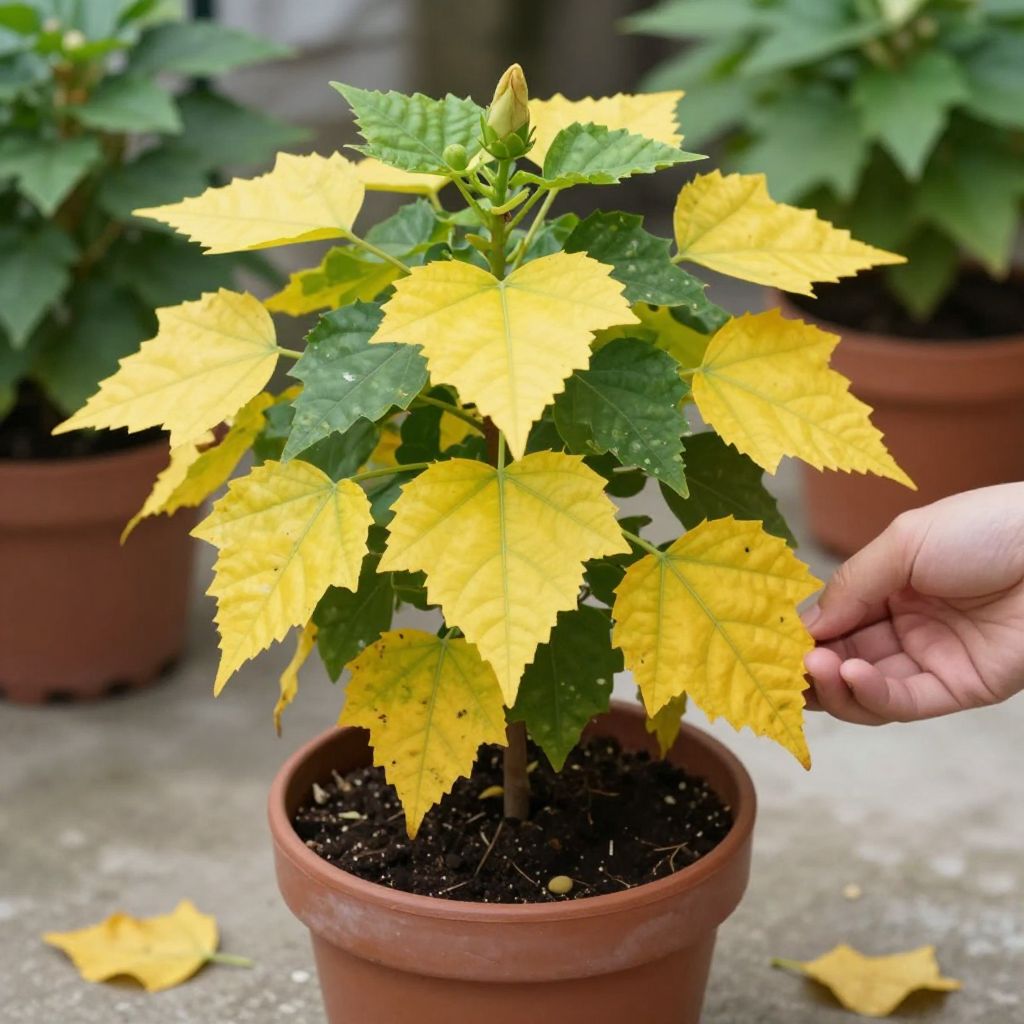
Why is my hibiscus leaves turning yellow? Yellowing leaves are a common hibiscus warning sign, and the cause is usually something you can correct. It may be watering stress, poor drainage, low light, nutrient issues, pests, or a sudden change in temperature.
The good news is that hibiscus often recovers once you identify the stress and adjust care. Start by checking the soil, light, and leaf undersides, then make changes one at a time so you can tell what helped.
Why is my hibiscus leaves turning yellow?
Hibiscus leaves turn yellow when the plant is stressed and can’t take up water, nutrients, or light properly. The most common causes are overwatering, underwatering, poor drainage, low light, nutrient deficiency, pests, or cold stress. Look at the whole plant, not just the leaf color, to find the real cause.
Check the most common causes first
1. Overwatering and poor drainage
This is one of the most common reasons hibiscus leaves turn yellow. When roots sit in soggy soil, they lose oxygen and begin to decline, which quickly shows up as yellow leaves and leaf drop.
Signs include:
- Yellowing leaves, especially lower leaves
- Soft, wet, or sour-smelling soil
- Wilting even though the soil feels damp
- Slow growth or dropping buds
Fix: Let the top 1 to 2 inches of soil dry before watering again. If the pot has no drainage holes, repot into one that does. For in-ground hibiscus, improve drainage with compost and avoid planting in low spots where water collects.
2. Underwatering or irregular watering
Hibiscus also yellows when it dries out too much. Dry stress can cause leaves to pale, curl, or drop, especially during hot weather or windy conditions.
Signs include:
- Dry, pulling-away soil in pots
- Leaves that feel thin or crisp
- Wilting that improves after watering
- Yellow leaves mixed with brown edges
Fix: Water deeply until excess runs from the bottom of the pot or soaks several inches into the bed. Then check moisture regularly. Hibiscus prefers evenly moist soil, not bone-dry or constantly wet conditions.
3. Not enough sunlight
Hibiscus is a sun-loving plant. If it receives too little light, it may grow weakly and develop yellow leaves, especially on shaded lower branches.
Outdoor hibiscus usually does best in full sun to partial sun, with strong light for much of the day. Indoor hibiscus needs the brightest window you have, often a south- or west-facing exposure, plus protection from cold glass in winter.
Fix: Move the plant to a brighter location gradually so it can adjust without sunburn. If you’re growing indoors, rotate the pot every week or two so all sides get even light.
4. Nutrient deficiency
Yellow leaves can signal a lack of nutrients, especially nitrogen, iron, or magnesium. This is more likely in container-grown hibiscus because frequent watering leaches nutrients from potting mix.
Clues include:
- General yellowing of older leaves from the bottom up
- Yellow leaves with greener veins, sometimes linked to iron issues
- Pale new growth
- Reduced flowering
Fix: Feed with a balanced fertilizer made for flowering plants, following the label directions. If the plant is in a pot, use a quality potting mix and refresh the top layer of soil occasionally. Avoid overfertilizing, which can damage roots and worsen yellowing.
5. Pests on the undersides of leaves
Insects can sap hibiscus leaves and cause yellowing, stippling, or distortion. Common pests include aphids, whiteflies, spider mites, and scale.
Check for:
- Tiny insects clustered on new growth
- Sticky residue on leaves or nearby surfaces
- Fine webbing, especially from spider mites
- Speckled or faded-looking leaves
Fix: Rinse the plant thoroughly, especially leaf undersides. Prune heavily infested tips if needed, and use insecticidal soap or horticultural oil according to the product label. Repeat as directed, because pests often hatch in waves.
6. Cold stress or sudden temperature swings
Hibiscus dislikes cold drafts, cool nights, and abrupt changes in temperature. This is especially important for tropical hibiscus grown indoors or moved outside in spring and back inside in fall.
Yellowing may appear after exposure to:
- Cold windows or drafty doors
- Unexpected late frost
- Rapid moves from shade to hot sun
- Air conditioning vents indoors
Fix: Keep the plant in a stable, warm location. If moving it outdoors, harden it off gradually over several days to a week. Bring it in before temperatures drop to a level your hibiscus cannot tolerate.
How to diagnose the problem step by step
If you’re not sure why your hibiscus leaves are turning yellow, use a simple check to narrow it down. The goal is to match the symptom pattern with the growing conditions.
- Feel the soil. Wet and heavy points to overwatering; dry and pulling away from the pot points to underwatering.
- Look at where the yellowing starts. Lower leaves often suggest watering or nutrient issues; new growth problems may point to pests or iron deficiency.
- Inspect leaf undersides. Check for insects, webbing, sticky residue, or black specks.
- Assess the light. If the plant is shaded for much of the day, lack of sun may be part of the problem.
- Review recent changes. Repotting, moving the plant, heat waves, cold snaps, or fertilizing can all trigger yellowing.
What to do right away
Once you spot the likely cause, make the correction and give the plant time to respond. Hibiscus usually won’t green up overnight, but new growth should look healthier if conditions improve.
- Remove only fully yellow or dead leaves if they pull off easily.
- Adjust watering based on soil moisture, not the calendar.
- Move the plant to brighter light if it is too shaded.
- Check drainage holes and empty saucers after watering.
- Treat pests promptly before they spread.
- Hold off on extra fertilizer until you know the roots are healthy.
Avoid making several big changes at once unless the plant is clearly in trouble. For example, don’t overwater to “fix” yellowing leaves, and don’t fertilize a plant with soggy soil.
Indoor hibiscus vs. outdoor hibiscus
Indoor plants
Indoor hibiscus often turn yellow because they do not get enough light or because watering is inconsistent. Dry indoor air, especially in winter, can also stress the plant and attract spider mites.
Helpful habits for indoor plants include:
- Placing the pot in the brightest window available
- Turning the plant periodically for even growth
- Watering when the top layer of soil is dry, not when you remember
- Watching for pests on leaf undersides
Outdoor plants
Outdoor hibiscus usually yellow from too much rain, poor drainage, or nutrient shortages in soil that has been heavily watered. They can also yellow after a cold night or a sudden weather shift.
For garden hibiscus, make sure the planting site drains well and receives enough sun. If the soil stays wet after rain, consider raising the bed or improving the area before replanting.
Soil, compost, and drainage tips
Healthy roots are the foundation of green hibiscus leaves. Whether your plant is in a pot or the ground, the soil should hold moisture without staying waterlogged.
Good practices include:
- Using a well-draining potting mix for containers
- Adding compost to garden soil to improve structure
- Making sure pots have drainage holes
- Keeping mulch a little away from the stem outdoors
If the plant is rootbound in a container, repot it into a slightly larger pot with fresh mix. A cramped root system can dry out too fast, then stay wet too long after watering, both of which stress the plant.
When yellow leaves are normal
Not every yellow leaf means something is wrong. Older leaves naturally age, yellow, and drop as the plant grows. A few yellow leaves here and there, especially at the base, can be normal if the rest of the plant looks healthy.
Be more concerned if:
- Many leaves yellow at once
- New growth is pale or weak
- Buds drop before opening
- The plant is wilting, even in moist soil
- Yellowing spreads quickly
Keeping hibiscus healthy long term
Once you correct the immediate issue, steady care helps prevent yellow leaves from returning. Hibiscus prefers consistent moisture, bright light, and regular feeding during active growth.
Focus on these basics:
- Water deeply, then let the surface dry slightly before watering again
- Provide strong light or full sun, depending on your climate and plant type
- Feed lightly and regularly during the growing season if the plant is actively growing
- Inspect for pests every week or two
- Protect the plant from cold snaps and drafts
If you want to keep troubleshooting other plant problems, it also helps to learn how to spot watering stress early and how to check for pests before they spread.