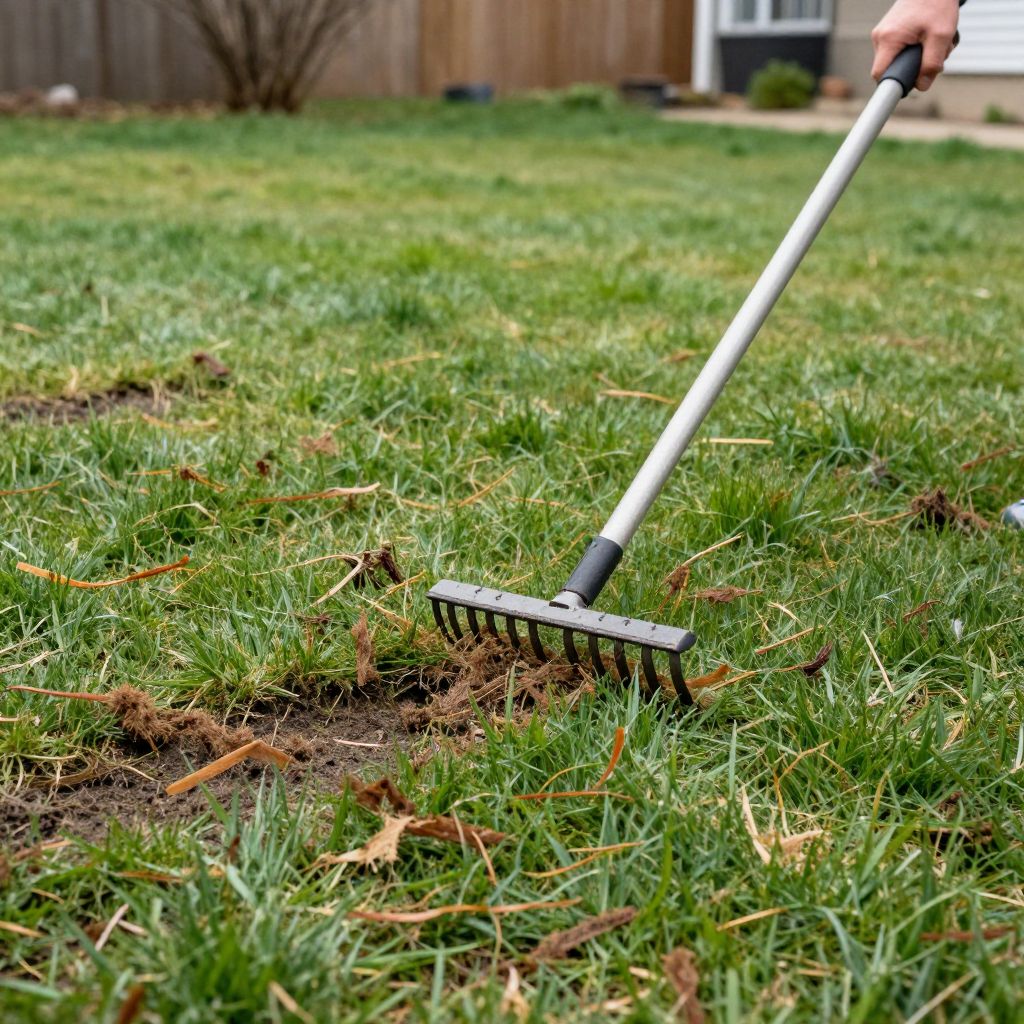
When should you dethatch your lawn? The best time is when grass is actively growing and can recover quickly, usually in the main growth season for your turf type. Dethatching at the wrong time can stress the lawn, thin it out, and invite weeds, so timing matters as much as the tool you use.
The right approach depends on whether you have cool-season or warm-season grass, how thick the thatch layer is, and how healthy the lawn is overall. A little thatch can be normal; a heavy mat is when dethatching becomes useful.
When should you dethatch your lawn?
Dethatch your lawn when the grass is in active growth and the thatch layer is more than about 1/2 inch thick. For cool-season lawns, that usually means early fall or early spring; for warm-season lawns, late spring to early summer is often best. Avoid dethatching during heat, drought, or dormancy.
What thatch is and why it matters
Thatch is the layer of dead and living stems, roots, and debris that builds up between the green grass blades and the soil surface. A thin layer can help cushion foot traffic and reduce moisture loss, but too much can block water, air, and nutrients from reaching the roots.
How much thatch is too much?
- Less than 1/2 inch: usually fine and often left alone.
- About 1/2 to 3/4 inch: monitor closely; dethatching may help if the lawn looks stressed.
- More than 3/4 inch: usually a good candidate for dethatching.
A quick way to check is to cut a small wedge from the lawn with a spade and measure the brown spongy layer above the soil. If the lawn feels springy underfoot or water seems to run off instead of soaking in, thatch may be part of the problem.
Best season to dethatch by grass type
Cool-season grasses
Cool-season grasses such as Kentucky bluegrass, perennial ryegrass, and tall fescue recover best when dethatched in early fall. Spring can also work if the lawn is healthy and you have time for it to regrow before summer heat arrives.
Fall is often ideal because temperatures are milder, weeds are less aggressive, and grass has time to rebuild before winter.
Warm-season grasses
Warm-season grasses such as bermudagrass, zoysiagrass, St. Augustinegrass, and centipedegrass are usually dethatched in late spring to early summer, once they are fully green and growing strongly. Dethatching too early can slow recovery.
Do not dethatch warm-season lawns when they are still dormant or when extreme heat and drought are already stressing them.
Why timing matters
Dethatching is a mechanical stress. If the lawn is already struggling from heat, cold, insects, disease, or poor drainage, the process can do more harm than good. The goal is to remove excess thatch while giving the grass the best chance to fill in quickly afterward.
Signs your lawn actually needs dethatching
Not every lawn needs dethatching on a schedule. Many lawns never need it, while others build thatch quickly because of heavy fertilizing, frequent shallow watering, or certain grass types.
- Water beads up or runs off instead of soaking in.
- The lawn feels spongy or bouncy when you walk on it.
- Grass looks thin even though you water and feed it.
- You see a thick brown layer at the soil surface.
- Grass clippings seem to sit on top instead of breaking down.
If the lawn is compacted rather than thatchy, dethatching alone may not solve the issue. In that case, aeration may be the better maintenance step, or it may need to be done along with dethatching.
How to dethatch a lawn the right way
1. Mow and prepare the area
Mow the lawn slightly shorter than usual, but do not scalp it. Remove sticks, stones, toys, and other debris so the dethatcher can move evenly across the surface.
2. Use the right tool
- Manual dethatching rake: best for small areas and light thatch.
- Power dethatcher or vertical mower: best for larger lawns or thicker thatch.
- Core aerator: useful if compaction is also a problem, though it does not remove thatch in the same way.
3. Work in one or two passes
Run the dethatcher over the lawn in one direction first. If needed, make a second pass at a right angle, but only if the lawn can handle it. The goal is to lift thatch without tearing up healthy turf.
4. Rake up the debris
Collect the loosened thatch after dethatching. Leaving it in piles can smother grass and slow recovery. A leaf rake, lawn sweeper, or bagging mower can help with cleanup.
5. Water and recover
Water lightly after dethatching if the soil is dry, then keep the lawn evenly moist while it recovers. Avoid heavy foot traffic for a couple of weeks, especially on thin or newly repaired areas.
What to do after dethatching
Post-dethatching care is just as important as the dethatching itself. The lawn will usually look rough for a short time, and that is normal.
- Apply seed only if the grass type and season are right for overseeding.
- Topdress lightly with compost if your soil needs organic matter and the lawn is thin.
- Resume mowing once the grass is actively growing again.
- Fertilize only if your lawn needs it and the timing suits your grass type.
If you overseed, keep the seedbed consistently moist but not soggy. If you do not overseed, let the lawn recover before returning to normal mowing and traffic.
Common mistakes to avoid
Dethatching at the wrong time of year
This is the biggest mistake. A lawn that is dormant, heat-stressed, or just coming out of winter will struggle to recover.
Removing too much at once
Heavy dethatching can expose soil and damage crowns. If the thatch layer is severe, it may be better to tackle it in stages rather than all in one session.
Confusing thatch with compaction
Compacted soil can look like a thatch problem because water does not move well through it. If a screwdriver or soil probe is hard to push into the ground, compaction may be part of the issue.
Ignoring the cause
If thatch keeps returning, look at your mowing and watering habits. Overfertilizing, overwatering, and mowing too high or too low can all contribute to buildup depending on the grass type.
How to prevent thatch from building up again
Good lawn care often reduces the need for repeated dethatching. The most effective prevention is steady, sensible maintenance rather than aggressive cleanup later.
- Mow at the recommended height for your grass type.
- Keep mower blades sharp so clippings break down cleanly.
- Water deeply but not too often, when appropriate for your climate and soil.
- Avoid excess nitrogen fertilizer.
- Use compost and aeration strategically if your soil is poor or compacted.
Some lawns naturally accumulate thatch faster than others. Fine-textured, aggressively spreading grasses tend to build it more readily than slower-growing types.
When dethatching is not the best answer
If your lawn is thin because of shade, poor drainage, pests, disease, or the wrong grass for the site, dethatching will not fix the root problem. It may even make the lawn weaker if the underlying issue remains.
Consider another approach if you notice:
- Large bare spots caused by shade or tree roots.
- Soggy ground from poor drainage.
- Insect damage, fungal disease, or grub activity.
- Soil that is hard and compacted rather than spongy.
In those cases, improve the site conditions first, then decide whether dethatching is still needed.
Quick answer: should you dethatch now?
Ask yourself three questions: Is the grass actively growing? Is the thatch layer thicker than 1/2 inch? Can the lawn recover quickly after stress? If the answer is yes, dethatching may be worthwhile. If not, wait for better conditions or choose a different lawn care step.
Conclusion
When should you dethatch your lawn? Do it only when the grass is actively growing, the thatch layer is truly excessive, and the weather gives the lawn a good chance to recover. Measure the thatch, choose the right season for your grass type, and avoid overdoing it. If you want to keep improving your lawn care routine, a good next step is learning how aeration and overseeding fit into the same seasonal plan.