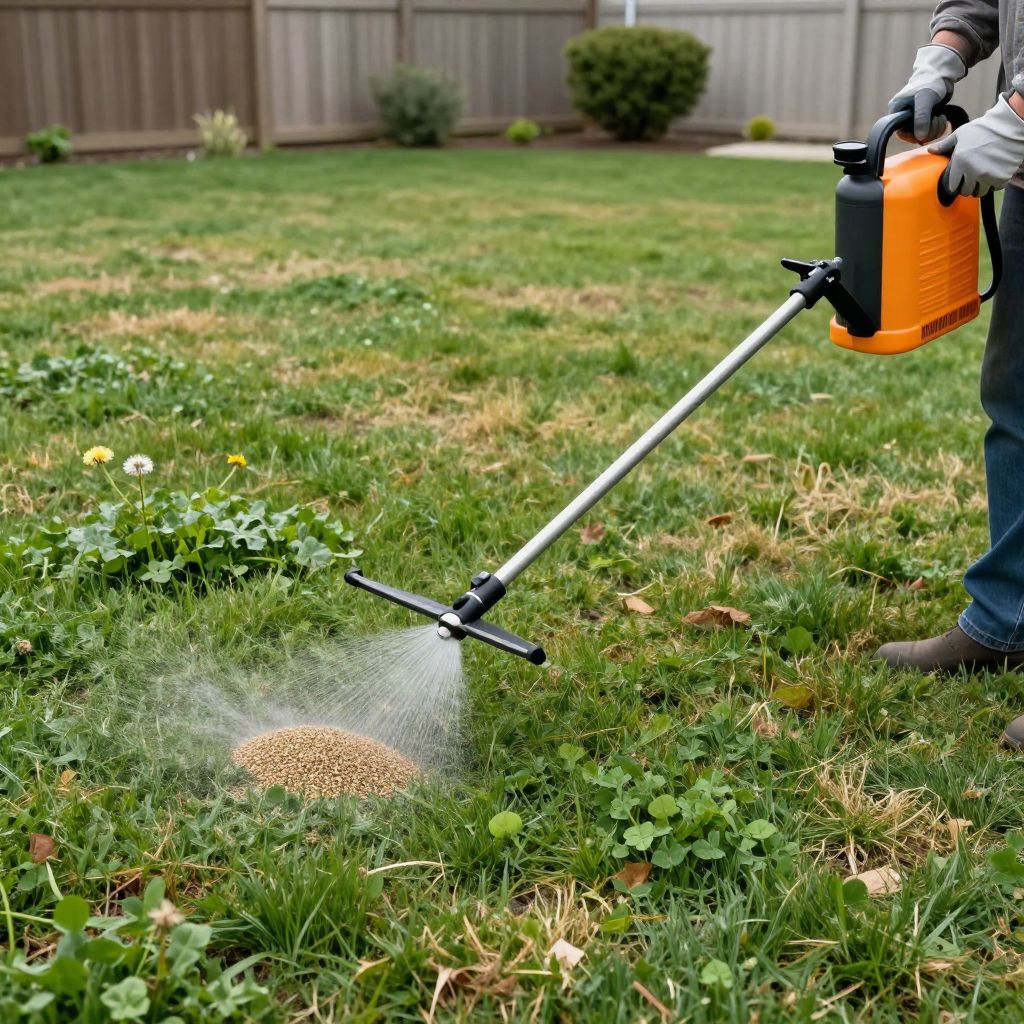
Does weed and feed work, or is it just a quick fix that disappoints? The short answer is yes, it can work well in the right conditions, but only if you use it on the right weeds, the right lawn, and at the right time.
It is not a cure-all. Weed and feed products are most effective when your turf is actively growing and the weed problem is still fairly small. Used at the wrong time, they can waste money, stress the grass, and leave you with the same weeds a few weeks later.
Does weed and feed work?
Yes, weed and feed can work on lawns when the grass is growing actively and the weeds are young and broadleaf, such as dandelion or clover. It is less effective on mature weeds, stressed turf, grassy weeds, or lawns with poor soil, thin coverage, or the wrong seasonal timing.
How weed and feed products work
Weed and feed combines two jobs in one product: a fertilizer that feeds the lawn and an herbicide that targets certain weeds. The idea is convenient, but the results depend on whether your lawn can absorb the fertilizer and whether the weed killer can reach the weed leaves or roots.
Two common types
- Granular weed and feed: Usually spread with a broadcast or drop spreader. It often needs dew or light moisture to stick to weed leaves, depending on the label.
- Liquid weed and feed: Sprayed onto the lawn and can give more even leaf contact, but it still needs proper timing and active weed growth.
Most weed and feed products are designed for broadleaf weeds, not grassy weeds like crabgrass, goosegrass, or nutsedge. If your main problem is grassy weeds, you usually need a different product or a different strategy.
When weed and feed is most likely to work
Timing matters more than many gardeners realize. Weed and feed performs best when the lawn is healthy, the weeds are actively growing, and the weather is mild enough for the grass to use nutrients without stress.
Best lawn conditions
- The grass is actively growing, not dormant.
- Weeds are small and visible, not old and woody.
- The lawn has been mowed recently, but not scalped.
- Soil is moist enough for growth, but not soggy.
- Temperatures are within the product label’s recommended range.
In many climates, that means spring or early fall for cool-season lawns, and late spring through summer for warm-season lawns. Always follow the label and adjust for your local weather, because heat, drought, and dormancy can change how well the product works.
When weed and feed does not work well
There are several common reasons weed and feed seems ineffective. In many cases, the product is not failing so much as the lawn conditions are preventing good results.
Common reasons for poor results
- The weeds are too mature. Large, established weeds often survive a single application.
- The lawn is stressed. Heat, drought, compaction, or disease can reduce uptake and recovery.
- The weeds are not broadleaf weeds. Many products do not control grassy weeds.
- The application was uneven. Missed strips are common with spreaders and sprayers.
- The grass was too short or too dry. Weak turf may not benefit from the fertilizer portion.
- The product was used at the wrong time. Dormant grass cannot use fertilizer well, and some herbicides work poorly in extreme temperatures.
Weed and feed is usually a poor fit for these situations
- Newly seeded lawns
- Recently sodded lawns
- Lawns with severe weed infestation
- Lawns with moss, bare soil, or compaction problems
- Lawns under drought stress or heat stress
If your lawn is thin or patchy, weed and feed may feed the grass a little, but it will not solve the underlying problem. Weeds often return because bare soil and weak turf give them room to reestablish.
How to use weed and feed correctly
Good application makes a big difference. Read the label first, because the product type, grass species, and weed targets all affect how you should apply it.
Step-by-step application basics
- Identify the weeds. Make sure the product is meant for the weeds you actually have.
- Check your grass type. Some products are not safe for certain turf species.
- Mow first if needed. Keep the lawn at a normal height; do not scalp it.
- Apply evenly. Use the correct spreader setting or spray coverage recommended on the label.
- Water only as directed. Some products need moisture after application; others should stay dry for a period.
- Keep people and pets off the lawn until the label says it is safe.
Important mistakes to avoid
- Applying before a heavy rain, which can wash product away.
- Using more than the label rate, which can burn grass or pollute runoff.
- Applying during heat waves or drought.
- Using it on a lawn that was recently seeded or overseeded.
- Expecting it to fix compacted soil, poor drainage, or shade problems.
Do not guess at the rate. Overapplication is one of the fastest ways to damage turf and reduce the product’s usefulness. If your spreader is not calibrated, test it on a small area first and compare the coverage to the label instructions.
What results to expect and how long they take
Weed and feed is not instant. The fertilizer portion may help grass green up in a week or two, while the herbicide portion often takes longer to show visible decline in weeds.
Some weeds may yellow, curl, or wilt before they die back. Others may only weaken and then regrow if the application was incomplete or the weed was too mature. A second treatment may be needed later, but only if the label allows it.
Signs it is working
- Weeds begin to yellow, curl, or stop growing.
- The lawn color improves gradually, not overnight.
- Weed patches thin out over the following weeks.
Signs it is not working well
- No change in weeds after the expected waiting period.
- Only the grass greens up, while weeds stay healthy.
- Weeds recover quickly after a brief wilt.
- Missed strips or patchy results appear where the product was applied unevenly.
Better alternatives when weed and feed is not enough
Sometimes the best answer to “does weed and feed work?” is “not for this lawn problem.” If weeds are widespread or the turf is thin, a more targeted approach usually gives better long-term results.
For broadleaf weeds in established lawns
Spot-treat individual weeds with a product labeled for your turf and the weed species. This reduces chemical use and lets you focus on the worst spots instead of treating the whole lawn.
For thin or patchy lawns
- Improve soil with compost if the site is poor or compacted.
- Overseed at the right season for your grass type.
- Water deeply but not constantly, so roots grow downward.
- Mow at the recommended height for your turf species.
For recurring weed pressure
- Keep grass dense by fertilizing according to soil needs, not just weed control.
- Reduce bare soil by overseeding or repairing damaged areas.
- Correct drainage issues so the lawn is not constantly stressed.
- Use mulch in nearby beds to prevent weeds from creeping into the lawn edge.
Healthy turf is often the best weed control. A dense, well-rooted lawn shades the soil, crowds out seedlings, and recovers faster after mowing and weather stress.
Soil, watering, and mowing tips that improve results
Weed and feed works better when the lawn is already in decent shape. Basic lawn care can make a bigger difference than many gardeners expect.
Soil and drainage
- Compacted soil limits root growth and makes lawns more vulnerable to weeds.
- Poor drainage can weaken turf and encourage some weed species.
- A soil test can help you decide whether the lawn needs lime, nutrients, or organic matter.
If water puddles after rain, fix drainage before relying on weed and feed. Aeration, topdressing, and improving soil structure can help more than repeated herbicide applications.
Watering
Watering should support active grass growth, not keep the surface constantly wet. Deep, less frequent watering usually encourages stronger roots than shallow daily sprinkling, but the right pattern depends on your soil and climate.
Mowing
Mow at the height that suits your grass type, and avoid cutting off too much at once. Taller grass shades the soil and helps suppress weeds, while scalping weakens turf and opens space for weed seedlings.
Safety and environmental care
Because weed and feed contains herbicide, treat it like a lawn chemical, not a general fertilizer. Keep it away from flower beds, edible gardens, and storm drains unless the label specifically allows otherwise.
- Store products in the original container.
- Keep children and pets off treated areas as directed.
- Do not apply near desirable broadleaf plants, since drift or runoff can injure them.
- Never use more than the label rate in hopes of faster results.
If you are treating a lawn near trees, shrubs, or vegetable beds, consider spot treatment instead of a broadcast application. That reduces the chance of accidental damage to nearby plants.
Bottom line: does weed and feed work?
Yes, weed and feed can work, but it works best as a maintenance tool on an established, actively growing lawn with young broadleaf weeds. It is less effective on stressed turf, mature weeds, grassy weeds, and lawns with deeper problems such as compaction, poor drainage, or thin coverage.
If you want better results, identify the weed, match the product to your grass, apply it at the right time, and support the lawn with proper mowing, watering, and soil care. For more lawn improvement ideas, you may also want to read up on how to overseed a lawn and how to improve compacted soil.