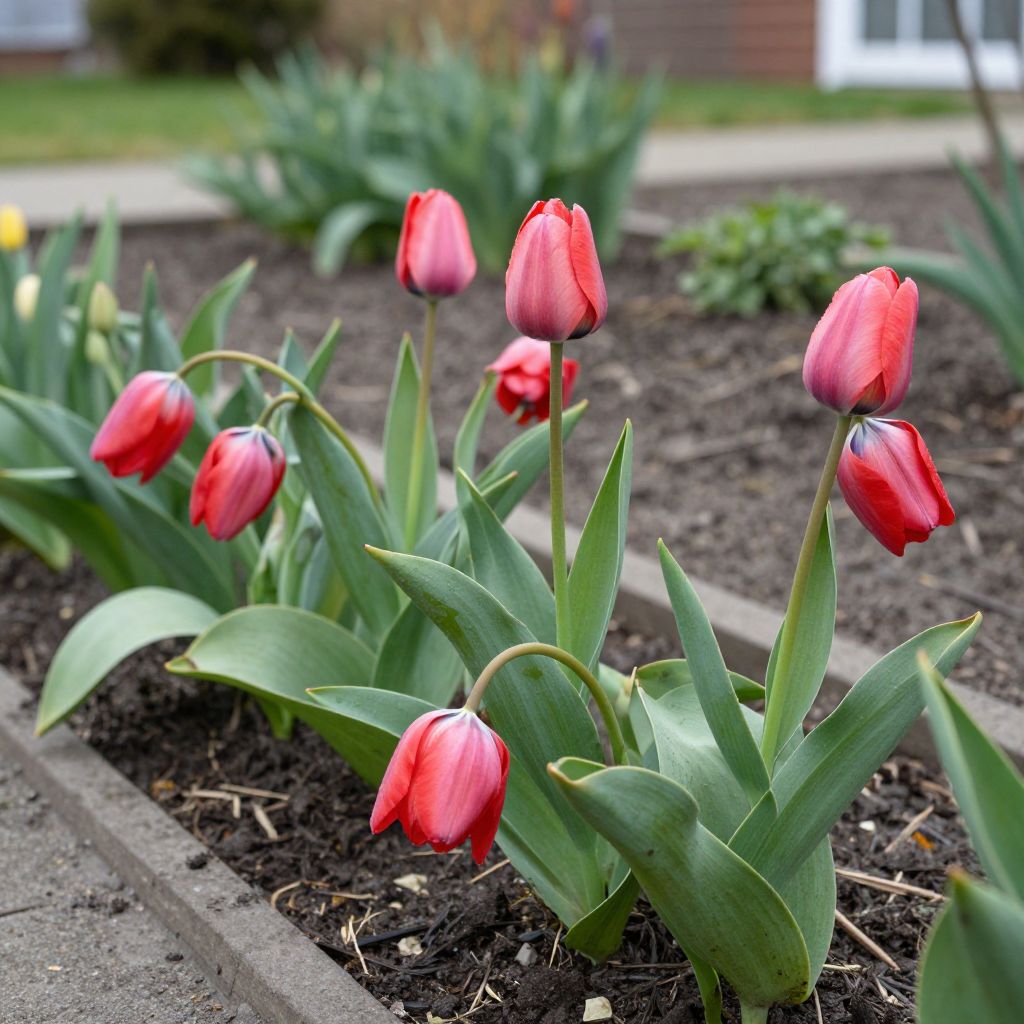
Why are my tulips drooping? In many cases, it’s a normal part of the bloom cycle, but drooping can also point to too much heat, poor watering, weak stems, bulb problems, or disease. The key is to tell the difference between a temporary flop and a plant that needs help.
With a few quick checks, you can usually figure out whether your tulips need support, better drainage, less heat stress, or a healthier planting site. The right fix depends on whether the plants are in the garden, in pots, newly cut, or already finishing their bloom.
Why are my tulips drooping?
Tulips often droop because their blooms are heavy and their stems naturally bend as flowers age, especially in warm weather. If the whole plant is collapsing early, the most common causes are insufficient light, excess moisture, poor drainage, heat stress, damaged bulbs, or weak stems from overcrowding or shallow planting.
Normal drooping vs. a problem
Not every drooping tulip is a sick tulip. Tulips naturally lean and soften as flowers open, fade, and prepare to go dormant.
Usually normal
- Flowers nod after a few days of full bloom
- Stems bend slightly in rain or wind but perk up later
- Leaves remain green and firm while the flower ages
More likely a problem
- Stems flop over while buds are still closed
- Leaves turn yellow, mushy, or spotted too early
- Plants collapse suddenly after watering or warm weather
- Bulbs produce weak, short, or misshapen growth
Common causes of drooping tulips and how to fix them
1. Heat stress
Tulips prefer cool spring conditions. When temperatures rise, stems and petals soften quickly, and flowers may droop even if the plant is otherwise healthy.
What to do: If possible, give tulips morning sun and afternoon shade in warmer climates. Mulch lightly around the bed to keep soil cooler, and avoid planting them where reflected heat from walls or paving is intense.
2. Too much water or poor drainage
Wet soil is one of the fastest ways to weaken tulips. Bulbs sitting in soggy ground can develop rot, which often shows up as limp stems, yellowing leaves, or flowers that never fully open.
What to do: Check the soil a few inches down. It should be moist, not muddy. If water pools after rain or irrigation, improve drainage by raising the bed, mixing in coarse organic matter where appropriate, or moving bulbs to a better site in fall.
- Do not let tulips sit in saucers of water in containers.
- Use pots with drainage holes only.
- Empty cachepots after watering.
3. Underwatering during active growth
While tulips are not thirsty plants, they do need consistent moisture during spring growth. If the soil dries out completely while buds are forming or flowers are opening, stems can weaken and droop.
What to do: Water deeply when the top layer of soil feels dry, especially in containers or during dry spells. Aim for evenly moist soil, not constant wetness. In the ground, established beds usually need less frequent watering than pots.
4. Not enough sunlight
Tulips need bright light to build sturdy stems. In shade, they may stretch toward the light, producing long, weak growth that bends easily.
What to do: Choose a site with full sun or at least strong morning sun. If nearby shrubs or trees have filled in since planting, that extra shade may be the reason your tulips are flopping more each year.
5. Stems naturally too tall or top-heavy
Some tulips have large blooms that are simply heavier than the stem can support, especially after rain. This is especially noticeable in windy spots or in beds without shelter.
What to do: Plant tulips in groups so they support one another visually, and place them in a slightly sheltered location. In exposed areas, use discreet stakes or a low ring support before the stems get too far along.
6. Bulbs planted too shallowly
Shallow planting can lead to weak anchoring and unstable stems. The bulb may push up easily, especially in loose soil or after heavy rain.
What to do: Replant bulbs in fall at the proper depth for your climate and soil type. As a general rule, tulip bulbs are usually planted about 6 to 8 inches deep, but adjust for bulb size and local conditions.
7. Crowded bulbs
When tulips are packed too tightly, they compete for water, nutrients, and space. The result can be smaller flowers, shorter stems, and drooping blooms.
What to do: Lift and divide congested clumps after the foliage has died back, if your climate and gardening style allow it. Replant healthy bulbs with enough spacing for air movement and root expansion.
8. Bulb rot or disease
Diseases such as bulb rot can cause sudden collapse, especially in wet soil. Fungal problems often show up as soft bulbs, poor emergence, distorted growth, or leaves with unusual spots and streaks.
What to do: Remove badly affected plants and dispose of them in the trash, not the compost pile. Avoid replanting tulips in the same soggy spot until drainage is corrected. Use clean tools when digging or cutting damaged plants.
9. Pests damaging stems or bulbs
Animals and insects can weaken tulips from below or above. Voles, squirrels, and deer may disturb bulbs or buds, while aphids can stress tender growth and spread disease.
What to do: Check for chewed stems, disturbed soil, or missing buds. Use physical barriers, bulb cages, or repellents as appropriate for your garden. If aphids are present, a strong spray of water can sometimes knock them off before they multiply.
What to do right now if your tulips are drooping
Start with a quick inspection. A few minutes of troubleshooting can tell you whether the plant is simply finishing bloom or needs immediate attention.
- Look at the leaves. Green, firm leaves usually mean the plant is still functioning normally.
- Check the soil. Dry soil suggests underwatering; muddy soil suggests drainage trouble.
- Feel the stem. Soft, mushy stems can indicate rot, while firm stems that bend from weight may just need support.
- Inspect the bloom. Older flowers naturally nod; unopened or newly opened flowers drooping early may signal stress.
- Check for pests or damage. Look for holes, chewing, discoloration, or missing bulbs.
How to keep tulips from drooping in future seasons
Choose the right planting site
Tulips do best in well-drained soil and a sunny spot. Good drainage matters more than rich soil, because bulbs rot easily in heavy, waterlogged ground.
- Pick a location with full sun or bright morning sun
- Avoid low spots where water collects
- Keep them away from dense root competition from shrubs and trees
Improve soil structure carefully
If your soil is heavy clay, tulips may struggle unless drainage is improved. Organic matter can help loosen soil over time, but the goal is always to prevent standing water around the bulbs.
In containers, use a free-draining potting mix and a pot with drainage holes. Avoid garden soil in pots, since it often compacts and holds too much water.
Water with restraint
Tulips need moisture during growth, but they do not like wet feet. Water when the soil begins to dry, then let excess water drain away completely.
After flowering, reduce watering as foliage begins to yellow and the bulbs enter dormancy, unless your local conditions are extremely dry and the bulbs are still actively rooting.
Plant at the right depth and spacing
Proper planting depth helps bulbs anchor well and protects them from temperature swings. Good spacing improves airflow and reduces the risk of disease.
- Plant bulbs deep enough to stay stable
- Leave enough room between bulbs for growth
- Set bulbs with the pointed end up when visible
Feed lightly, if needed
Overfertilizing can produce lush leaves but weak stems. If you fertilize, do so modestly and according to your soil needs rather than pushing fast growth.
In many gardens, healthy soil and proper planting are more important than extra feeding. A soil test is the most reliable way to know whether nutrients are actually lacking.
Should you cut drooping tulips?
If the flowers are fading and the stems are bending naturally, you can deadhead the spent blooms to keep the bed tidy. Cut only the flower head, or remove the stem back to the base if the bloom is finished and you do not need seed formation.
Do not remove healthy green leaves too early. The foliage feeds the bulb for next year’s bloom. Let leaves yellow and die back naturally before removing them.
When drooping means the tulip is done for the season
After flowering, tulips often look less upright as they shift into dormancy. This is normal and does not always mean something is wrong.
If the plant has finished blooming, the best care is usually simple:
- Deadhead the spent flower if desired
- Keep foliage intact until it yellows
- Water only if the soil is very dry
- Mark the spot so you do not disturb the bulb later
Conclusion
If you’re wondering why your tulips are drooping, start by checking the soil, sunlight, and stage of bloom. A slight nod after flowering is normal, but early collapse usually points to heat, water issues, shallow planting, or disease. Fix the growing conditions now, and you’ll give next season’s tulips a much better chance.
If you’d like more help with spring bulbs, you may also want to read about how to care for tulips after blooming and how to plant bulbs for stronger spring flowers.