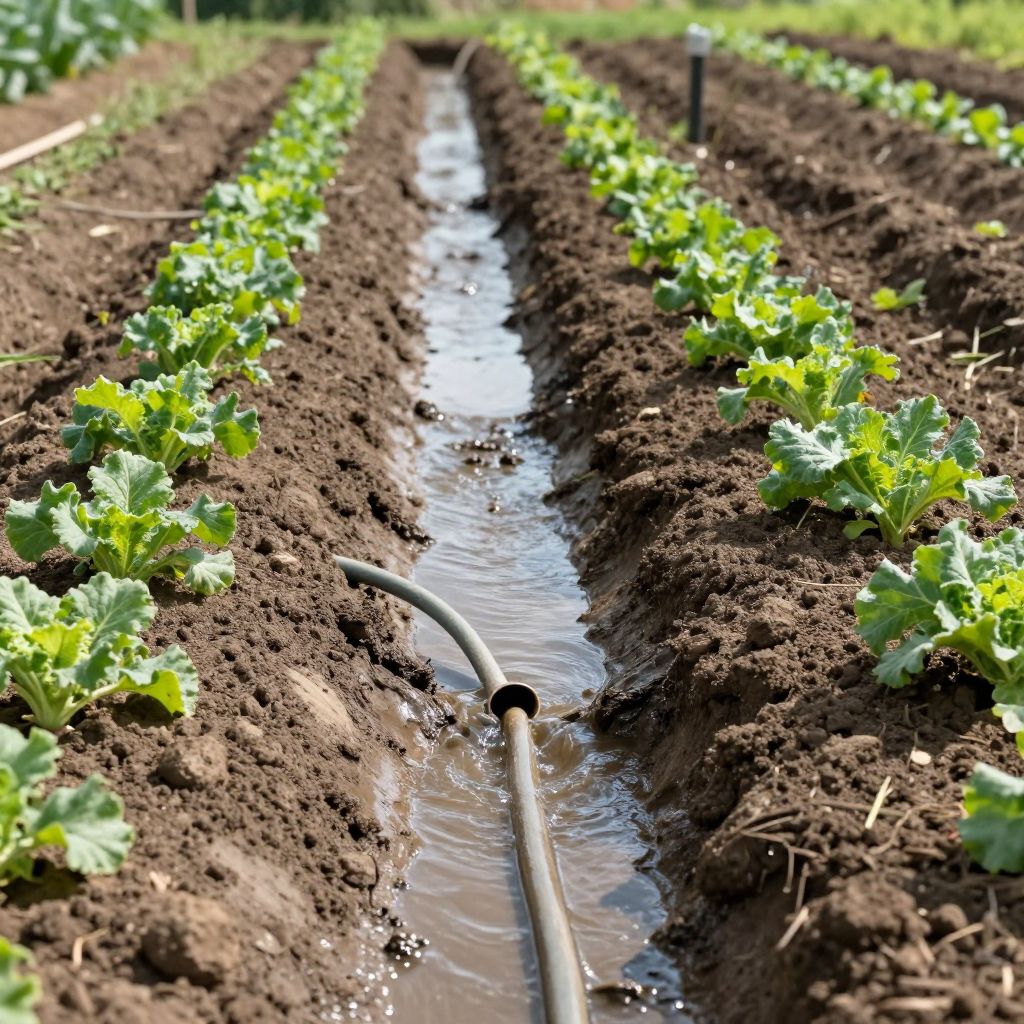
If you’ve seen long, shallow channels in a field or garden bed and wondered what they are for, you’re probably looking at furrow irrigation. This old but still useful watering method delivers water through trenches between rows so it can soak into the root zone by gravity.
It can work well in the right soil and layout, but it also has limits. Knowing when furrow irrigation helps, when it wastes water, and how to set it up correctly can save you from runoff, uneven watering, and root problems.
What is furrow irrigation?
Furrow irrigation is a surface-watering method where water runs through shallow channels dug between crop rows. The water moves along the furrows and infiltrates sideways and downward into the soil, wetting plant roots without flooding the entire bed.
How furrow irrigation works in the garden
Furrow irrigation depends on gravity, soil texture, and the slope of the land. Water enters the top of the furrow, travels down the channel, and gradually soaks into the root zone of nearby plants.
It is most effective when the bed is laid out in straight rows with a gentle, even slope. If the slope is too steep, water rushes through and erodes soil; if the ground is too flat or compacted, water may pond and spread unevenly.
Why gardeners still use it
- It is simple and low-tech.
- It can reduce wet foliage compared with overhead watering.
- It works well for row crops and larger garden beds.
- It can be paired with gravity-fed or hose-fed water sources.
Where it is less useful
- Small, irregular beds with many mixed plantings
- Heavy clay soils that drain slowly
- Very sandy soils that let water move too quickly
- Slopes that are uneven or difficult to level
Best conditions for furrow irrigation
Furrow irrigation performs best in moderately well-drained soil with a gentle slope and crops planted in rows. The goal is to let water soak in evenly without runoff, erosion, or waterlogging.
Soil type matters
- Loam: Usually the easiest soil for furrow irrigation because it absorbs and holds water reasonably well.
- Sandy soil: Water may move too fast and deep, so shorter furrows and slower flow help.
- Clay soil: Water may pool or move slowly, so careful leveling and smaller water applications are important.
Planting layout
Furrow irrigation is usually used for crops planted in rows, such as beans, corn, potatoes, tomatoes, squash, and many vegetables grown in wider spacing. The furrow runs between the rows, so roots can access moisture without the crown of the plant sitting in water.
How to set up furrow irrigation step by step
If you want to try furrow irrigation in a home garden, start small and observe how water moves through your soil. A few test runs will tell you more than any fixed rule.
- Prepare the bed. Remove weeds, break up clods, and level the area as evenly as possible.
- Mark straight rows. Space rows according to the crop’s mature width and your access needs.
- Form shallow furrows. Make channels between rows, usually only a few inches deep, so water can move without collapsing the bed.
- Check the slope. The grade should be gentle and uniform so water doesn’t race downhill.
- Apply water slowly. Let water enter the furrow at a controlled rate rather than blasting it in all at once.
- Watch the advance. Make sure water reaches the end of the furrow before the top section dries out too much.
- Stop before runoff. Shut off the water when the furrow has had enough time to soak in.
Simple tools that help
- Garden hoe or hand hoe for shaping furrows
- Shovel or rake for leveling
- Garden hose, drip-tape supply line, or irrigation valve for controlled flow
- Stake and string for keeping rows straight
- Level or line level for checking slope
How to tell if furrow irrigation is working well
Good furrow irrigation wets the root zone evenly along the row without leaving standing water for long periods. The soil should be moist below the surface, not just wet on top.
Signs of a good setup
- Water moves steadily through the furrow
- The top and bottom of the row receive similar moisture
- There is little or no erosion
- Plants stay upright and vigorous, with no signs of water stress
Signs something is wrong
- Water pools at the top and never reaches the end
- The end of the furrow gets too much water while the top stays dry
- Soil crusts over after watering
- Roots look stressed, yellowed, or stunted from poor drainage
Common mistakes to avoid
Most furrow irrigation problems come from uneven ground, too much water, or poor timing. A few small adjustments usually make a big difference.
- Making furrows too deep: Deep channels can dry out the bed edges and waste water.
- Using too much flow: Fast water can erode soil and skip past the root zone.
- Ignoring soil texture: Clay and sand behave very differently, so the same setup won’t work everywhere.
- Letting water sit too long: Prolonged saturation can reduce oxygen around roots.
- Not checking the end of the row: The far end often gets under-watered if you stop too soon.
Furrow irrigation vs. other watering methods
Furrow irrigation is not the only way to water a garden, and it is not always the best choice. Comparing methods helps you choose the right one for your site and crops.
Compared with overhead watering
Overhead watering wets leaves and soil surface, which can be convenient but may encourage leaf disease in some crops. Furrow irrigation keeps foliage drier, which can be an advantage for tomatoes, peppers, and other plants that prefer dry leaves.
Compared with drip irrigation
Drip irrigation is usually more water-efficient and easier to control in many home gardens. Furrow irrigation is simpler and may be useful where drip systems are not practical, but it typically loses more water to evaporation and uneven distribution.
Compared with basin irrigation
Basin irrigation floods a contained area around each plant or group of plants. Furrow irrigation is better for row crops because it guides water between rows rather than around isolated plants.
Seasonal and climate considerations
Your local climate affects how well furrow irrigation works. Hot, windy weather increases evaporation, while cool or rainy periods reduce the need for frequent watering.
In dry climates, furrows may need to be shorter and watered more carefully to limit loss. In humid or rainy regions, you may need to use furrows less often and watch closely for soggy soil, especially in heavier ground.
Adjust for your garden conditions
- Water early in the day when possible to reduce evaporation.
- Shorten furrows if water is running off before soaking in.
- Mulch between rows if appropriate to reduce surface drying and soil crusting.
- Recheck soil moisture after watering instead of relying on appearance alone.
Can furrow irrigation cause plant problems?
Yes, if it is poorly managed. The main risks are uneven moisture, soil erosion, and root stress from too much water. Plants may also suffer if the furrow stays wet long enough to compact the soil or reduce oxygen around roots.
Watch for these issues
- Root rot or decline: Often linked to poor drainage or overly long watering.
- Dry patches: Usually caused by uneven slope or too little flow.
- Soil crusting: Can make it harder for seedlings to emerge.
- Erosion: More likely on steeper ground or with strong water flow.
Practical troubleshooting tips
If your furrow irrigation is not working well, start by observing where the water goes first and where it stops. That tells you whether the issue is flow, slope, soil, or timing.
- Water is running too fast: Reduce the flow and make the furrow shallower.
- Water is not reaching the end: Slow the infiltration at the top by reducing intake or shortening the furrow.
- The soil is staying soggy: Water less often and improve drainage before planting the next crop.
- Rows are washing out: Flatten the slope slightly and use gentler water entry.
- Plants still look dry: Check deeper in the root zone, not just the surface.
Is furrow irrigation right for your garden?
Furrow irrigation can be a smart choice if you grow row crops, have reasonably even ground, and want a simple watering method that keeps leaves dry. It is less suitable for small ornamental beds, containers, or sites with poor drainage.
If you are unsure, test one short row first and compare the soil moisture at both ends after watering. That quick trial will show whether furrow irrigation fits your soil, slope, and crops.
For more practical watering and bed-preparation advice, you may also want to read related guides on soil drainage and garden beds and choosing the best watering method for vegetables.