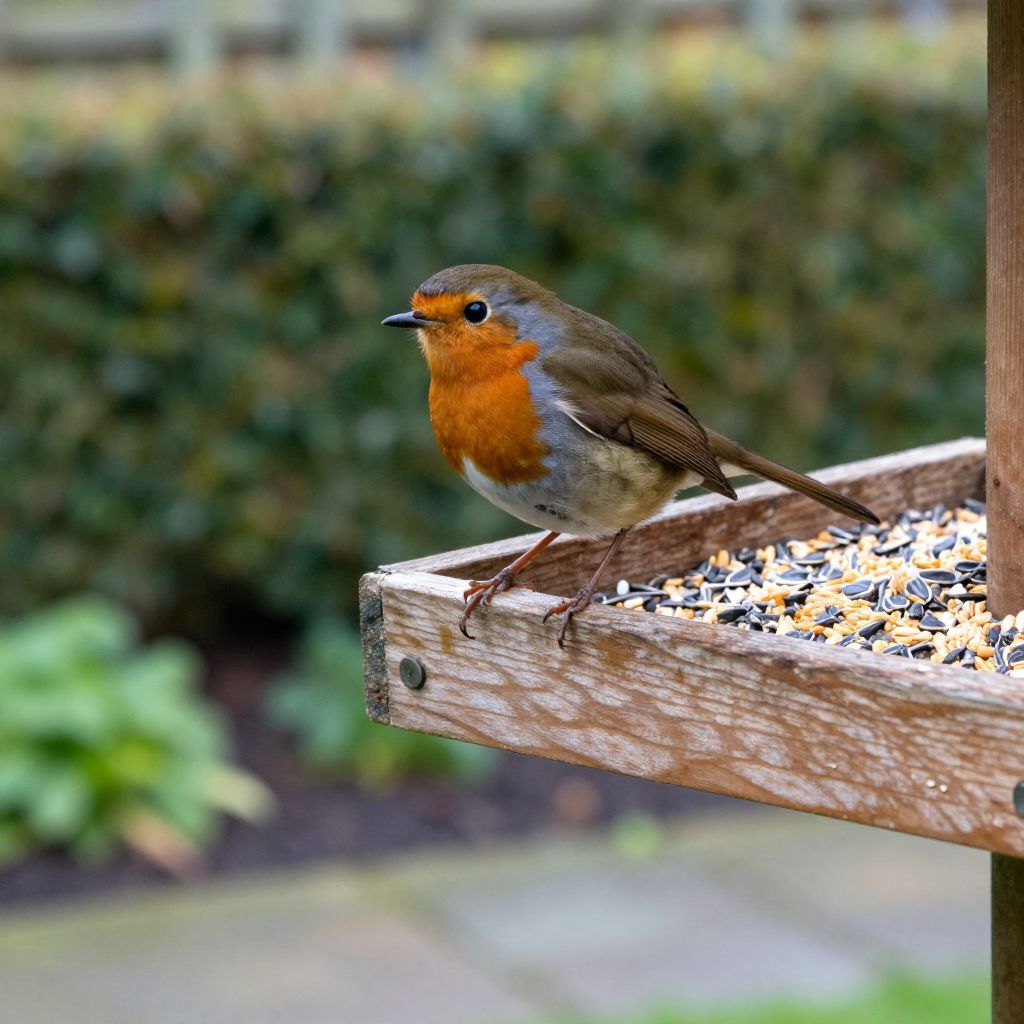
Do robins eat bird seed? Yes, they can, but they usually prefer softer, protein-rich foods such as worms, insects, and fruit. If your feeder is full of large sunflower seeds or mixed seed, robins may peck at it occasionally, but they are not the most efficient seed-feeder compared with finches, sparrows, or chickadees.
For gardeners, that matters because robins often show up where bird feeders, lawns, shrubs, and berry-producing plants overlap. Understanding what they actually eat helps you choose the right feeding setup, support them through the seasons, and avoid wasting seed on the wrong feeder style.
Do robins eat bird seed?
Robins will eat bird seed, especially small seeds or broken pieces, but seed is not their natural first choice. American robins (Turdus migratorius) are more likely to feed on earthworms, insects, berries, and other soft foods. If seed is available, they may sample it, especially in colder weather or when other food is scarce.
What robins prefer to eat in the garden
Robins are ground-feeding birds, so they often forage on lawns, mulch beds, and under shrubs rather than clinging to hanging feeders. In a healthy garden, they look for food in places where soil life is active and where fruiting plants are available.
Common robin foods
- Earthworms and grubs in moist, well-aerated soil
- Beetles, caterpillars, and other insects
- Berries from native shrubs and trees
- Small soft fruits, especially when ripe
- Occasionally seeds, usually small or cracked ones
This is why robins are often seen after rain or irrigation, when worms come closer to the soil surface. They also gather in yards with berrying shrubs, mulched borders, and open lawn areas where they can move easily.
Which bird seeds are most likely to interest robins?
If robins visit a feeder, they are more likely to pick at smaller, softer foods than at hard, shelled seeds. They may also eat seed that has fallen to the ground, where their feeding style feels more natural.
More likely to be sampled
- Small millet
- Cracked corn
- Finely chopped or broken seed pieces
- Soft suet blends that include fruit or mealworms
Less likely to be useful for robins
- Whole sunflower seeds with shells
- Large, hard mixed seed blends
- Feeder mixes with lots of filler seed
Important: robins are not built like acrobatic feeder birds. A hanging tube feeder may attract them only briefly, while a low tray, platform feeder, or ground feeding area is more suitable.
How to feed robins in a garden-friendly way
If you want to support robins, think beyond standard seed feeders. The best approach is to provide a feeding setup that matches how they naturally forage and to keep the area clean and safe.
- Use a ground tray or platform feeder. Robins are comfortable feeding on flat surfaces where they can hop and scan for danger.
- Offer small, soft foods. Try mealworms, chopped fruit, or a small amount of cracked corn rather than a heavy seed mix.
- Keep the area dry and clean. Remove wet, moldy, or spoiled food quickly to prevent disease and pests.
- Place feeders near cover, but not too close. A nearby shrub or tree gives robins a quick escape route, but keep enough open space so predators cannot ambush them.
- Provide water. A shallow birdbath or low dish helps robins drink and bathe, especially in dry weather.
If you already feed other birds, a separate ground station can reduce competition. Robins are less likely to be chased off when they are not forced to compete on a crowded hanging feeder.
Garden conditions that attract robins naturally
Robins often need less direct feeding and more good habitat. A garden that supports soil life, insects, and fruiting plants will usually attract them more reliably than a feeder alone.
Helpful planting and habitat features
- Native berry-producing shrubs and small trees
- Lawns or open beds with healthy soil life
- Mulched borders that hold moisture but do not stay soggy
- Mixed planting layers for cover and nesting
- Shallow water sources for drinking and bathing
Robins are especially drawn to gardens with a balance of open feeding space and nearby shelter. Dense, overgrown corners are less useful than a landscape with a few perches, a lawn edge, and productive shrubs.
Soil, watering, and lawn care: why they matter to robins
Because robins feed heavily on worms and insects, your soil and lawn care choices affect how often they visit. A garden that is too compacted, too dry, or overtreated with chemicals may offer fewer natural food sources.
What helps
- Moderately moist soil encourages earthworm activity near the surface
- Organic matter such as compost improves soil structure
- Light, regular watering is better than long drought stress followed by flooding
- Reduced pesticide use supports the insects robins eat
What to avoid
- Heavy soil compaction from frequent foot traffic
- Overwatering that leaves the lawn waterlogged
- Broad pesticide use that reduces insect food
- Leaving spoiled fruit or damp seed piles in warm weather
For lawns, aim for healthy growth rather than perfection. A slightly less manicured lawn often supports more life, which can mean more robin activity.
Seasonal feeding tips for robins
Robins’ diet changes through the year, so your feeding strategy should change too. In warmer months, they usually rely more on insects and fruit. In colder weather, they may spend more time looking for accessible soft foods and sheltered feeding spots.
Spring and summer
- Focus on water, cover, and insect-friendly planting
- Use fruit or mealworms sparingly if you want to supplement
- Keep feeders clean because warm weather increases spoilage risk
Fall and winter
- Offer berries, chopped fruit, or small amounts of cracked corn
- Use a sheltered tray feeder if snow or ice covers the ground
- Refresh food often so it does not freeze, mold, or attract rodents
Tip: In cold weather, robins may gather where berrying shrubs still hold fruit. Landscaping with winter-interest plants can be more effective than relying on seed alone.
Common problems when feeding robins
Feeding robins is usually simple, but a few issues come up often. Most are easy to fix once you know what the birds need and what they do not.
Problem: Robins ignore the feeder
This is common if the feeder is too high, too crowded, or filled with the wrong food. Move food to a tray or ground platform and offer softer items.
Problem: Seed gets moldy or wet
Robins are not likely to benefit from spoiled seed, and damp food can spread disease. Put out only what they can eat quickly and clean the feeder regularly.
Problem: Too many squirrels or larger birds
Ground feeding can attract other wildlife. Use a small tray, feed in shorter sessions, and avoid overfilling. If needed, place the feeder where you can monitor it closely.
Problem: Robins seem stressed or wary
They may be uncomfortable if the feeding area has no escape cover or is too exposed to pets. Keep cats indoors or away from feeding zones and provide nearby shrubs or trees.
Best feeder setup for robins
If your goal is to see robins regularly, the feeder itself matters as much as the food. A low, open setup works better than a narrow hanging feeder.
- Platform feeder: Best overall choice for robins
- Ground tray: Useful if you want a natural feeding style
- Shallow birdbath nearby: Helps with drinking and bathing
- Nearby shrub or tree: Gives robins a quick retreat
Keep the feeder in a spot that is easy to clean and observe. Good visibility helps you notice spoiled food, pests, or signs that the birds are not using the setup.
Should you feed robins at all?
Yes, if you do it thoughtfully. Robins are best supported by habitat, water, and natural food sources, with supplemental feeding used as a bonus rather than the main plan. A garden that supports worms, insects, and berries will usually do more for robins than a bag of seed alone.
If you want to encourage robins, start with a shallow tray feeder, a clean water source, and a few berry-producing plants suited to your climate. Then watch how they use your garden and adjust the setup to match their feeding habits.
If you’d like to create a more bird-friendly garden, consider reading about birdbath care and placement and native berry shrubs for backyard wildlife.