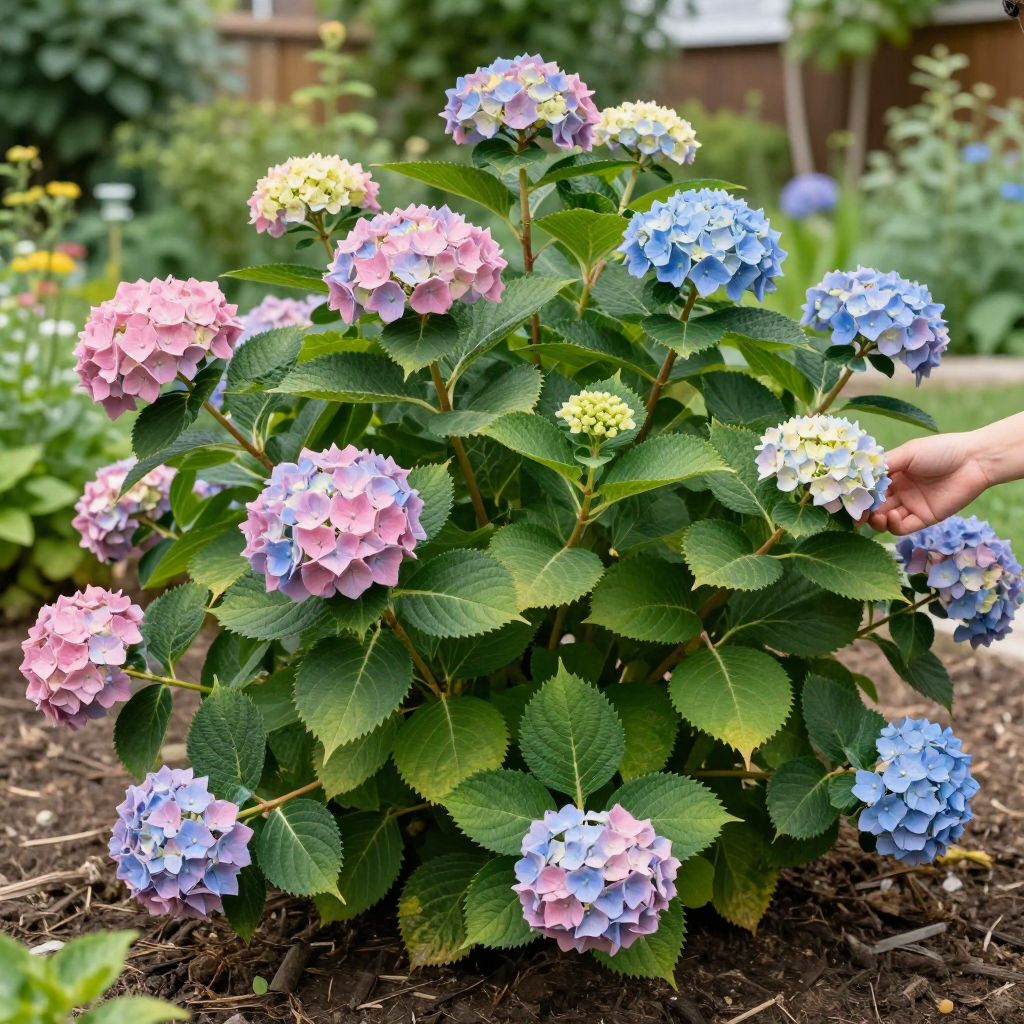
If you’re asking, “What type of hydrangea do I have?” the fastest way to tell is to compare the flower shape, leaf size, stem texture, and whether the plant blooms on old wood, new wood, or both. Those clues usually narrow it down to one of the main garden hydrangeas: bigleaf, panicle, smooth, oakleaf, or climbing hydrangea.
Once you know the type, you can prune it correctly, choose the right spot, and avoid the most common mistakes that keep hydrangeas from blooming well. Here’s how to identify yours and care for it with confidence.
What Type Of Hydrangea Do I Have?
Look first at the flower shape and the leaves. Bigleaf hydrangeas have mophead or lacecap blooms, panicle hydrangeas have cone-shaped flower clusters, smooth hydrangeas have round white heads, oakleaf hydrangeas have lobed leaves, and climbing hydrangeas are vines. Bloom timing and stem texture help confirm the ID.
How to identify your hydrangea step by step
Start with the easiest clues and work outward. You do not need to know the exact cultivar to make good care decisions in most gardens.
- Check the flower form. Rounded “mophead,” flat “lacecap,” cone-shaped, or vine-like flowering clusters are the biggest clues.
- Look at the leaves. Size, shape, and texture often separate one hydrangea group from another.
- Inspect the stems. Some types have woody, peeling stems; others are smoother and more flexible.
- Notice when it blooms. Some bloom on old wood, some on new wood, and some on both.
- Observe the plant’s habit. Is it a shrub, a small tree form, or a climbing vine attached to a wall or fence?
1. Bigleaf hydrangea, Hydrangea macrophylla
This is one of the most commonly grown garden hydrangeas. It usually has large, broad leaves and either round mophead blooms or flatter lacecap blooms.
Best clue: flower heads are usually pink, blue, purple, or white depending on variety and soil conditions.
Bigleaf hydrangeas often bloom on old wood, though some newer types rebloom on both old and new growth. If you prune them at the wrong time, you can remove next season’s flowers.
2. Panicle hydrangea, Hydrangea paniculata
Panicle hydrangeas have cone-shaped flower clusters that often start white or cream and may age to pink, rose, or tan. The leaves are usually narrower than those of bigleaf hydrangeas.
Best clue: these are the hydrangeas that tolerate more sun than most others, especially in cooler climates with enough moisture.
They bloom on new wood, so they are usually easier to prune without losing flowers.
3. Smooth hydrangea, Hydrangea arborescens
Smooth hydrangeas usually have rounded white flower heads and softer, less leathery leaves than oakleaf hydrangeas. A well-known example is the common “Annabelle” type, though many cultivars exist.
Best clue: the plant often dies back or looks rougher in winter, then sends up fresh stems in spring.
These also bloom on new wood, which makes them forgiving for gardeners who prune in late winter or early spring.
4. Oakleaf hydrangea, Hydrangea quercifolia
Oakleaf hydrangeas are easy to spot once you notice the leaves. They are deeply lobed and resemble oak leaves, and the flowers are usually cone-shaped and white, aging to pink or tan.
Best clue: the leaves turn excellent fall color, often red, burgundy, or bronze.
This type blooms on old wood, so avoid hard pruning unless you are removing dead or damaged stems.
5. Climbing hydrangea, Hydrangea anomala subsp. petiolaris
Climbing hydrangea is a woody vine rather than a shrub. It has white lacecap-style flowers, aerial rootlets, and can cling to walls, trellises, or tree trunks.
Best clue: if it is climbing on its own and spreading horizontally with layered stems, you likely have a climbing hydrangea.
It can take time to establish, but once settled, it becomes a sturdy, long-lived climber in the right site.
Quick comparison: which hydrangea do you have?
- Bigleaf: round or flat flower heads; broad leaves; often pink or blue blooms.
- Panicle: cone-shaped flower clusters; narrower leaves; good sun tolerance.
- Smooth: round white flower heads; soft leaves; blooms on new wood.
- Oakleaf: lobed leaves like oak; cone-shaped blooms; strong fall color.
- Climbing: woody vine; white lacecap flowers; aerial rootlets.
How bloom timing tells you a lot
Knowing whether your hydrangea blooms on old wood, new wood, or both is one of the most useful identification and care tools you have.
Old wood bloomers
Bigleaf hydrangeas and oakleaf hydrangeas commonly form flower buds on stems made the previous season. If you prune them too late in the year, or cut them back hard in spring, you may remove the buds before they open.
New wood bloomers
Panicle and smooth hydrangeas usually flower on new growth that emerges in spring. That means they are more forgiving if winter damage or pruning removes older stems.
Why this matters
If your hydrangea is healthy but not blooming, the problem is often pruning at the wrong time, winter bud damage, too much shade, or too much nitrogen fertilizer.
Growing conditions that help hydrangeas thrive
Most hydrangeas prefer rich, moisture-retentive soil with good drainage. They do best where roots stay evenly moist but never waterlogged.
Light
Morning sun and afternoon shade is a safe starting point for many hydrangeas, especially bigleaf types in warmer regions. Panicle hydrangeas usually handle more sun if the soil does not dry out too fast.
Soil
Hydrangeas like soil that holds moisture but drains well. If your soil is sandy, add compost to improve water retention. If it is heavy clay, work in organic matter and avoid planting in a spot that stays soggy after rain.
Water
Newly planted hydrangeas need consistent moisture while they establish. Mature plants still benefit from deep watering during dry spells, especially when buds are forming or flowers are opening.
Important: frequent shallow watering can create weak roots. Water less often, but water deeply enough to soak the root zone.
Pruning based on hydrangea type
Pruning is where many gardeners accidentally lose flowers. The right method depends on the type you have.
Bigleaf and oakleaf hydrangeas
- Prune lightly, if needed, right after flowering.
- Remove dead wood and spent blooms only if necessary.
- Avoid severe pruning in late summer, fall, or early spring unless you are sure the plant blooms on new wood.
Panicle and smooth hydrangeas
- Prune in late winter or early spring before strong new growth starts.
- Cut back to shape the plant and encourage sturdy flowering stems.
- Remove weak, crossing, or damaged stems first.
Climbing hydrangea
Prune only to control size, remove dead stems, or guide growth. Heavy pruning is usually unnecessary and can reduce flowering.
Common problems and how to troubleshoot them
No flowers
- The plant may have been pruned at the wrong time.
- Late frost may have damaged buds on old wood bloomers.
- Too much shade can reduce flowering.
- Excess nitrogen may produce leafy growth with few blooms.
Leaves wilting or scorching
Hydrangeas can wilt in hot sun, dry wind, or drought. If the soil is dry several inches down, water deeply and add mulch to help the root zone stay cooler.
Yellowing leaves
Yellow leaves may indicate poor drainage, overwatering, nutrient imbalance, or soil that is too alkaline for some types. Check whether the roots are sitting in wet soil before adding fertilizer.
Brown leaf edges
Leaf scorch often comes from too much sun, reflected heat, or irregular watering. Move potted plants if needed, and keep the soil evenly moist.
Pests and diseases to watch for
Hydrangeas are not usually high-maintenance, but a few issues can show up in damp or crowded plantings.
- Aphids: cluster on soft new growth and can distort leaves.
- Spider mites: more common in hot, dry conditions; leaves may look stippled or dusty.
- Powdery mildew: a white coating on leaves, often in humid conditions with poor air circulation.
- Leaf spots: usually cosmetic, but severe cases can weaken the plant if conditions stay wet.
Good spacing, morning sun, clean pruning tools, and watering at the base of the plant help reduce these problems.
Can you change the flower color?
Only some bigleaf hydrangeas change color noticeably. In many cases, blue flowers are associated with more acidic soil and available aluminum, while pink flowers are more common in less acidic soil. White-flowering hydrangeas usually do not change color much.
Do not chase color changes with quick fixes. Soil pH adjustments take time, and the plant type must be one that actually responds to pH.
Propagation and replacing old plants
If you identify your hydrangea correctly, you can also decide whether to propagate it or replace it with a better-suited type.
Simple propagation options
- Softwood cuttings: often used in late spring or early summer for many hydrangeas.
- Layering: a stem is bent to the ground and encouraged to root while still attached.
Propagation success depends on the plant’s condition, the season, and local humidity. If your hydrangea is stressed, it is better to focus on recovery first.
Best maintenance habits for healthy hydrangeas
- Mulch with 2 to 3 inches of organic material, keeping it away from the stems.
- Water deeply during dry periods, especially for newly planted shrubs.
- Remove only dead or damaged wood unless you know the bloom habit.
- Give enough space for air flow to reduce fungal problems.
- Match the plant to the site: more sun for panicles, more protection for bigleaf types in hot climates.
When to call it a hydrangea problem versus a site problem
If the plant looks healthy but does not bloom, the issue is often pruning, too much shade, or winter bud loss. If the plant consistently struggles with yellowing, wilting, or poor growth, the soil, drainage, or watering pattern may be the real problem.
Before replacing the shrub, check the basics: light, drainage, pruning history, and whether the plant is a type suited to your climate.
Conclusion
To answer what type of hydrangea do I have, start with the flowers, leaves, and growth habit, then confirm whether it blooms on old or new wood. Once you know the type, you can prune at the right time, improve growing conditions, and get better flowers year after year.
If you want to keep learning, look for more gardening guides on hydrangea pruning, soil care, and choosing the right shrub for your landscape.