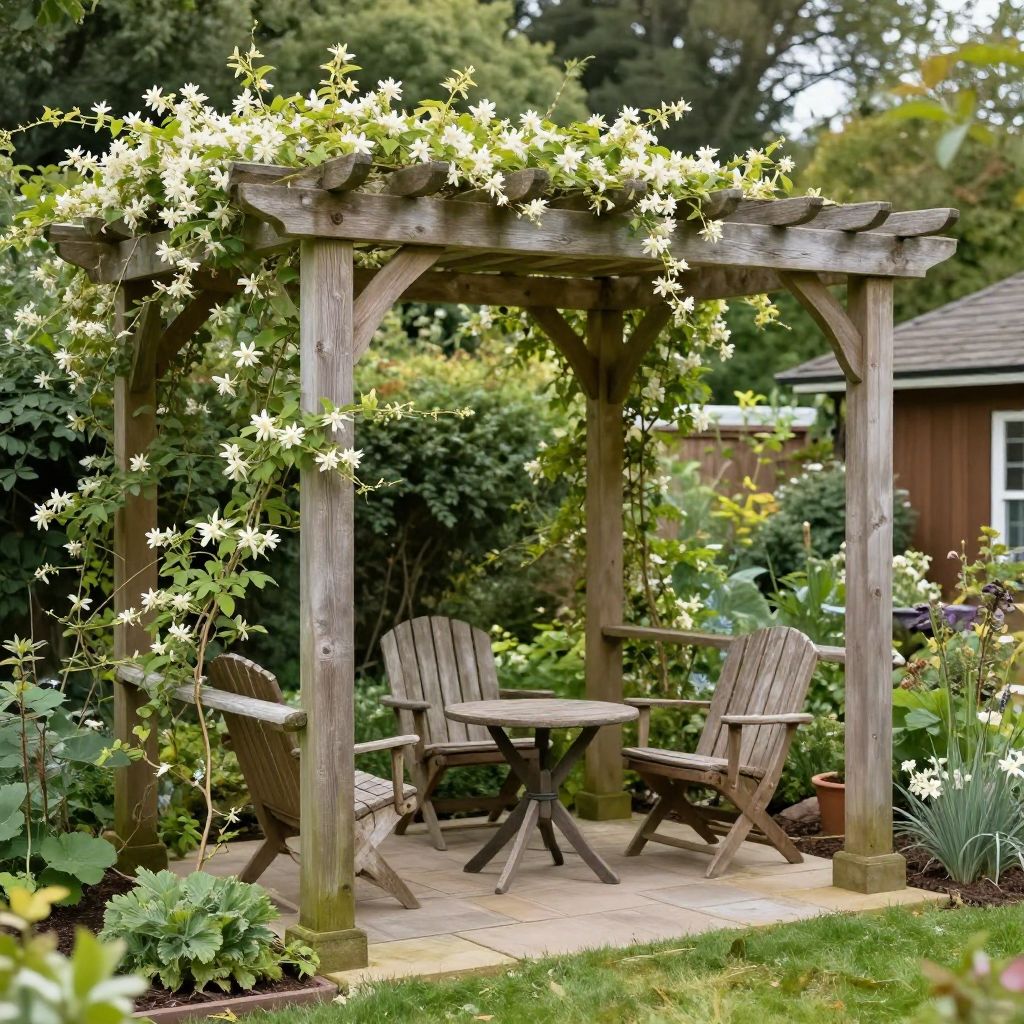
What is the point of a pergola? In gardening, a pergola is a practical outdoor structure that adds shade, supports climbing plants, and helps define a seating, dining, or pathway area. It can turn an open patio or border into a more usable, sheltered space without fully enclosing it.
Used well, a pergola is both a garden feature and a growing support. It can improve comfort, create vertical interest, and give climbers like roses, wisteria, clematis, or grapevines a framework to grow on.
What is the point of a pergola?
A pergola creates partial shade, supports climbing plants, and gives structure to an outdoor space. In gardening terms, it helps you use vertical space, soften hard landscaping, and make patios, paths, and seating areas feel more enclosed without blocking light or airflow completely.
Why gardeners add a pergola
A pergola is not just decorative. It solves several common garden design problems at once, especially in sunny or exposed spaces.
- Shade: It reduces harsh sun over patios, benches, and dining areas.
- Plant support: It gives climbers a framework to grow upward instead of sprawling across the ground.
- Garden structure: It creates a focal point and helps divide large spaces into usable zones.
- Privacy: With plants or screening, it can make a seating area feel more secluded.
- Vertical interest: It adds height and layers to a flat garden design.
If your garden feels too open, a pergola can make it feel more settled and intentional. If your garden is small, it can still work well as a compact entrance feature or a frame for a bench.
How a pergola helps plants grow
For climbers, a pergola is a support system. It gives stems something to attach to, helps foliage spread in a controlled way, and encourages growth into the overhead structure rather than outward into paths or beds.
Best plants for a pergola
Choose climbers based on your climate, sun exposure, and how much maintenance you want. Some plants need regular tying in, while others climb with tendrils or twining stems.
- Roses: Great for a classic look, but they need pruning and tying in.
- Clematis: Useful for adding flowers without too much bulk, depending on the type.
- Wisteria: Vigorous and beautiful, but only suitable where you can manage its size and weight.
- Grapevines: Excellent in sunny gardens where edible fruit is a goal.
- Honeysuckle: Fragrant and wildlife-friendly, though it can become tangled if ignored.
- Climbing hydrangea: Better for partial shade and slower, patient coverage.
Important: match the plant to the pergola’s strength. Heavy climbers need a sturdy structure, not a lightweight decorative frame.
Where to place a pergola in the garden
Placement matters as much as the pergola itself. A well-positioned pergola should improve comfort, not create a dark or awkward corner.
Good locations
- Over a patio or terrace where you want filtered shade.
- At the entrance to a garden room or seating area.
- Along a path to create a sense of journey and enclosure.
- As a transition between lawn, border, and hard landscaping.
Things to check first
- Sun path: Observe where shade is needed during the day.
- Wind exposure: Open sites may need stronger posts and secure fixing.
- Soil and drainage: Planting beds near the posts should drain well enough for climbers.
- Access: Leave enough room to prune, water, and move around the structure.
If you are adding climbers, remember that roots need living soil, not compacted rubble or dry fill. Improve the surrounding ground before planting if necessary.
How to plant climbers around a pergola
Planting is usually done at the base of the pergola posts or just outside them, where roots have room to establish. The exact spacing depends on the mature size of the climber and the pergola design.
- Prepare the soil by removing weeds and loosening it well.
- Mix in compost or well-rotted organic matter if the soil is poor or thin.
- Dig a hole wide enough for the root ball, not just deep enough.
- Plant at the same depth the plant was growing before.
- Water thoroughly after planting to settle the soil.
- Mulch around the base, keeping mulch a little away from the stem.
- Tie in young growth gently to guide it onto the pergola.
For most climbers, the first season is about root establishment, not fast top growth. Keep the soil evenly moist while the plant settles, but avoid waterlogging.
Maintenance: keeping a pergola useful, not overgrown
A pergola works best when it is maintained regularly. Without pruning and training, climbers can become tangled, heavy, or bare in the wrong places.
Pruning and training basics
- Check growth often during the active season.
- Tie in flexible stems before they become woody and awkward.
- Remove dead, weak, or crossing growth to improve airflow.
- Prune according to the plant’s needs, not the pergola’s shape alone.
Do not let vigorous climbers smother the structure. A pergola should frame the plant, not disappear under it.
Common maintenance mistakes
- Using a pergola that is too weak for the plant chosen.
- Planting climbers too close together, causing crowding.
- Neglecting pruning until growth becomes unmanageable.
- Ignoring drainage around the posts, which can weaken nearby roots and timber.
- Forgetting to inspect fixings, ties, and support points each season.
What problems can happen with a pergola?
Most pergola problems come from poor matching between structure, site, and plant. The good news is that these issues are usually preventable.
Weak or leaning structure
If the pergola sways or leans, check the post anchoring and the condition of the timber or metalwork. Heavy climbers can add a surprising amount of weight, especially after rain or when fully leafed out.
Poor flowering or sparse growth
Climbers may flower poorly if they are in too much shade, are overfed with nitrogen, or have been pruned at the wrong time. Some species also need several seasons to settle before they perform well.
Pests and diseases
Problems vary by plant, but common issues include aphids, mildew, black spot on roses, and general dieback from stress. Good airflow, sensible spacing, and removing infected growth promptly all help.
If your pergola is planted, treat the climber as you would any other garden plant: give it the right light, space, water, and pruning routine for its species.
Choosing the right pergola for your garden
Not every pergola has to be large or elaborate. The best one is the one that suits your space and the plants you want to grow.
- For shade: Choose a wider frame with closely spaced beams or slats.
- For climbers: Make sure the structure has secure horizontal supports.
- For small gardens: Use a slimmer design to avoid overwhelming the space.
- For windy gardens: Prioritise strength and proper fixing over decorative detail.
- For low maintenance: Pick slower-growing climbers and a simple structure.
Materials matter too. Timber gives a softer, traditional look, while metal can suit modern gardens. Whatever you choose, make sure it is strong enough for the intended use and suited to outdoor exposure in your climate.
So, what is the point of a pergola?
The point of a pergola is to make a garden more usable, more attractive, and more layered. It provides shade, supports climbers, and creates a defined outdoor room without fully closing it in. If you plan it well, it becomes one of the most useful structures in the garden.
If you are considering one, start by deciding whether you want shade, plant support, or a focal point first. Then choose the right size, position, and climbers to match your space and maintenance level. For more garden structure ideas, you may also enjoy reading about garden structures for small gardens and the best climbing plants for pergolas.