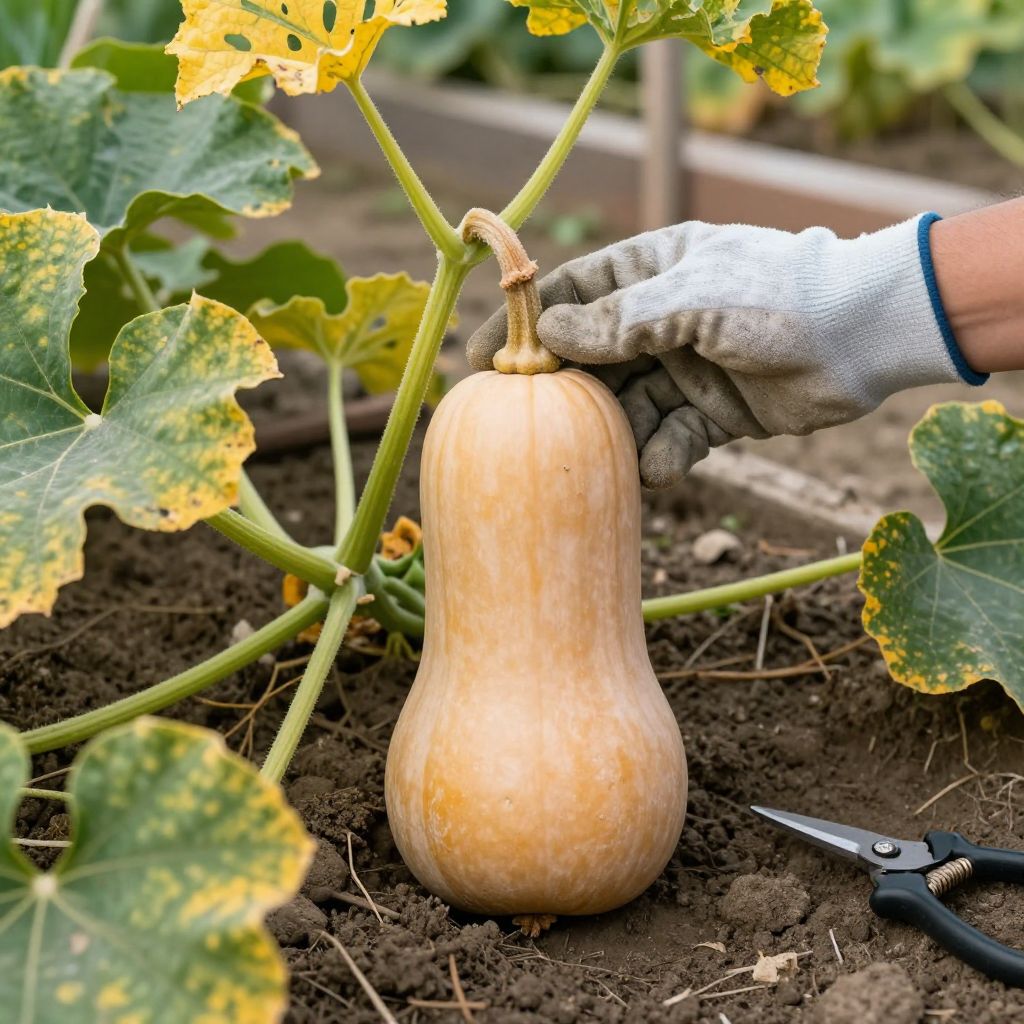
If you’re wondering when is butternut squash ready to pick, the short answer is: harvest when the rind is fully tan, the skin is hard enough that your fingernail barely dents it, and the stem has started to dry and cork over. Most squash are ready in late summer to fall, but maturity depends on variety, weather, and when you planted.
Picking at the right time matters because immature squash store poorly and lack full flavor, while overripe fruit can become stringy or more vulnerable to damage. Below, you’ll learn the clearest signs of readiness, how to harvest without injuring the vine, and what to do if frost is coming before your squash seem fully mature.
When Is Butternut Squash Ready To Pick?
Butternut squash is ready to harvest when the fruit has turned a deep, even tan, the rind is hard, and the stem is dry and corky rather than green and soft. Most varieties take about 85 to 110 days from planting, but the best test is the fruit itself, not the calendar.
How to Tell Butternut Squash Is Mature
Use several signs together. One clue alone can be misleading, especially in a cool or cloudy season when ripening slows.
1. Check the rind color
Ripe butternut squash usually changes from pale green to a solid tan or buff color. Some slight variation is normal, but the fruit should look mature overall, not patchy and green.
2. Press the skin with your fingernail
Try a gentle scratch test. If your fingernail easily pierces the skin, the squash is still immature. A ready squash has a hard rind that resists pressure.
3. Look at the stem
The stem should be dry, woody, and corky. A green, tender stem often means the squash is still actively growing. Do not twist or pull by the stem; that can shorten storage life if the stem breaks off.
4. Listen for a hollow sound
Tap the squash lightly. A mature fruit often sounds more hollow than a young one. This is a helpful extra clue, but it should not be your only test.
5. Watch for vine decline
As the plant finishes its season, leaves may yellow and vines may slow down. That can signal maturity, but it can also mean stress, disease, or frost damage. Always confirm with rind and stem condition.
Seasonal Timing: When to Expect Harvest
In many home gardens, butternut squash ripens from late summer into fall. Exact timing depends on your climate, sowing date, and growing conditions.
- Warm climates: squash may mature earlier if planted as soon as soil warms and the season stays long.
- Short-season climates: you may need to start seeds indoors or choose early-maturing varieties.
- Cool, cloudy weather: can slow ripening, even if the plant looks large and healthy.
If you’re unsure, count the days from sowing or transplanting and then check the fruit closely. Seed packets often list days to maturity, but local weather can speed up or delay harvest.
How to Harvest Butternut Squash the Right Way
Harvest on a dry day if possible. Wet fruit is more likely to pick up rot organisms or get bruised while you handle it.
- Use clean, sharp pruners, garden shears, or a knife.
- Cut the squash from the vine, leaving 2 to 4 inches of stem attached.
- Support the fruit with your other hand so it doesn’t drop.
- Handle each squash gently to avoid bruising the skin.
- Set harvested squash in a dry, shaded spot for curing.
Never yank the squash off the vine. A torn stem can invite decay and shorten storage life significantly.
What If Frost Is Coming Before the Squash Looks Ready?
Butternut squash can tolerate a light chill, but frost can damage both vines and fruit. If a hard frost is forecast and the squash are close to mature, harvest them anyway.
If the squash is still quite green, you can still pick it and try to cure it indoors. It may not store as long or taste as sweet as fully mature fruit, but it is usually better than leaving it to freeze on the vine.
- Cover plants with row cover or a frost cloth if you need a little extra time.
- Remove covers in the morning so the plant can dry out.
- Harvest all fruit before a hard frost if the vine is dying back.
Can You Pick Butternut Squash Early?
You can harvest slightly early if weather threatens, but the squash should still be close to mature. Very immature fruit has softer skin, less developed flavor, and poor storage quality.
If you must pick early, cure the squash in a warm, dry place and use it sooner rather than storing it for months. Early-picked squash is best treated as a short-term crop, not a long keeper.
Curing Butternut Squash for Better Storage
Curing helps the skin harden and minor surface scratches heal. It can improve storage life and flavor development.
Basic curing conditions
- Warm location: about 80 to 85°F is often ideal if available.
- Dry air and good ventilation.
- Out of direct sun to prevent overheating.
- Keep fruit off damp ground, on a rack, board, or newspaper.
Many gardeners cure squash for about 1 to 2 weeks, though the exact time depends on conditions and how mature the fruit was at harvest. After curing, move it to a cool, dry storage area.
How Growing Conditions Affect Ripeness
Healthy plants produce better-ripened fruit. If your squash seems slow to mature, the issue may be growing conditions rather than the plant variety alone.
Sunlight
Butternut squash needs full sun for the best fruit development. Less light can delay ripening and reduce sweetness.
Soil and drainage
Use fertile, well-drained soil enriched with compost. Heavy, waterlogged soil can stress roots and slow fruit maturation.
Watering
Keep soil evenly moist while the plant is growing and fruit is forming. Irregular watering can cause stress, poor fruit fill, or reduced quality. Once fruit is nearing maturity, avoid overwatering, especially if the weather is cool and damp.
Feeding
Too much nitrogen can push leafy growth at the expense of fruit ripening. A balanced soil with compost is often enough for many home gardens, but nutrient needs depend on your soil test and local conditions.
Common Problems That Make Harvest Timing Confusing
Sometimes a squash looks finished when it is not, or seems unripe even though it is close to harvest. Here are the most common reasons.
Green shoulders or uneven color
Some fruit ripen unevenly, especially if leaves shade part of the squash. If the rind is hard and the stem is drying, the squash may still be ready even with a little color variation.
Soft spots or damage
Bruises, insect feeding, or rot can make fruit look mature when it is actually declining. Harvest damaged squash promptly and use it first.
Powdery mildew on the vines
This common disease can weaken plants before fruit fully ripens. If the squash is close to mature, harvest it. If it is still immature, try to keep the plant alive a bit longer with good airflow and careful watering at the base.
Squash vine borers or other pests
Severe pest damage can cause vines to collapse early. In that case, fruit may still finish ripening off the vine if it is nearly mature. Check the rind and stem rather than waiting for the plant to look perfect.
Storing Harvested Butternut Squash
After curing, store squash in a cool, dry place with good air circulation. Avoid damp basements, sealed plastic bags, and places that freeze.
- Keep squash from touching each other if possible.
- Inspect regularly for soft spots or mold.
- Use damaged fruit first.
- Do not wash squash before storage; brush off dry soil instead.
Storage life varies with maturity, variety, and conditions. Fully mature, well-cured squash generally keeps longer than fruit picked too early.
Quick Harvest Checklist
If you want a fast answer in the garden, use this checklist before you cut:
- The squash is a solid tan or buff color.
- The skin is hard and resists a fingernail.
- The stem is dry, corky, and starting to harden.
- The fruit sounds somewhat hollow when tapped.
- The plant is slowing down or nearing the end of the season.
If most of these are true, your butternut squash is likely ready to pick.
Final Tip
When in doubt, let the fruit stay on the vine a little longer if frost is not a threat, because butternut squash usually improves as it finishes maturing. Check it every few days, harvest with a stem attached, and cure it properly for the best flavor and storage.
If you’re planning your next crop, it can also help to read more about growing winter squash successfully and squash planting and care basics so you can time harvest with more confidence next season.