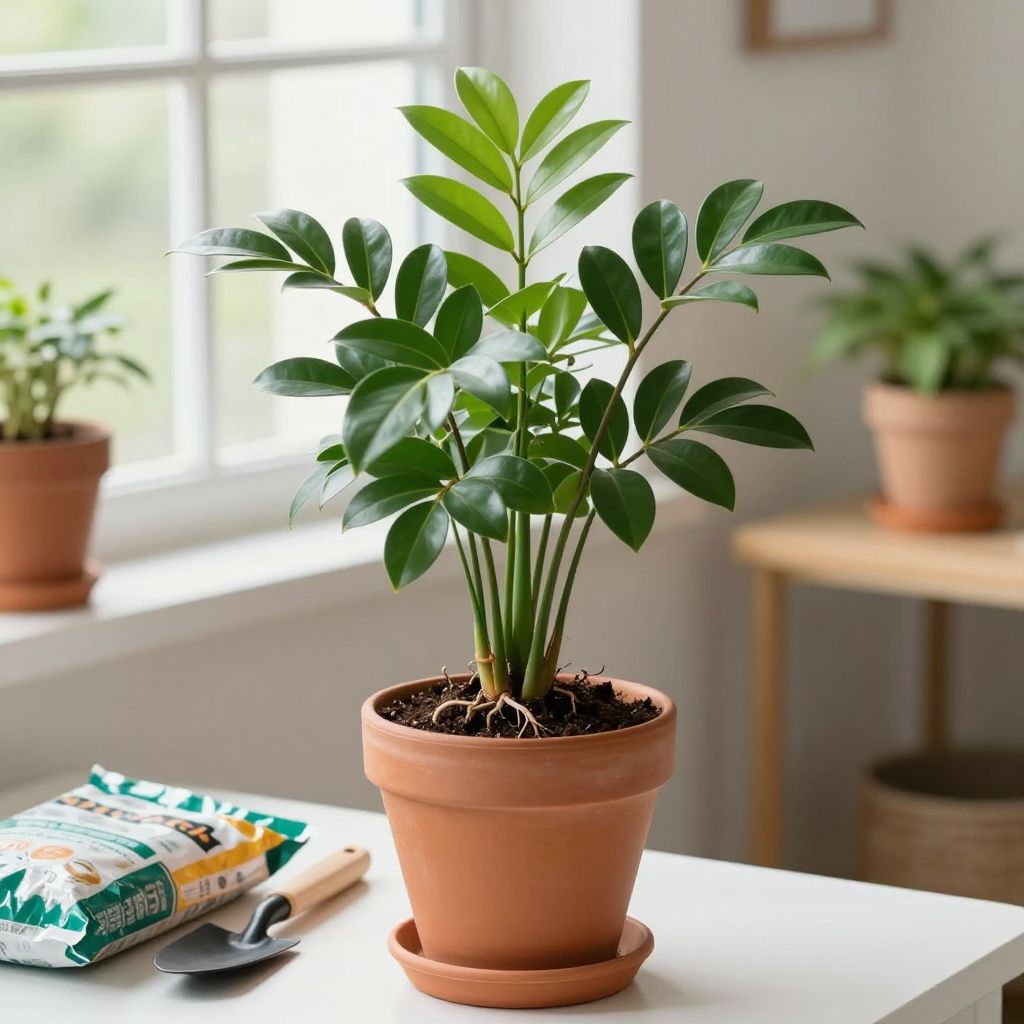
Do ZZ plants like to be root bound? In most cases, yes—Zamioculcas zamiifolia actually tolerates a snug pot better than an oversized one. A slightly crowded root system often helps the plant stay stable and can reduce the risk of overwatering problems.
That said, “root bound” should not mean severely cramped or stressed. The goal is a pot that is just a little snug, with healthy rhizomes, good drainage, and room for slow growth.
Do ZZ plants like to be root bound?
Yes, ZZ plants generally prefer to be somewhat root bound. They grow slowly and store water in thick rhizomes, so they often do best in a pot that is only one size larger than the root ball. A very large pot can hold too much moisture and increase the risk of rot.
Why ZZ plants handle snug pots so well
ZZ plants are built for survival in dry conditions. Their underground rhizomes act like water-storage organs, so they do not need frequent repotting or lots of extra soil.
What happens in a pot that is too large?
- The soil stays wet longer than the roots can use it.
- Excess moisture can lead to yellowing leaves and rhizome rot.
- The plant may focus on root spread instead of top growth.
What happens when a ZZ plant is too crowded?
- Growth slows even more than usual.
- Roots and rhizomes may press against the pot and distort it.
- Water may run through the pot too quickly because there is little soil left to hold moisture.
A mildly root-bound ZZ plant is usually fine. A severely cramped one, however, may need repotting or division.
How to tell if your ZZ plant is root bound
ZZ plants do not always show dramatic signs, so it helps to check the whole plant and the pot. Look for a combination of clues rather than relying on just one symptom.
Common signs
- Roots or rhizomes are circling tightly around the inside of the pot.
- The pot bulges, cracks, or becomes hard to remove.
- Water drains very quickly through the pot with little absorption.
- The plant dries out unusually fast after watering.
- New growth is sparse, weak, or much slower than expected.
- Rhizomes are pushing up near the soil surface.
Keep in mind that slow growth alone is not proof of root binding. ZZ plants are naturally slow growers, especially indoors with lower light.
When to repot a ZZ plant
Repot only when the plant truly needs it. ZZ plants often stay happy in the same container for a long time, and repotting too often can do more harm than good.
Good reasons to repot
- The pot is visibly distorted or cracking.
- Roots are circling densely and there is very little soil left.
- The plant has become top-heavy and unstable.
- Water no longer soaks in evenly.
- The plant has outgrown its container and needs division.
- You suspect root rot and need to inspect the rhizomes.
If the plant looks healthy and the pot is still functioning well, you can often leave it alone. Many ZZ plants perform better when slightly crowded than when moved into a pot that is too large.
How to repot a root-bound ZZ plant
When repotting is necessary, move up only one pot size. Choose a container with drainage holes and a soil mix that dries well after watering.
Step-by-step repotting guide
- Water lightly a day or two before repotting if the soil is very dry and compact.
- Gently remove the plant from the pot, supporting the stems at the base.
- Inspect the roots and rhizomes for firm, healthy tissue.
- Trim away any black, mushy, or rotten roots with clean scissors.
- Place the plant in a pot that is only 1 to 2 inches wider than the old one.
- Fill around the root ball with a fast-draining mix.
- Set the plant at the same depth it was growing before.
- Wait a few days before watering again if the roots were disturbed significantly.
Best potting mix
ZZ plants need a loose, airy mix that drains quickly. A quality indoor potting soil amended with perlite, pumice, or orchid bark is usually a good choice.
- Use a container with drainage holes.
- Avoid heavy, water-retentive soil that stays soggy.
- Do not bury the rhizomes too deeply.
Important: A bigger pot is not automatically better. For ZZ plants, excess soil often means excess moisture, which is one of the most common causes of decline.
How root binding affects watering
Root-bound ZZ plants often need watering a little more often than plants in roomy pots, but the difference is usually modest. The key is to water based on soil dryness, not on a fixed schedule.
Watering tips for crowded ZZ plants
- Check the top few inches of soil before watering.
- Water thoroughly until excess drains out, then empty the saucer.
- Let the soil dry well between waterings.
- Reduce watering in cooler months or low-light conditions.
If a root-bound plant seems to dry out in a day or two, it may be time for a slightly larger pot. If the soil stays wet for a long time, the issue is more likely poor drainage, low light, or overpotting.
Light, growth, and pot size: what matters most
Pot size is only one part of ZZ plant care. Light has a major effect on how quickly the plant grows and how often it needs attention.
Best growing conditions indoors
- Light: Bright, indirect light is ideal, though ZZ plants tolerate lower light.
- Temperature: Average indoor temperatures are usually fine; avoid cold drafts.
- Humidity: Normal household humidity is usually enough.
- Soil: Fast-draining and airy.
In lower light, ZZ plants grow more slowly and may stay comfortable in the same pot for years. In brighter indoor spaces, they may fill a container faster and need closer monitoring.
Should you divide a root-bound ZZ plant?
Sometimes division is a better option than simply moving the plant into a larger pot. ZZ plants grow from clumps of rhizomes, and a crowded plant can often be split into smaller sections.
When division makes sense
- You want more than one plant.
- The original plant is too large or lopsided.
- The root ball is dense and difficult to loosen.
- You want to refresh the plant without increasing pot size too much.
Division can slow growth for a while, so only do it when the plant is healthy and actively growing. Use clean tools and make sure each section has roots and at least one healthy stem or rhizome cluster.
Common mistakes with ZZ plants in pots
Most ZZ plant problems come from overwatering, poor drainage, or repotting into a container that is too large. Avoid these common errors to keep the plant healthy.
- Using an oversized pot: This traps moisture around the roots.
- Watering on a strict schedule: Always check the soil first.
- Using dense garden soil: It holds too much water indoors.
- Repotting too often: ZZ plants do not need frequent disturbance.
- Ignoring drainage holes: Standing water can quickly damage rhizomes.
Pests and diseases to watch for
Healthy ZZ plants are fairly trouble-free, but stressed plants can become more vulnerable. Root-bound conditions do not usually cause pests directly, but poor care around them can.
Possible issues
- Root rot: Often linked to overwatering or poor drainage.
- Mealybugs: White, cottony insects that hide in leaf joints.
- Scale insects: Small, firm bumps on stems or leaves.
- Fungus gnats: More common in soil that stays too wet.
If you suspect rot, remove the plant from the pot and inspect the rhizomes. Firm, pale, potato-like rhizomes are healthy; soft, dark, or mushy tissue is not.
How often should you check a ZZ plant?
You do not need to disturb a ZZ plant often, but a quick check every few months is helpful. Look at the soil surface, drainage, and overall shape of the plant.
Simple maintenance routine
- Rotate the pot occasionally for even growth.
- Wipe dust from leaves so they can photosynthesize efficiently.
- Remove yellowing or damaged stems at the base.
- Inspect for pests when watering.
Pruning is minimal. If a stem turns yellow or collapses, remove it cleanly at the base rather than leaving it to decay in the pot.
Outdoor ZZ plants and root binding
In warm climates, ZZ plants can be grown outdoors in containers or sheltered landscape beds where conditions are suitable. The same root-bound principle applies: they usually prefer a snug fit, but not a pot that is packed solid with roots.
Outdoor plants may grow faster in brighter light and warmer weather, so check them more often during the active growing season. Protect them from heavy rain, cold snaps, and poorly drained soil.
Bottom line: do ZZ plants like to be root bound?
Yes, ZZ plants usually do best when they are slightly root bound, not overpotted. A snug container supports their slow growth and helps prevent soggy soil, but a severely cramped plant may need repotting or division.
If your ZZ plant looks healthy, leave it alone. If it is cracking its pot, drying out too fast, or showing crowded roots, move it into a slightly larger container with a fast-draining mix. For more plant care guidance, you may also want to read related houseplant articles such as how to repot indoor plants without shock and the best soil mix for houseplants with drainage problems.