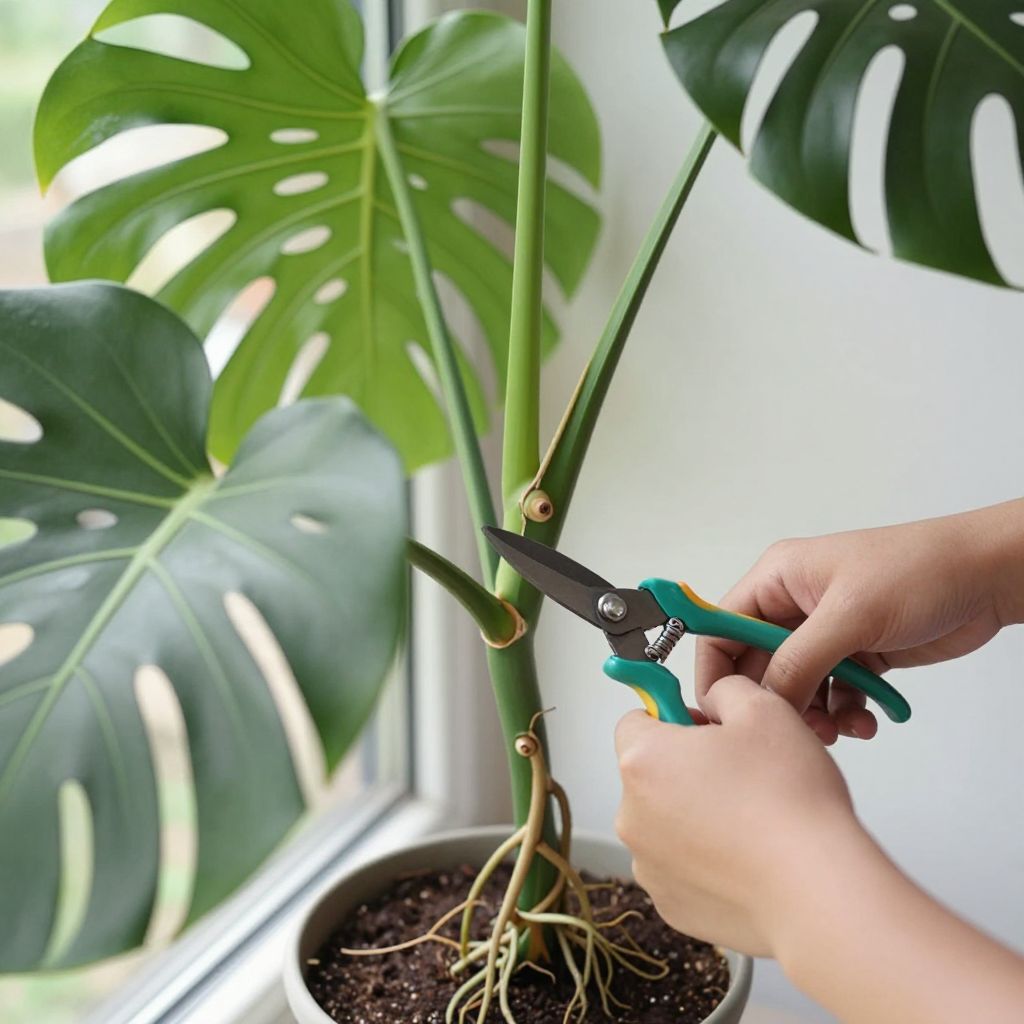
Wondering where to cut Monstera deliciosa without damaging the plant? The best cut depends on your goal: pruning for shape, taking a stem cutting for propagation, or removing damaged growth. In every case, the key is to cut at the right point near a node, using clean tools and leaving enough healthy stem for the plant to recover.
Done correctly, pruning can encourage a fuller plant and propagation can give you a new Monstera from the same parent. Done poorly, you can leave the plant stressed, slow to root, or miss the node entirely.
Where to cut Monstera deliciosa?
Cut Monstera deliciosa just above a node when pruning the parent plant, or just below a node when taking a cutting to root. A node is the slightly swollen point on the stem where a leaf, aerial root, or bud emerges. Never cut through the node itself if you want the plant to regrow or root successfully.
Understanding the parts of the stem
Before you make a cut, identify the stem correctly. Monstera deliciosa has a main vine with leaves attached at intervals, and each leaf attachment point is usually near a node.
What to look for
- Node: the knobby joint where new growth can emerge.
- Internode: the bare section of stem between nodes.
- Aerial root: a thick root that may grow from a node and help the plant climb or root.
- Petiole: the leaf stalk; avoid cutting this if you want to keep the leaf attached.
If you are unsure, trace the stem back from a leaf until you find the joint or bump where it attaches. That is usually the safest reference point for your cut.
Best cutting locations for different goals
1. Pruning to control size or shape
If you want to shorten a leggy Monstera, cut the stem just above a node. The node below the cut is where new growth may eventually emerge, helping the plant branch or resprout from lower down.
Choose a point that keeps at least one or two healthy leaves on the remaining plant. Removing too much at once can slow recovery, especially on a smaller or recently stressed plant.
2. Taking a cutting for propagation
If you want to root a new plant, make your cut just below a node. A cutting must include at least one node, and ideally one healthy leaf and an aerial root or visible root nub if available.
Without a node, the cutting may stay alive for a while but will not form new roots or growth. This is the most common mistake beginners make.
3. Removing damaged or diseased growth
If a leaf is yellowing, torn, or diseased, remove it by cutting the petiole near the main stem, not by hacking into the stem itself. If the stem section is damaged, cut back to healthy tissue at the nearest node or internode.
Use caution if you suspect rot. Any soft, brown, or foul-smelling tissue should be removed with a sterile blade until you reach firm, healthy stem.
How to make the cut cleanly
Monstera stems are thick enough that a clean, decisive cut matters. Dull tools can crush tissue and increase the chance of infection or rot.
- Choose a sharp pruning shear, clean knife, or sterilized blade.
- Wipe the tool with rubbing alcohol before and after cutting.
- Find the node you want to keep on the parent plant or the node you want to include on the cutting.
- Make a smooth cut in one motion.
- Support the vine as you cut so it does not tear.
Tip: If the stem is thick, make the cut slightly angled to shed water more easily, especially on the parent plant.
How much can you cut off a Monstera?
You can prune a Monstera deliciosa fairly hard if the plant is healthy, but avoid removing too much at once. For most indoor plants, it is safer to remove only a few leaves or one long vine in a single session rather than cutting back every stem.
If the plant is already weak, rootbound, recently repotted, or recovering from pests, keep pruning minimal. Give it time to regain strength before making more cuts.
Signs you should prune lightly
- Few roots or a very small root ball
- Yellowing from overwatering or poor drainage
- Slow growth in low light
- Recent repotting or transplant shock
- Visible pest damage
Where to cut for propagation success
If your goal is a new plant, the cutting needs the right structure. A healthy Monstera cutting usually includes:
- At least one node
- One leaf, if possible, for photosynthesis
- An aerial root or root nub, if available
- A section of stem long enough to handle without damaging the node
Cutting too close to the node can damage the growth point. Leaving a small amount of stem on both sides of the node is usually safer than cutting flush against it.
Best rooting methods
- Water: easy for beginners; change the water regularly and keep the node submerged, not the leaf.
- Moist sphagnum moss: often roots well if kept lightly moist and airy.
- Soil: possible, but the mix must drain well and stay just damp, not wet.
Whichever method you choose, keep the cutting in warm conditions with bright, indirect light. Direct sun can stress the cutting and dry it out too quickly.
Where not to cut Monstera deliciosa
Some cuts do more harm than good. Avoid cutting in the wrong place if you want a healthy recovery.
- Do not cut through a node unless you are removing the entire section and do not need it for propagation.
- Do not cut only the leaf blade and expect new growth from the leaf alone.
- Do not remove all aerial roots unless they are dead or in the way.
- Do not leave ragged tears from dull tools or rough handling.
If you are training the plant on a moss pole or support, be careful not to cut the vine where it is attached. Unclip it first, then prune with clear access to the stem.
What to do after cutting
After pruning or propagating, give the plant stable conditions so it can recover. Monstera deliciosa usually responds best to steady moisture, warmth, and bright filtered light.
Aftercare for the parent plant
- Keep the soil evenly moist, but never soggy.
- Place it in bright, indirect light.
- Avoid heavy fertilizing for a short period if the plant is stressed.
- Watch the cut area for softening, blackening, or unusual odor.
Aftercare for cuttings
- Keep the node humid but not waterlogged.
- Change water regularly if rooting in water.
- Use a loose, airy medium if rooting in moss or soil.
- Wait for strong roots before potting up.
New roots are often more important than new leaves at first. A cutting may sit for weeks before showing visible top growth, so patience is part of the process.
Growing conditions that support healthy regrowth
Good pruning results depend on good growing conditions. A Monstera that gets enough light and proper drainage is more likely to push new growth after being cut.
Light
Bright, indirect light is ideal indoors. Too little light can make stems stretch and leaves space out, which often leads people to prune more than necessary.
Soil and drainage
Use a chunky, well-draining potting mix that holds some moisture but does not stay dense and wet. A mix with bark, perlite, and quality potting soil often works better than heavy garden soil.
Watering
Water when the top layer of mix begins to dry, but adjust based on pot size, temperature, airflow, and the season. Overwatering after a cut can be especially risky because stressed roots are more vulnerable to rot.
Support
As the plant grows, a moss pole, stake, or trellis can help it climb and produce larger, more mature leaves. Support also makes future pruning easier because the vine stays organized.
Common mistakes when cutting Monstera deliciosa
- Cutting without a node: the cutting cannot root or grow.
- Using dirty tools: raises the risk of disease.
- Over-pruning a weak plant: slows recovery.
- Leaving the cutting in harsh sun: causes stress and dehydration.
- Planting in heavy, wet soil: increases rot risk.
If a cutting starts to yellow, soften, or smell bad, remove the affected tissue promptly. If the parent plant shows decline after pruning, check light, watering, and drainage before assuming the cut itself is the only issue.
Quick answer: the safest cutting rule
For pruning, cut above a node. For propagation, cut below a node. Always use a healthy section of stem, keep tools clean, and avoid removing more growth than the plant can comfortably replace.
Conclusion
If you are asking where to cut Monstera deliciosa, start by finding the node and deciding whether you want to shape the plant or make a new one. Make a clean cut in the right spot, then give the plant bright indirect light, good drainage, and time to recover. If you want more houseplant care guidance, you may also enjoy reading about how to repot a Monstera and best indoor plant soil mixes.