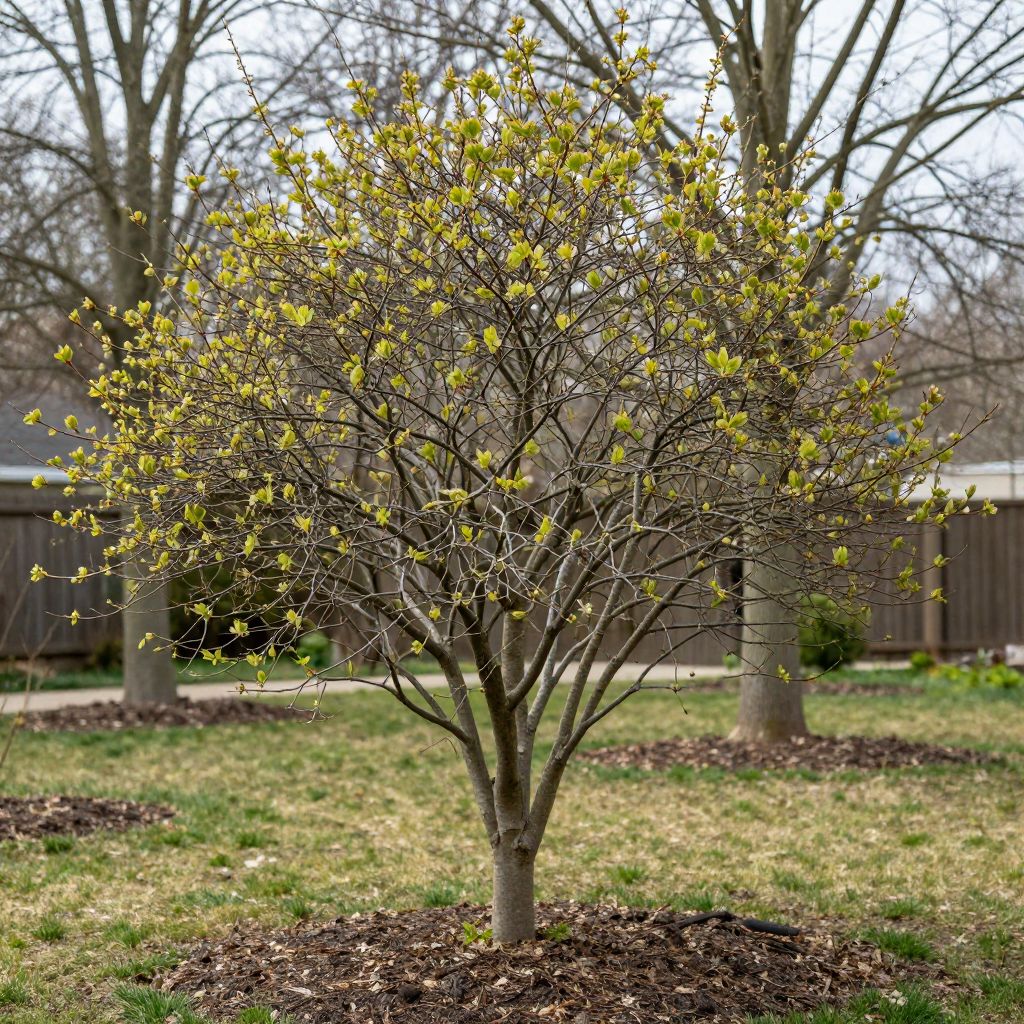
When do leaves grow back on trees? If your tree looks bare in late winter or after a dry spell, it’s natural to wonder whether it’s dormant, stressed, or dead. The answer depends on the tree species, your climate, and the season, but most deciduous trees leaf out in spring once temperatures warm and day length increases.
Knowing the normal timing helps you avoid pruning too early, overwatering, or worrying before a tree has had a fair chance to recover. Here’s how to tell what’s normal, what’s not, and what you can do to support healthy leaf growth.
When do leaves grow back on trees?
For most deciduous trees, new leaves emerge in spring, often after several weeks of warming weather and when soil temperatures rise. In mild climates this may happen earlier, while in colder regions it can be delayed into late spring. Evergreen trees keep foliage year-round, though they also replace older needles or leaves gradually.
Why leaf-out timing varies
Leaf-out is triggered by a mix of temperature, daylight, moisture, and the tree’s own internal cycle. A tree in a sheltered city yard may leaf out weeks before the same species in a windy, colder spot.
Climate and local weather
Spring warmth is the biggest cue for many trees, but a late cold snap can slow or interrupt growth. In cool regions, trees may wait until the risk of hard frost drops.
Tree species and type
Different trees leaf out at different times. Some species, such as maples, often open early, while others, such as oaks, may wait longer. Fruit trees, ornamentals, and shade trees each follow their own rhythm.
Tree age and health
Young trees and newly planted trees can be slower to leaf out because they are establishing roots. Stressed trees may also delay bud break if they are short on water, have root damage, or suffered winter injury.
What normal spring leaf growth looks like
Healthy leaf-out usually starts with swollen buds, then small leaf tips, and finally a full canopy over days or weeks. Some trees leaf out all at once, while others unfurl gradually. A tree can still be perfectly healthy even if it is one of the last in the neighborhood to wake up.
Typical signs of healthy bud break
- Buds swell and become plump before opening.
- Leaf tissue appears green or reddish, depending on the species.
- Small leaves expand steadily over 1 to 3 weeks.
- Branches remain flexible, and twigs show living green tissue under the bark.
How to tell if a bare tree is dormant or in trouble
A tree can look lifeless in early spring and still be fine. The key is to check whether it is still within its normal leaf-out window and whether the buds and twigs are alive.
Simple checks you can do
- Inspect the buds. Healthy buds are usually firm and swollen, not dry and brittle.
- Scratch a small twig. If the tissue under the bark is green and moist, that branch is likely alive.
- Look for pattern changes. A tree with leaves on lower branches but none at the top may have dieback or stress.
- Check the trunk and roots. Cracks, peeling bark, heaving soil, or mushrooms near the base can signal problems.
When to worry
If a deciduous tree has not leafed out well after its normal spring window and buds are dry or brittle, it may be damaged. If only part of the tree leafs out, you may be seeing branch dieback, root stress, or disease.
What to do if your tree is slow to leaf out
Slow leaf-out does not always mean a tree is dying. Start with basic care and avoid making the problem worse by overreacting.
- Water deeply during dry spells. Newly planted trees especially need consistent moisture, but the soil should not stay soggy.
- Keep mulch in place. A 2 to 4 inch layer of wood chips or shredded bark helps conserve moisture and moderate soil temperature.
- Do not fertilize blindly. Extra fertilizer can push weak growth or stress roots if the tree is already struggling.
- Hold off on heavy pruning. Wait until you can clearly see which branches are alive and which are dead.
If the tree is newly planted, check whether the root flare is visible and whether the root ball is drying out too fast. Trees planted too deep or in compacted soil often leaf out poorly because roots cannot function well.
Common reasons leaves do not return on time
When a tree stays bare longer than expected, the cause is often environmental rather than mysterious. Identifying the reason helps you choose the right fix.
Late frost or cold injury
A warm spell can trigger early bud swell, then a freeze can damage tender growth. The tree may push a second flush later, or some buds may fail completely.
Drought stress
Dry soil can delay leaf growth, especially in young trees and trees on sandy sites. Leaves may emerge small, sparse, or scorched at the edges.
Root problems
Compacted soil, construction damage, girdling roots, and poor drainage all limit root function. If roots cannot take up water and nutrients, leaf-out may be weak or uneven.
Pests and diseases
Insects that feed on buds, twig cankers, and vascular diseases can all reduce spring growth. If you see holes in buds, sticky residue, blackened twigs, or branch dieback, inspect more closely.
How to support strong leaf growth
Healthy leaf-out starts months before spring, but you can still help a tree recover if it is already in the ground.
Improve soil conditions carefully
Most trees do best in well-drained soil with plenty of organic matter. If the site is heavy clay or frequently wet, avoid digging deep around the trunk; instead, top-dress lightly with compost and maintain mulch over the root zone.
Water the root zone, not the trunk
Apply water slowly so it soaks into the soil where roots can reach it. Shallow, frequent watering encourages weak surface roots; deeper watering encourages stronger establishment.
Prune only what is clearly dead
Wait until leaves are out before making major pruning decisions on uncertain branches. Once growth begins, dead wood is easier to identify and remove cleanly.
Protect from future stress
- Keep lawn equipment away from the trunk.
- Refresh mulch each season, but keep it a few inches away from the bark.
- Stake only if needed, and remove stakes once the tree is stable.
- Choose tree species suited to your climate and site conditions.
Leaf-out timing for different tree situations
Not every bare tree should be judged by the same calendar. Use the tree’s situation as much as the season.
Newly planted trees
New trees may leaf out later than established ones because they are putting energy into roots. If the buds are alive, give them time and steady moisture.
Mature trees
Established trees usually follow a more predictable schedule. If a mature tree is late and many buds fail to open, inspect for dieback, root issues, or storm damage.
Potted or patio trees
Container-grown trees can leaf out earlier because pots warm faster, but they also dry out faster. Check moisture often, especially during windy spring weather.
Practical mistakes to avoid
- Do not assume a bare tree is dead too early. Some species are naturally late to leaf out.
- Do not flood the soil. Waterlogged roots can be just as harmful as drought.
- Do not prune heavily before bud break. You may remove live wood by mistake.
- Do not pile mulch against the trunk. This can trap moisture and encourage rot.
- Do not overfertilize a stressed tree. Fix the root and water problem first.
When to call an arborist
If a large tree has extensive dieback, cracks in the trunk, sudden leaf loss, or no leaf-out well past its normal season, a certified arborist can assess whether it can be saved. This is especially important if the tree is near structures, walkways, or power lines.
For more seasonal tree care, you may also want to read about how to tell if a tree is dormant or dead and spring pruning tips for trees and shrubs to help you make the right next step in your garden.