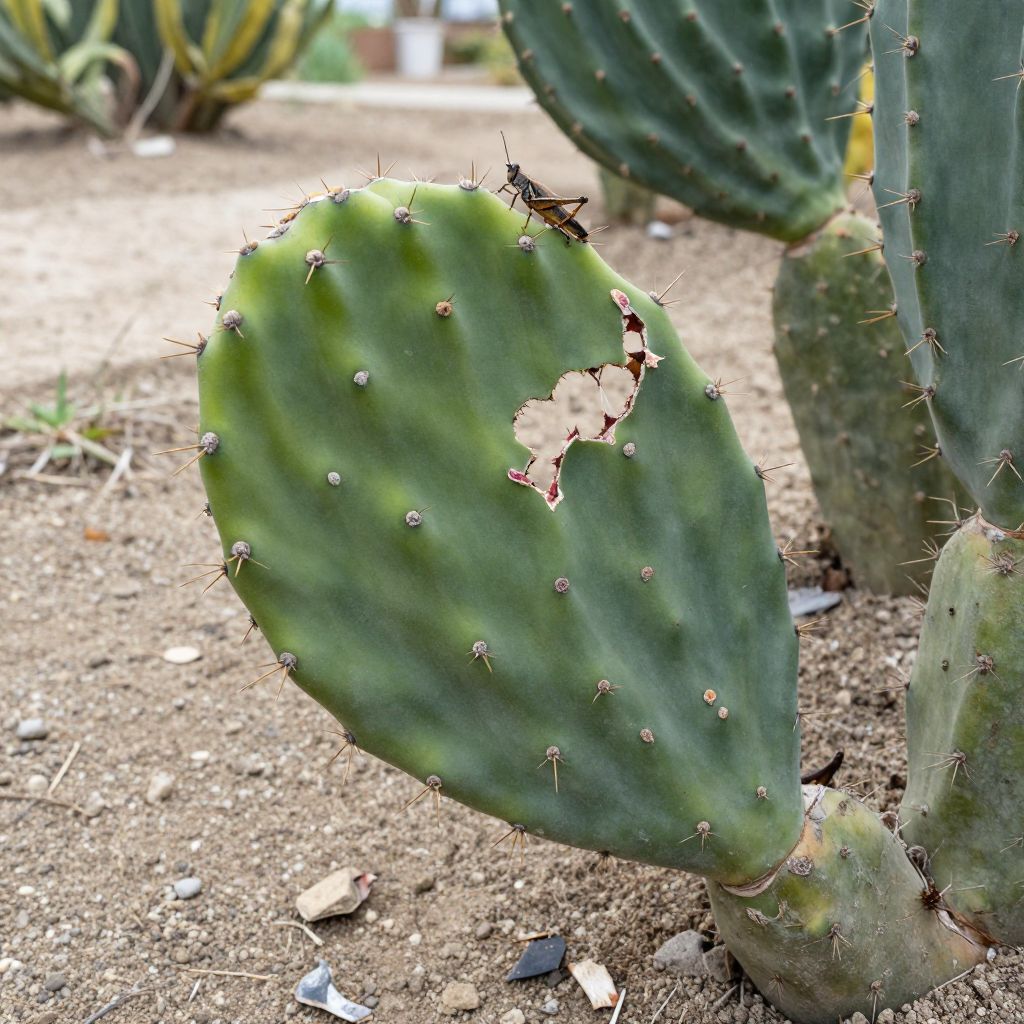
What eats a cactus? If your cactus has holes, ragged edges, or missing pads, the culprit is usually not one thing but a mix of pests, animals, and sometimes rot or sun damage that only looks like feeding damage.
The good news is that most cactus damage can be identified and managed with a close look at the pattern. Once you know whether you’re dealing with insects, mammals, birds, or growing problems, you can protect the plant and help it recover.
What eats a cactus?
Most cactus damage comes from insects, rodents, rabbits, deer, birds, or slugs/snails, depending on where the plant grows. In some cases, the cactus is not being eaten at all; cold injury, rot, or sunscald can create soft spots, holes, or scars that look like chewing. The shape of the damage is the best clue.
How to tell what is damaging your cactus
Insect damage
Insects usually leave small, repeated marks rather than large chunks missing. Look for tiny holes, corky patches, sticky residue, webbing, or white cottony clusters.
- Mealybugs hide in joints, ribs, and under spines.
- Scale insects look like small bumps or shells attached to the plant.
- Spider mites cause stippling, dull color, and fine webbing.
- Cactus moth larvae or other caterpillars may chew larger irregular holes in some regions.
Animal feeding
Animals usually leave more obvious damage. Large bites, broken pads, uprooted plants, or missing stems often point to mammals rather than insects.
- Rabbits may nibble tender new growth or pads.
- Rodents can gnaw stems, roots, or the base of the plant.
- Deer may browse taller cacti or knock plants over.
- Birds sometimes peck for insects, fruit, or moisture.
- Slugs and snails can chew soft tissue, especially in damp, shaded spots.
Problems that mimic chewing
Not every hole means something ate your cactus. Cold damage, sunburn, and rot can all create tissue collapse that later turns into holes or scabs.
- Sunscald often shows as bleached, dry, corky patches on the sun-facing side.
- Rot usually feels soft, dark, or mushy and may spread from the base.
- Frost injury can leave water-soaked areas that later dry out and split.
Common pests that feed on cacti and how to manage them
Mealybugs and scale
These sap-feeding pests are among the most common cactus problems indoors and in greenhouses. They weaken the plant, distort new growth, and can leave sticky honeydew that attracts ants and sooty mold.
To manage them, isolate the plant first. Then remove visible clusters with a cotton swab dipped in rubbing alcohol, or wash the cactus carefully with a gentle stream of water if the species can tolerate it. Repeat checks every few days, because eggs and hidden insects often survive the first cleanup.
Spider mites
Spider mites thrive in hot, dry, indoor conditions. They are tiny, so you may notice fine webbing, faded color, or bronzed skin before you see the mites themselves.
Increase humidity around the plant if appropriate, rinse the cactus gently, and remove heavily infested growth if the plant can spare it. Good airflow helps, but avoid crowding plants too tightly together.
Caterpillars and beetles
In some gardens, chewing pests may feed on cactus pads or stems, especially at night. Look for ragged edges, frass, or hidden larvae tucked into crevices.
Inspect the plant after dark with a flashlight. Hand-pick larger pests when possible, and remove nearby weeds or debris where they may hide during the day.
How to protect cactus from animals
If the damage is from mammals, the best fix is physical protection. Cactus spines deter many animals, but they do not stop all browsing, especially when food is scarce or the plant is young and tender.
- Identify the animal by tracks, droppings, bite height, and the type of damage.
- Use barriers such as fencing, wire cages, or raised planters.
- Protect young plants with temporary mesh until they are established.
- Remove attractants like fallen fruit, pet food, or dense cover near the planting area.
- Check at night if you suspect nocturnal visitors such as rodents or rabbits.
Best barrier options
- Hardware cloth works well around small garden beds and pots.
- Sturdy wire fencing can deter rabbits and larger animals.
- Pot placement on benches or stands may reduce access from ground animals.
- Thorn-proof gloves and tongs help you work safely while installing protection.
Repellents can help, but they usually work best as a backup rather than the only defense. Reapply them after rain and rotate products if animals get used to one smell or taste.
How to prevent cactus damage before it starts
Give the plant the right growing conditions
A healthy cactus is less likely to be attacked or to suffer damage that looks like feeding. Most cacti need very bright light, fast-draining soil, and careful watering.
- Light: Provide full sun outdoors if the species tolerates it, or the brightest indoor window available.
- Soil: Use a gritty cactus mix that drains quickly.
- Water: Water deeply, then let the mix dry appropriately before watering again.
- Containers: Choose pots with drainage holes.
Overwatered cacti are especially vulnerable because soft tissue is easier for pests and animals to damage, and rot can be mistaken for chewing. If the plant is indoors, make sure light levels are high enough that it is not stretching weakly toward the window.
Keep the area clean
Good sanitation reduces hiding places for pests and discourages some animals.
- Remove dead pads, fallen fruit, and plant debris.
- Check under pots and around the base for hiding insects.
- Quarantine new plants before placing them near your collection.
- Inspect the cactus regularly, especially during warm months.
What to do if your cactus already has damage
Once you spot damage, act quickly but carefully. Cactus wounds can stay open for a while, and stressed plants recover more slowly than healthy ones.
- Inspect the wound closely to decide whether it is pest, animal, or rot damage.
- Remove the cause by treating pests or blocking animals.
- Trim only if necessary with clean tools, and only remove tissue that is clearly dead or rotting.
- Let wounds dry before watering again if the plant was recently damaged or repotted.
- Monitor new growth for spreading spots, softening, or fresh feeding marks.
If the cactus is soft at the base, smells bad, or collapses quickly, rot may be the real issue. In that case, improve drainage immediately and remove affected tissue if the plant can be saved. If the rot is extensive, propagation from a healthy section may be the only option.
When propagation may help
Some cacti can be propagated from healthy pads or stem sections if the damage is localized. Let the cut surface dry and callus before placing it into a suitable dry, well-draining medium. This is not a fix for every species, but it can rescue a plant that has been badly chewed or rotted at one end.
Seasonal and indoor vs. outdoor considerations
Outdoors, animal feeding often increases when natural food is scarce, especially in dry or cold periods. Indoors, pest problems are more likely because air is still, light is lower, and plants are grown close together.
In warm months, inspect outdoor cacti more often for chewing damage, insect activity, and signs of birds pecking at fruit or soft tissue. Indoors, check the undersides, joints, and base of the plant every couple of weeks so small infestations do not become severe.
Common mistakes to avoid
- Assuming every hole is a pest problem. Check for rot, sunburn, and frost injury too.
- Overwatering after damage. Wounds and excess moisture make rot more likely.
- Using blunt or dirty tools. Clean cuts heal better and reduce disease spread.
- Ignoring the base of the plant. Many serious issues start where you cannot see them easily.
- Relying on one control method. Combine inspection, sanitation, and barriers for better results.
Final check: what should you do today?
Start by examining the damage pattern closely, then decide whether you are dealing with insects, animals, or a growing problem that only looks like feeding. Once you know the cause, you can treat the plant correctly and prevent the same issue from returning.
If you want to keep learning about healthy cactus care and problem-solving, look for more gardening guides on cactus soil, drainage, and pest control.