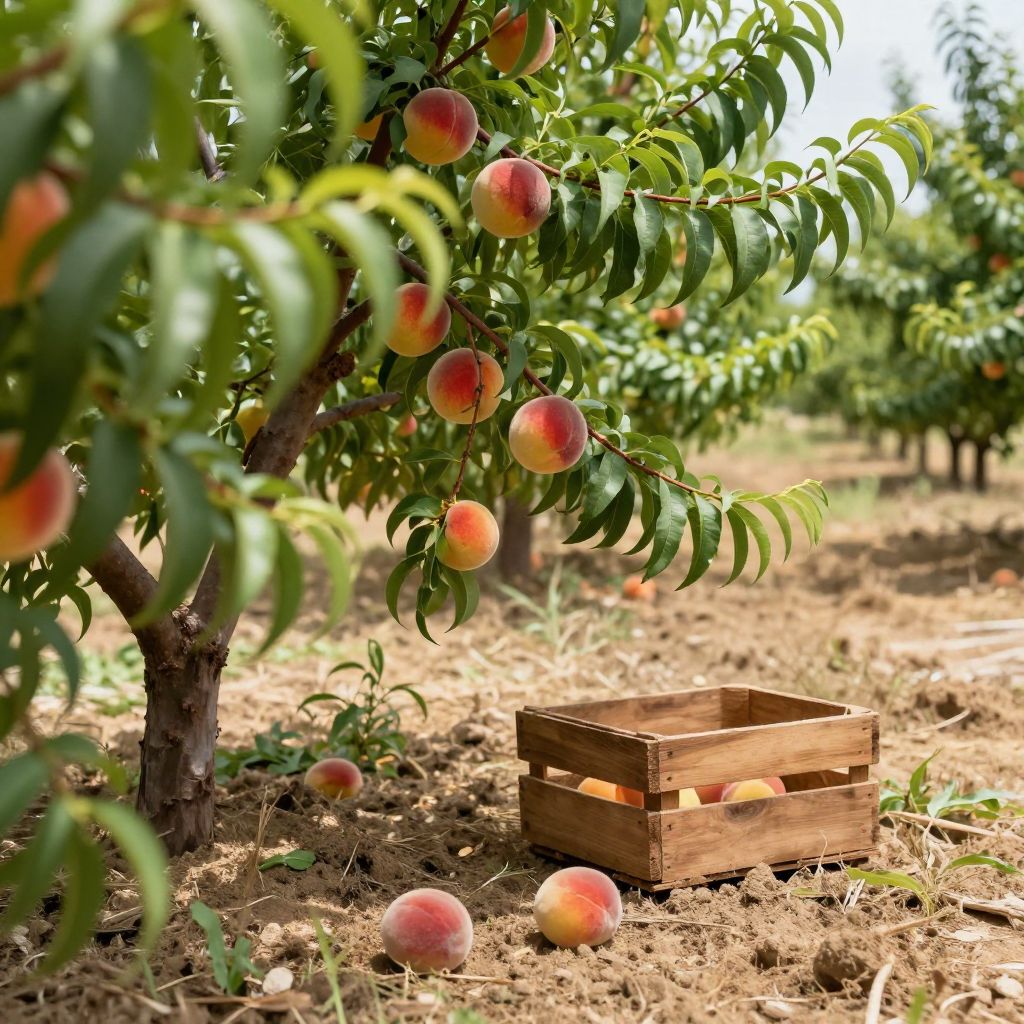
If you’re wondering when is peach season in Texas, the short answer is that harvest usually begins in late spring in the warmest parts of the state and can continue into early summer, with some varieties ripening later depending on location and weather. Texas peaches are highly regional, so your exact season depends on chill hours, bloom time, and local spring temperatures.
For home gardeners, that means peach season is not one fixed date. It’s a moving window shaped by variety, winter cold, and how quickly fruit develops after bloom. If you grow peaches or plan to plant a tree, understanding that timing will help you choose the right cultivar and care for it properly.
When is peach season in Texas?
In Texas, peach season typically runs from late May through August, with the earliest fruit in South and Central Texas and later harvests in North Texas and higher-elevation areas. The exact timing varies by cultivar, winter chill accumulation, spring weather, and local microclimate, so gardeners should use regional harvest windows as a guide rather than a fixed calendar date.
How Texas peach season varies by region
Texas is large enough that peach ripening can differ by several weeks from one area to another. A tree in the Rio Grande Valley may finish much earlier than one in the Hill Country or North Texas.
General harvest windows
- South Texas: often starts in late spring, sometimes by late May.
- Central Texas and the Hill Country: commonly peaks from June into July.
- North Texas: often follows later, with many varieties ripening in June and July.
- Higher or cooler sites: can push harvest later into midsummer.
These windows shift from year to year. A warm winter or an early hot spell can move harvest earlier, while a cool spring may delay ripening.
Why timing changes so much
Peaches need a certain amount of winter cold, called chill hours, to break dormancy and bloom properly. After bloom, fruit development depends on spring temperatures, pollination, and tree health. If winter is too warm or spring is unusually erratic, the crop may be sparse, uneven, or late.
What determines peach ripening in Texas?
Several factors control when peaches are ready to pick. If you understand them, you can better predict your own harvest and avoid picking fruit too early.
1. Chill hours
Most peach trees need a cultivar matched to your local chill range. If the tree doesn’t receive enough winter cold, bloom and fruit set may be weak or irregular. If it gets too much or too little chill for the variety, timing and yield can suffer.
2. Variety
Some cultivars ripen early, while others are midseason or late. Local nurseries often carry varieties suited to Texas conditions, and that regional fit matters more than any generic calendar date.
3. Spring weather
Warm spring temperatures speed fruit growth. Late frosts, cold rain, or extended cloudy weather can delay ripening and reduce crop quality.
4. Tree age and crop load
Young trees usually produce less fruit, and heavily loaded trees may ripen unevenly. Proper thinning helps fruit size and can make harvest timing more consistent.
How to tell when peaches are ready to harvest
Do not rely on color alone. Some peaches blush beautifully before they are fully ripe, while others stay pale even when ready. Use a combination of signs instead.
Ripeness checklist
- The background color shifts from green to yellow, cream, or the expected mature color for the variety.
- The fruit feels slightly soft near the stem end when gently pressed.
- The peach releases easily with a gentle twist.
- The fruit has a strong peach aroma.
- The flesh tastes sweet and flavorful, not starchy or flat.
Harvesting too early is one of the most common mistakes. Peaches will soften a little after picking, but they do not become sweeter in the same way some fruits do. If you pick under-ripe fruit, the flavor often stays disappointing.
How to pick without damaging fruit
- Support the fruit in your hand.
- Lift and twist gently.
- Do not yank, which can tear the stem or bruise nearby fruit.
- Place peaches in a shallow container to reduce bruising.
Growing peaches successfully in Texas
If you want reliable peach season at home, the work starts long before harvest. Good site selection, soil preparation, and pruning make a major difference in fruit quality and timing.
Choose the right site
Peach trees need full sun, good air movement, and well-drained soil. A site that stays wet after rain can lead to root stress and disease problems.
- Choose a spot with at least 6 to 8 hours of direct sun.
- Avoid low areas where cold air settles and late frosts are more likely.
- Give trees room for airflow to reduce fungal issues.
Soil and drainage
Peaches prefer fertile, well-drained soil with plenty of organic matter. Texas soils vary widely, from heavy clay to sandy ground, so drainage is often the limiting factor.
If your soil is heavy clay, plant on a slight mound or raised bed to improve drainage. Work in compost before planting, but avoid over-amending a small planting hole with rich, loose material that can create a “bathtub” effect and trap water.
Watering young and established trees
Newly planted peach trees need consistent moisture while roots establish, but they should never sit in soggy soil. Established trees generally need deep watering during dry spells, especially while fruit is sizing up.
- Water deeply and less often rather than giving frequent shallow drinks.
- Check soil moisture a few inches down before watering again.
- Reduce watering once fruit is nearly ripe if the soil is already moist, but do not let the tree wilt.
Mulch helps conserve moisture and moderates soil temperature. Keep mulch a few inches away from the trunk to reduce rot and pest problems.
Pruning and thinning for better peach harvests
Pruning is not just for shape. It helps sunlight reach fruiting wood, improves air circulation, and supports better fruit size and color. In Texas, proper pruning also helps trees recover from heat and disease pressure.
Why pruning matters
Peaches bear fruit on one-year-old wood, so annual pruning is essential. Without it, the canopy becomes crowded, fruit quality drops, and harvest timing becomes less predictable.
Basic pruning goals
- Open the center of the tree so light reaches the interior.
- Remove dead, damaged, crossing, or inward-growing branches.
- Encourage strong new shoots that will bear next season’s crop.
For most home gardeners, late winter pruning before bud break is the standard time to shape peach trees. In some Texas climates, avoid pruning too early if hard freezes are still possible.
Fruit thinning
When trees set too many peaches, thin them so the remaining fruit can size up properly. Thin when fruit is still small and firm, leaving enough space between peaches for growth. This improves flavor, reduces limb breakage, and can help fruit ripen more evenly.
Common peach problems in Texas
Texas gardeners often deal with a mix of heat, humidity, spring frost, and pest pressure. Knowing the common problems helps you protect the crop before harvest time.
Late frost damage
Peach blooms are vulnerable to late cold snaps. If frost hits during bloom, fruit set may be reduced or lost entirely. Choose a planting site with good air drainage and varieties suited to your region to lower the risk.
Peach leaf curl
This fungal disease can distort leaves and weaken the tree. It is easier to manage with prevention than cure. Sanitation, proper pruning, and timely dormant-season care are important for reducing pressure.
Brown rot
Brown rot can affect blossoms and ripening fruit, especially in warm, humid weather. Remove mummified fruit, keep the canopy open, and harvest promptly when fruit is ripe.
Insect pests
Peach trees can attract pests such as aphids, stink bugs, and borers. Check trees regularly, especially during spring growth and as fruit approaches maturity. Early detection makes control easier.
Planting a peach tree in Texas
If you are starting from scratch, planting at the right time gives your tree the best chance to establish before peak heat arrives. In many parts of Texas, dormant-season planting is preferred, but local conditions matter.
Planting basics
- Choose a cultivar suited to your local chill hours.
- Plant in a sunny, well-drained location.
- Set the tree at the same depth it grew in the nursery.
- Water thoroughly after planting.
- Mulch lightly, keeping mulch away from the trunk.
Young trees need training early so they develop a strong framework. A well-structured tree is easier to prune, spray if needed, and harvest later on.
How to extend and improve your peach season
You cannot force peaches to ripen at the wrong time, but you can make the season longer and more reliable by planting a mix of cultivars with different ripening windows. That spreads harvest out and reduces the risk of losing everything to one weather event.
Practical ways to improve harvest success
- Plant more than one variety if space allows.
- Match the cultivar to your local chill range.
- Prune annually to keep the canopy open.
- Thin fruit to improve size and ripening.
- Monitor for pests and disease throughout spring.
Also watch your tree closely as harvest approaches. The few days before peak ripeness can make a big difference in flavor and texture.
Final takeaways for Texas gardeners
When is peach season in Texas? Usually from late spring through midsummer, but the exact timing depends on where you live and which variety you grow. If you want better fruit, focus on the basics: the right cultivar, full sun, well-drained soil, careful pruning, and timely harvest.
For more help with fruit-tree care, you may also want to read about fruit tree pruning basics and improving garden soil drainage.