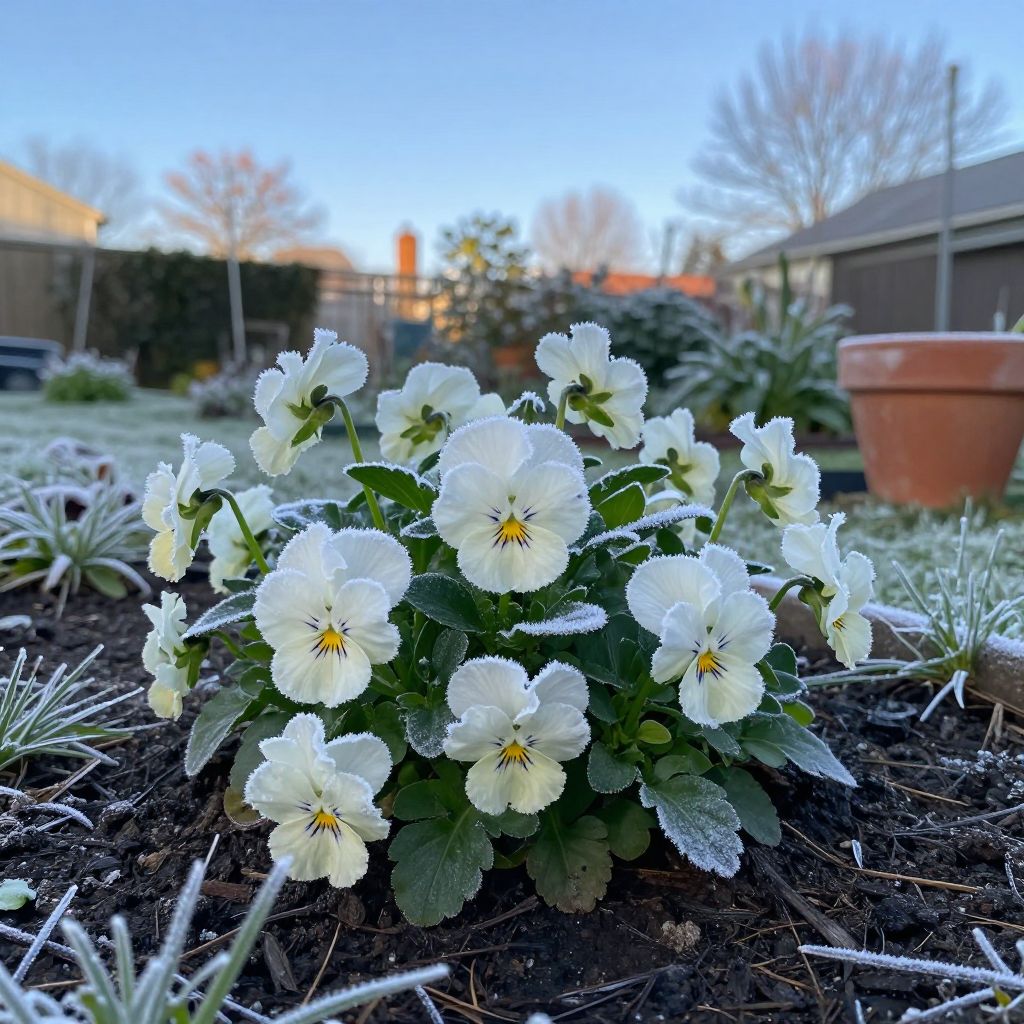
Can pansies survive frost? Yes—pansies are among the most cold-tolerant cool-season flowers, and they often keep blooming after light frost. In many gardens, established plants can handle chilly nights surprisingly well, though repeated hard freezes, soggy soil, and sudden warm-ups can still damage them.
The key is understanding what kind of frost your pansies are facing and how well they are rooted in. With the right planting, drainage, and a little protection, you can extend their color well into cold weather.
Can pansies survive frost?
Yes, pansies (Viola × wittrockiana) can usually survive light to moderate frost, especially when they are established and growing in well-drained soil. They may look limp after a freeze, but many recover as temperatures rise. The biggest risks are prolonged hard freezes, ice, and waterlogged roots.
How cold can pansies handle?
Pansies are cool-season plants, so they perform best in cool weather and often tolerate temperatures near freezing. Their exact limits depend on plant size, recent weather, moisture levels, and whether they are in the ground or in containers.
What affects frost tolerance?
- Plant maturity: Established plants usually handle cold better than newly planted ones.
- Soil drainage: Wet, compacted soil increases the chance of root damage.
- Weather pattern: A brief frost is less stressful than several freezing nights in a row.
- Exposure: Sheltered beds are safer than open, windy sites.
- Container growing: Pots freeze faster than garden soil.
If your pansies are in the ground and the frost is light, they often bounce back with little trouble. If they are in containers, treat them as more vulnerable and add protection sooner.
What frost does to pansies
Frost does not always kill pansies, but it can change how they look and how fast they recover. Leaves may darken, droop, or appear water-soaked after thawing. Flowers are usually the first part to suffer, while roots and crowns may remain healthy.
Signs of frost stress
- Wilted or limp foliage in the morning
- Darkened petals or flowers that collapse
- Leaves that look translucent or mushy after a hard freeze
- Slower growth for several days after cold weather
Do not rush to remove a plant just because it looks damaged after one cold night. Wait until it thaws and dries out before deciding whether it has truly been injured.
How to protect pansies from frost
Simple frost protection can make a big difference, especially during the first cold snaps of the season. The goal is to trap a little heat, reduce wind exposure, and keep roots from sitting in cold, wet soil.
- Water earlier in the day if the soil is dry. Moist soil holds heat better than dry soil, but avoid leaving plants soggy.
- Cover plants in late afternoon before temperatures drop. Use frost cloth, row cover, old sheets, or lightweight garden fabric.
- Secure covers to the ground so cold air cannot blow underneath.
- Remove covers in the morning once temperatures rise and the sun is up.
- Move containers to a porch, against a wall, or under an overhang for extra protection.
Do not use plastic directly on foliage unless it is supported by stakes or hoops. Plastic can trap moisture and freeze against the leaves, which can make damage worse.
Best protection for container pansies
- Group pots together to reduce temperature swings
- Place containers near a south- or west-facing wall
- Wrap pots with burlap, bubble wrap, or insulating material
- Raise pots slightly off the ground so drainage stays open
Container-grown pansies are often the first to suffer because roots are exposed to colder air on all sides. If you can, move them to a protected spot during the coldest nights.
Planting pansies for better frost survival
Good planting habits matter as much as frost covers. Healthy, well-rooted pansies are much more likely to survive cold weather than stressed plants sitting in poor soil.
Choose the right site
- Full sun to partial sun in cool seasons
- Well-drained soil or a container with drainage holes
- A spot sheltered from strong winter wind
- Room for air movement to reduce disease pressure
Improve the soil
Pansies prefer soil that stays evenly moist but never waterlogged. Mix in compost before planting to improve structure and help the soil hold moisture without becoming heavy.
If your soil is clay-like, raised beds or amended planting areas can help a lot. In very loose sandy soil, compost also helps retain enough moisture for steady growth.
Spacing and depth
Plant pansies at the same depth they were growing in their nursery pots. Space them so air can move around the foliage, but not so far apart that the bed looks sparse. Crowding can trap moisture and encourage disease during cool, damp weather.
Watering pansies before and after frost
Water management is one of the most important parts of frost care. Pansies need moisture, but cold, saturated soil is a common reason they decline in winter.
Before a frost
- Water if the top layer of soil is dry
- Water early enough for leaves to dry before nightfall
- Avoid soaking the bed if rain is already expected
After a frost
- Wait until plants thaw before watering again
- Check soil moisture with your finger, not the leaf appearance alone
- Do not water frozen soil or frozen containers
Cold plants can look thirsty when they are actually just frost-stressed. If the soil is still damp, hold off on watering until it begins to dry slightly.
Should you prune pansies after frost?
Usually, yes—but only lightly and only after you can see what has truly been damaged. Remove faded blooms, blackened flowers, and obviously dead leaves to keep the plant tidy and reduce disease risk.
What to trim
- Spent flowers
- Soft, mushy foliage
- Leaves that are clearly dead and brown
Leave healthy green growth in place. Overpruning can stress the plant when it is already recovering from cold weather.
Common problems after frost and how to fix them
Most frost damage on pansies is manageable if you respond quickly and avoid overreacting. The biggest mistake is assuming every wilted plant is dead.
Problem: Flowers collapse but leaves look okay
This is often temporary frost injury. Remove the damaged blooms and wait for new growth. Pansies commonly produce fresh flowers once temperatures stabilize.
Problem: Leaves turn mushy or black
That can mean tissue damage from a hard freeze. Trim off the worst areas, improve drainage, and avoid watering too often. If the crown is still firm and green, the plant may recover.
Problem: Plants rot after a cold spell
Rot usually points to wet soil, poor drainage, or repeated thaw-freeze cycles. Lift and inspect the planting area, and consider replanting in a better-drained spot if the problem keeps happening.
Problem: Pansies stop blooming
Cold weather naturally slows flowering. Give them more sun, remove old blooms, and keep soil evenly moist. When conditions improve, blooming often resumes.
Do pansies survive hard freezes?
They can sometimes survive a brief hard freeze, but the odds depend on how cold it gets, how long the freeze lasts, and whether the plants are protected. A short dip below freezing is very different from several hours of deep cold with wind and ice.
If a hard freeze is forecast, use frost cloth or move containers to the most protected location you have. For very severe weather, even hardy pansies may be damaged beyond recovery, especially in exposed beds or shallow pots.
How to tell if pansies are dead or just frozen
Wait until the plant thaws before judging. Frozen tissue can look awful while still being alive.
- Likely alive: stems feel firm, crowns are not mushy, and some foliage remains green.
- Likely dead: the crown is soft, black, or collapsed, and the plant does not recover after thawing.
If you are unsure, give the plant a few mild days. Pansies often surprise gardeners by recovering after they look badly wilted.
Can you overwinter pansies?
In many climates, pansies can carry through fall and mild winter weather outdoors, especially with protection. In colder regions, they may behave as short-lived seasonal plants unless conditions stay relatively gentle.
The best overwintering strategy is to keep them healthy going into cold weather: plant early enough to establish roots, mulch lightly if appropriate for your climate, and prevent the soil from staying wet for long periods.
Practical frost-care checklist
- Plant in well-drained soil or containers with drainage holes
- Choose a sheltered, bright location
- Water before a freeze only if the soil is dry
- Cover plants before temperatures drop
- Remove covers in the morning
- Trim damaged blooms after thawing
- Avoid overwatering cold, wet soil
Conclusion
So, can pansies survive frost? In many cases, yes—especially if the frost is brief and the plants are established. Protect them from hard freezes, keep the soil well drained, and remove damaged blooms after cold snaps. If you want to keep your pansies looking their best, check the forecast and cover them before the temperature drops.
For more cool-season planting help, you may also want to read about how to care for cool-weather annuals and protecting container plants from cold snaps.